
The role of philanthropy
Philanthropy plays a vital role in ending avoidable blindness, not only by supporting services today, but by building the systems that make quality eye care possible into the future.
Philanthropic partnership gives The Fred Hollows Foundation the flexibility to plan ahead, act at scale and work in deep partnership with governments and local organisations. This support helps us strengthen the eye health workforce, expand access to care, introduce new technologies and respond effectively when urgent needs or opportunities arise.
Philanthropic partnership also enables sight-restoring surgeries and screenings, the training of local doctors and health workers, the building and upgrading of facilities, and the provision of essential equipment across more than 25 countries. This kind of long-term investment delivers sustainable change and ensures that sight-restoring work continues well beyond individual projects.
You can help make this impact possible through philanthropic partnership.

We see a world in which no person is needlessly blind or vision impaired. With the support of our partners in 2025, our global impact was profound.
6136161
People screened.
511623
Eye operations and treatments performed.
148885
Pairs of glasses distributed.
48994
People trained including community health workers, teachers, and surgeons.
The impact our supporters make possible
Fred Hollows began with a simple belief that everyone should have the chance to see clearly. That belief has grown into a global effort to end avoidable blindness and strengthen eye health systems in more than 25 countries. Your support helps carry that vision forward. It powers the training of local eye health teams, strengthens national systems, and supports communities to deliver care that lasts. This is the kind of long term impact our philanthropic partners make possible: restoring sight today while helping countries build sustainable eye care for the future.
Why partner with us?
Trust
We're a trusted, Australian International Development Organisation.
The Fred Hollows Foundation is one of Australia’s most respected and trusted international development organisations. We have been consistently named one of Australia’s most reputable charities.
Value
We provide great value to impact-seeking philanthropists.
We offer excellent value to philanthropists seeking to have impact and make a difference. Since 1992, The Fred Hollows Foundation has made incredible progress towards ending avoidable blindness. We have restored sight to more than 3 million people worldwide.
Impact
Our sight restoring work has a positive effect on the economy.
The broad economic value of restoring sight is enormous. The results of a landmark study undertaken by PriceWaterhouseCoopers (PwC) found the economic benefits of eliminating avoidable blindness in developing countries far outweigh the costs by four to one.
This means for every $1 invested in preventing someone from going blind, at least $4 is returned to the economy. Cataract surgery is one of the most cost-effective health interventions you can make.
Vision
We're still committed to Fred's original vision.
The Foundation is overseen by our Board of Directors, which includes Founding Director, Gabi Hollows AO. Our CEO Ross Piper leads day-to-day operations, and we’re still advised by Fred’s great friend and fellow humanitarian, Dr Sanduk Ruit.
Impact in action
Every restored sight and stronger local health system is the result of strategic partnerships with investors like you. These stories highlight the people, communities, and programs your support is helping to transform, showing the lasting change made possible through philanthropy.

Scaling cataract surgery in Vietnam
Over 30 years, our local partners have grown from two surgeons to over 1,000 performing 250,000 sight-restoring surgeries each year. Donor support helped build this sustainable network of skilled eye health professionals.

Supporting doctors like Bouachan in Laos
With your support, Bouachan, a dedicated local doctor and single mother, received cataract surgery that allowed her to continue serving her community. Philanthropy transforms lives and sustains local health leadership.

Our work eliminating trachoma
Local health workers trained through our trachoma programs deliver treatments, hygiene education, and community support across multiple countries. Donor investment ensures these programs are effective, sustainable, and moving communities closer to eliminating this preventable disease.
The Fred Hollows Foundation has supported six ophthalmologists who are now working in provinces with the highest need. There is a lot of work to do, but this is just one example where supporters have improved access to eye health in Rwanda.

Recognition of your gift
We are committed to working closely with you to ensure your gift is directed to an area of our work that you’re most passionate about.
As a valued supporter of The Fred Hollows Foundation, you will receive personalised impact reports and regular updates, the opportunity to visit program work and meet key staff, invitations to attend intimate gatherings and recognition in our Annual Report.

We welcome your questions about philanthropic partnership. Call us on 1800 352 352 or email us at [email protected]. We look forward to partnering with you to create lasting change.
Email UsFrequently Asked Questions
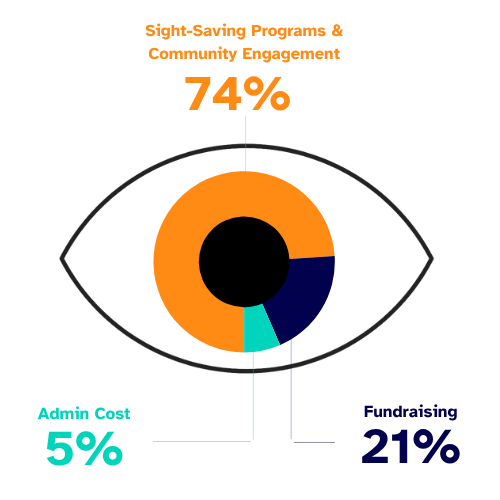
74% of expenditure supports program delivery and long-term eye health work across the countries where we operate.
The remaining funding supports the operational, governance and fundraising functions required to deliver programs effectively, manage risk, maintain accountability and grow future impact.
We believe strong organisations require strong infrastructure, and responsible stewardship of donor funding includes investing in both.