
Building health systems that last: how eye care strengthens primary healthcare

Across the world, millions of people live with avoidable vision loss not because the solutions don’t exist, but because the systems that deliver them are weak or uneven. Eye health services are often underfunded, concentrated in urban areas, and disconnected from broader health care. This creates a major gap in access, particularly for people in low- and middle-income countries, rural communities, and marginalised groups.
More than 1 billion people globally still do not receive the eye care they need; this figure is expected to reach 1.8 billion by 2050.
The reasons are systemic: limited government prioritisation and resourcing, a shortage of trained eye health professionals, fragmented service delivery, and poor integration of eye care into primary health care. These challenges make it difficult for countries to achieve universal health coverage and to deliver care that is equitable, sustainable, and people-centred.
To address this, the World Health Organization’s (WHO) World Report on Vision 2020 recommended an Integrated People-centred Eye (IPEC) approach, embedding eye health into every level of care. Strengthening health systems in this way ensures early detection and prevention, continuous treatment, and improved outcomes across the entire health sector.
Eye care belongs in primary healthcare
Nine in ten people with vision impairment have a preventable condition. Integrating eye care into community and primary health services improves early detection, treatment, and overall health outcomes. It also reduces poverty, labour productivity, and strengthens community resilience, which are the foundations of sustainable development and resilient health systems.
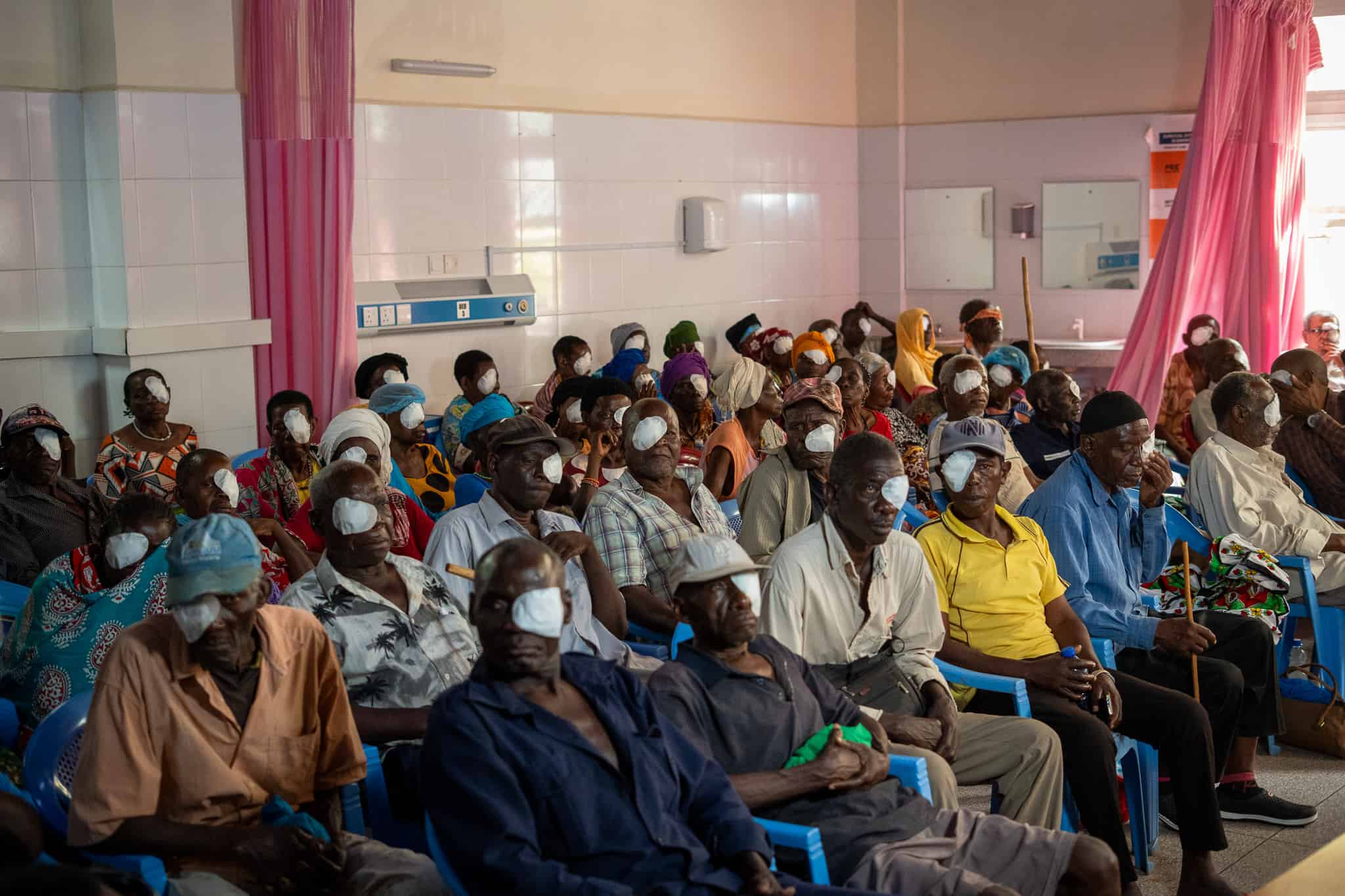
Community-based eye services reduce pressure on health systems. At Kilifi Referral Hospital, a collaborative eye care initiative screened over 2,000 people and delivered 103 surgeries, strengthening referral pathways and expanding access through the public health system.
Photo credit: Mark Maina
The system-wide benefits of eye care
Community screenings catch conditions such as refractive errors, cataract and diabetic retinopathy early, easing pressure on overstretched health systems. Good vision also reduces falls, depression, and complications from chronic diseases, freeing resources for other health priorities.
The economic case is powerful: a global study supported by The Fred Hollows Foundation found a 28-to-1 return on investment in eye health among the highest of any health intervention. Strong eye care systems strengthen entire economies and make health investments go further.
How to integrate eye care strategically
Integrating eye care into primary health care starts with strong national leadership and clear policies. Governments can embed eye health in budgets, and various financing schemes like social health insurances, and training programs to ensure it becomes part of routine care.
The Fred Hollows Foundation supports this by providing technical expertise, data, and scalable models that show how integration works from policy reform to health-worker training and connected referral pathways linking clinics and hospitals, ensuring resources align with health system functions at all levels.
Embedding quality and accountability
Integrating eye care into broader programs such as immunisation or non-communicable disease control maximises existing infrastructure and workforce capacity. To sustain quality, countries need clear standards, monitoring data on quality to inform continuous improvements, regular supervision, and ongoing skill development.
Performance indicators like screening accuracy, referral rates, and treatment outcomes should feed into national health-quality systems, ensuring accountability and improvement over time.
Financing and protecting the most vulnerable
Sustainable primary health care depends on fair financing and operational support. Integrating eye health into national insurance packages and primary-care budgets protects people from out-of-pocket costs and keeps essential medicines and equipment available.
The Foundation partners with governments to strengthen their ability to plan and appropriate resources for eye health commodities, infrastructure and supply chains systems strengthening, workforce development, and secure long-term funding so eye care is part of everyday health services and not reliant only on donor funding.
Training a robust workforce
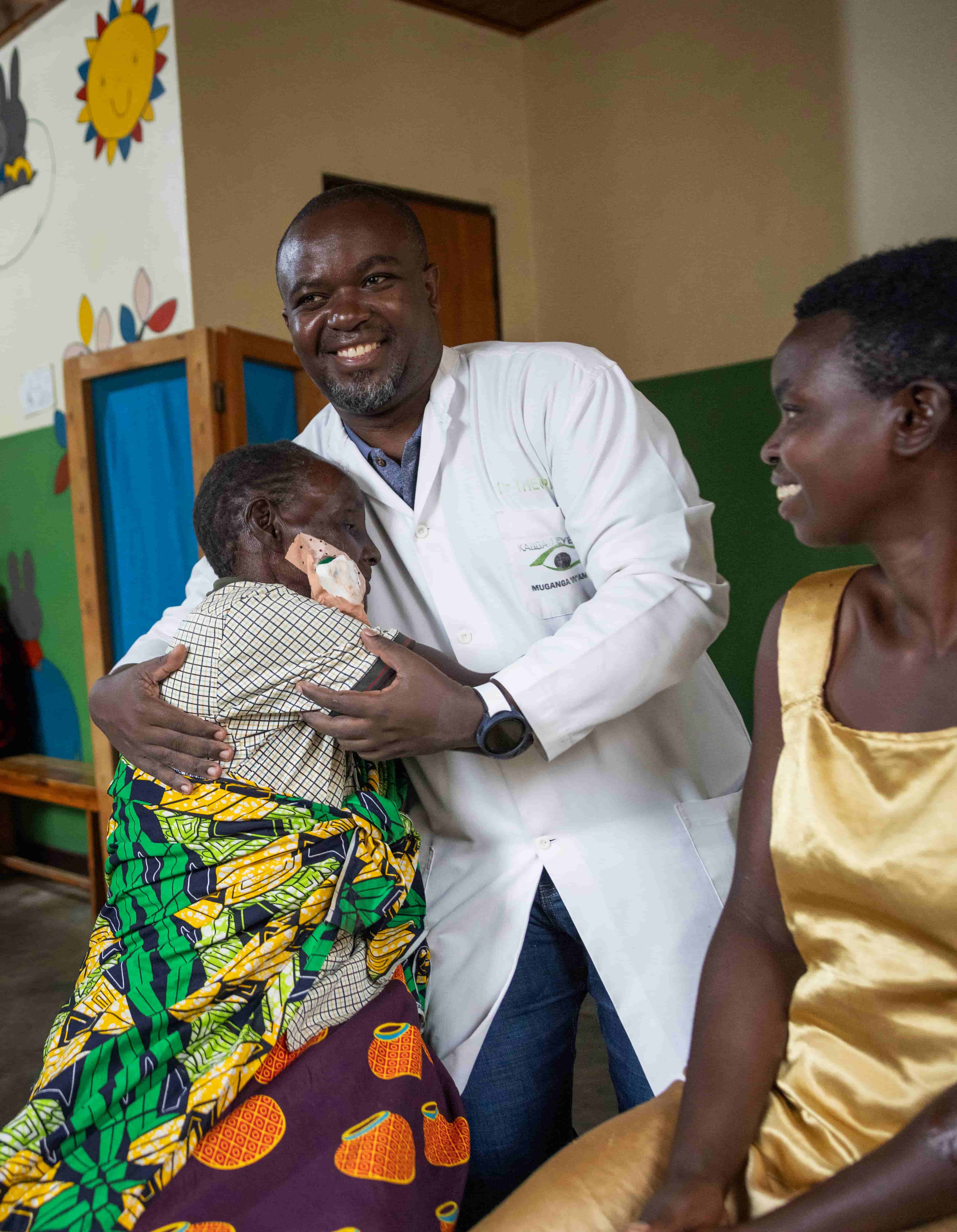
Strong health systems rely on skilled frontline workers, ensuring patients receive safe, integrated eye care at every stage. Rwanda, 2025.
Photo credit: Michael Amendolia
A sustainable health system depends on people, especially those working on the front line. Building a trained, confident health workforce is essential to delivering integrated, quality eye care at the primary care level.
The Fred Hollows Foundation partners with governments and training institutions to equip community and primary health workers with the skills to screen, diagnose, and refer patients with common eye conditions. Embedding eye care within national health training programs ensures that these skills become part of everyday practice, not specialist knowledge.
This approach strengthens primary health care as a whole, empowering local health workers, improving access to services, and ensuring that quality eye care reaches even the most remote communities.
Data, referrals, and informed decisions
Effective referral pathways link communities and primary health care facilities with referral to specialist hospitals, ensuring timely care for complex cases. Robust health-information systems capture patient data along the care journey, helping providers monitor quality, close service gaps, and make data-driven investment and care decisions.
Policy, partnerships, and local ownership
Sustained progress relies on government leadership and collaboration. The Fred Hollows Foundation works with ministries, technical partners, and civil-society organisations to co-design interventions that help shape policies and investment cases for budget advocacy by ensuring eye health is embedded within national systems.
Building local ownership helps unlock domestic resources and ensures that integrated eye care remains a long-term national priority.
A ripple effect: strengthening health systems for all
Every investment in eye health has a multiplier effect. Training health workers, improving data systems, and upgrading clinics all strengthen broader primary health care. Integrated eye care helps countries manage current challenges like cataract backlogs while preparing for future health needs.
Support The Fred Hollows Foundation through donations, partnerships, or volunteering — and help build health systems that last, so everyone, everywhere, can access the eye care they deserve.
Give today to help train local doctors, equip clinics, and build health systems that last.
Meet the author

Austine Odero
Austine Odero is a Technical Specialist in Health System Strengthening and Integration at The Fred Hollows Foundation, based in Kenya. His work focuses on integrating eye care into primary healthcare so communities can access quality, affordable services close to home.
Related articles

Types of eye health jobs: what's the difference?


Investing in eye health a $447b opportunity to end avoidable blindness

12 life-changing stories of sight restored