
Why is gender equity so important in global health?

When it comes to global health, understanding the role and importance of gender equity is essential.
In this blog, we’ll outline what the concept means and why gender equity is important for ensuring that more communities have access to quality, reliable healthcare.
Understanding Gender Equity
At its core, gender equity means ensuring fair and just access to resources, opportunities, and outcomes for women, men, and gender-diverse people.
Is gender equity and gender equality the same thing?
No. Gender equality focuses on equal treatment regardless of gender. Gender equity, however, acknowledges that people start from different positions because of longstanding social and structural inequalities and that achieving equity of outcomes will require tailoring approaches to the needs of different people.
Gender equity recognises that women, men, and gender-diverse people experience health systems differently because of deeply embedded social norms, power imbalances, and structural inequalities. A gender equity approach aims to identify and address barriers to access whilst also working to change systems, policies, and institutions that create and reinforce unequal outcomes.
In global health, promoting gender equity means ensuring that no one is excluded. It requires actively addressing the structural barriers that shape access, influence decision-making, and limit whose needs are prioritised.
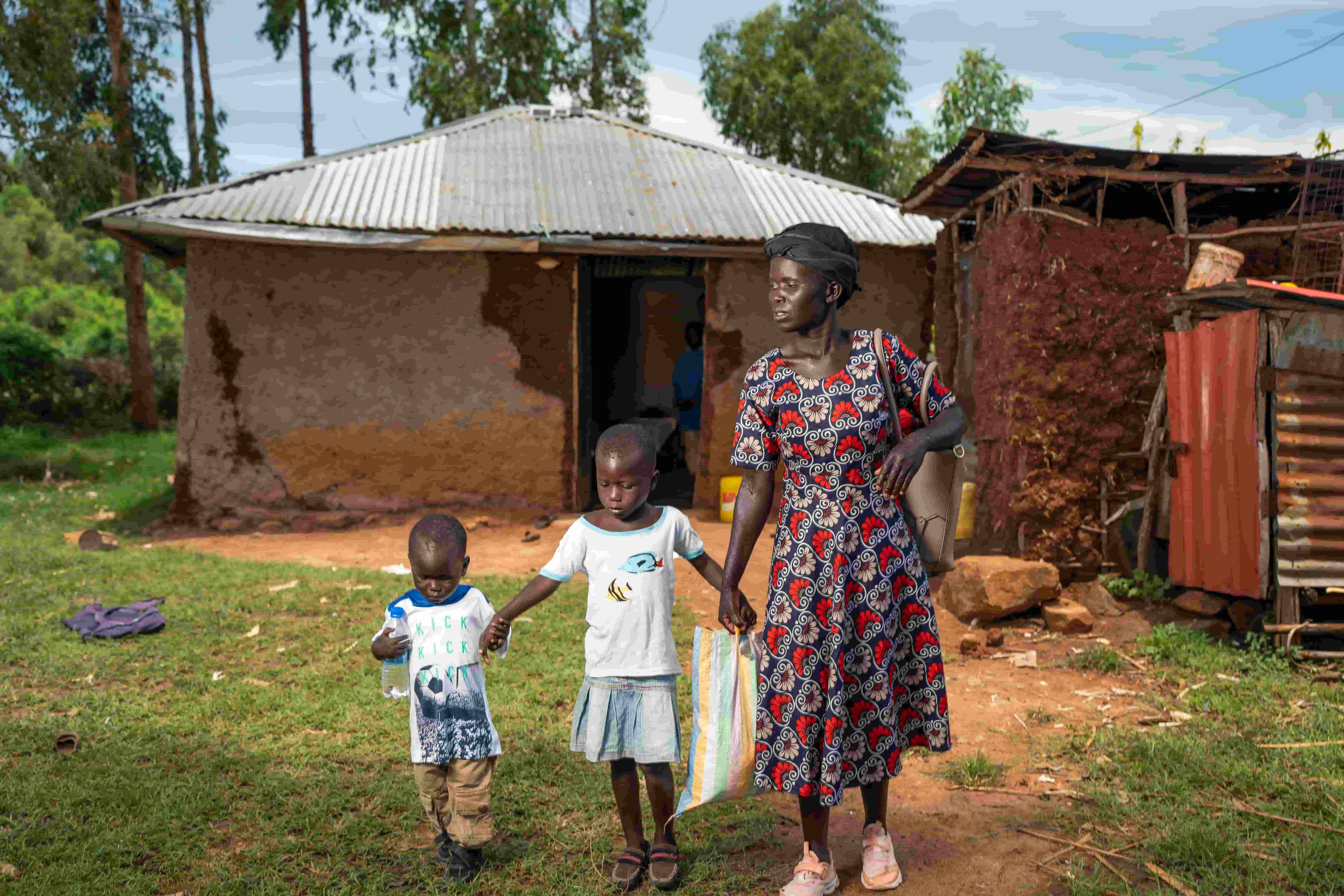
Eveline and her children outside their family home in Siaya County in Kenya. Women and girls are disproportionately affected by vision loss, but with access to equitable eye care, families like theirs can regain independence and opportunity.
Photo credit: Hugh Rutherford
Why is Gender Equity Important?
Gender equity is not only foundational to good practice — it also strengthens the effectiveness, reach, and impact of global health programs.
1. Improved outcomes for all
Equitable access transforms health systems, delivering stronger prevention, treatment, and recovery outcomes for all — not only for the few who already hold privilege.
2. Economic growth
When health improves, economies grow. A healthier population can participate more fully in work, education, and community life — driving development and reducing poverty.
3. Empowerment
Health initiatives that prioritise gender equity create space for diverse leadership across all genders. When decision-making reflects a wider range of experiences and perspectives, communities become more resilient and health programs become more effective.
4. Program effectiveness
Gender equity enables more nuanced and targeted health programs that recognise the different needs and barriers experienced across genders. When interventions are designed with this understanding, they become more effective and more sustainable.
5. Social justice
Above all, gender equity advances social justice by challenging the discriminatory structures that create health disparities and by affirming the equal rights and dignity of every person.
What are the barriers to advancing Gender Equity in Global Health
Achieving gender equity in global health also comes with several significant challenges.
Social Norms
In many contexts, deeply embedded cultural norms and gender roles create structural barriers that prevent women and gender-diverse people from accessing healthcare, education, and employment. For example, women may need permission from a male family member to travel to a clinic; gender-diverse people may avoid health services due to stigma or the risk of discrimination; and caregiving expectations can limit women’s time and mobility, reducing their ability to seek care for themselves.
Economic Challenges
Entrenched economic and social inequalities often mean women have less control over financial resources. These structural constraints directly affect their ability to access timely and affordable healthcare.
Lack of Data Analysis
Recent efforts to advance gender equity have often been limited by insufficient data. Without robust, disaggregated information, it becomes far harder to detect, understand, and address gender-based inequities in healthcare.
Existing Biases
The health system is not immune to gender bias. Both unconscious and conscious forms of sexism can shape how providers and institutions deliver care, leading to unequal treatment and the neglect of specific needs. These biases - often deeply ingrained in training, norms, and institutional culture - must be actively called out and dismantled.
Discrimination
Gender-based discrimination and stigma - whether intentional or unconscious - can create environments where women and gender-diverse people feel unwelcome or unsafe. These biases cause real harm and deter people from seeking the healthcare they need, underscoring the importance of naming and addressing them.
How We Can Work Towards Greater Gender Equity
Encouragingly, major efforts are underway to improve gender equity in global health. Governments, NGOs, donors, and global health institutions — including the United Nations — are increasingly recognising that gender equity is a critical foundation for achieving health equity and advancing social justice.
So, how can gender equity be promoted and improved in global health care?
- Stronger Partnerships — Building deeper collaboration with women’s organisations, community groups, governments, and health actors creates the foundation for lasting gender equity. These partnerships ensure that change is locally led, contextually grounded, and sustainable.
- Policy Advocacy — Effective advocacy is essential to drive gender-responsive health policies and generate the political will needed for systemic change. Policy shifts help address structural barriers and embed equity into national health priorities.
- Capacity Building — Investing in facilities, equipment, and training, especially in gender-sensitive and inclusive practice improves both the quality and accessibility of care. A well-equipped and trained health workforce is central to delivering equitable services.
- Data and Research — Strengthening the collection and use of gender-disaggregated data and targeted research enables more accurate analysis and more effective interventions. Better evidence leads to more informed, more equitable program design.
- Community Education — Raising awareness and meaningfully engaging communities helps shift harmful social norms and gender roles that restrict access to healthcare. Community understanding and support accelerate progress toward equitable outcomes.
- Inclusive Co-designed Programs — Designing programs with diverse voices — including women, gender-diverse people, and marginalised groups ensures services reflect real needs and lived experiences. Co-design drives more effective, inclusive, and impactful health initiatives.
The Fred Hollows Foundation’s Approach to Gender Equity
At The Fred Hollows Foundation, we understand the critical importance of gender equity. This commitment drives our work to ensure that everyone, regardless of gender can access the eye health services they need to prevent avoidable blindness. Of the 1.1 billion people living around the world with some form of vision loss because of a lack of basic eye care services, 55% are women or girls.
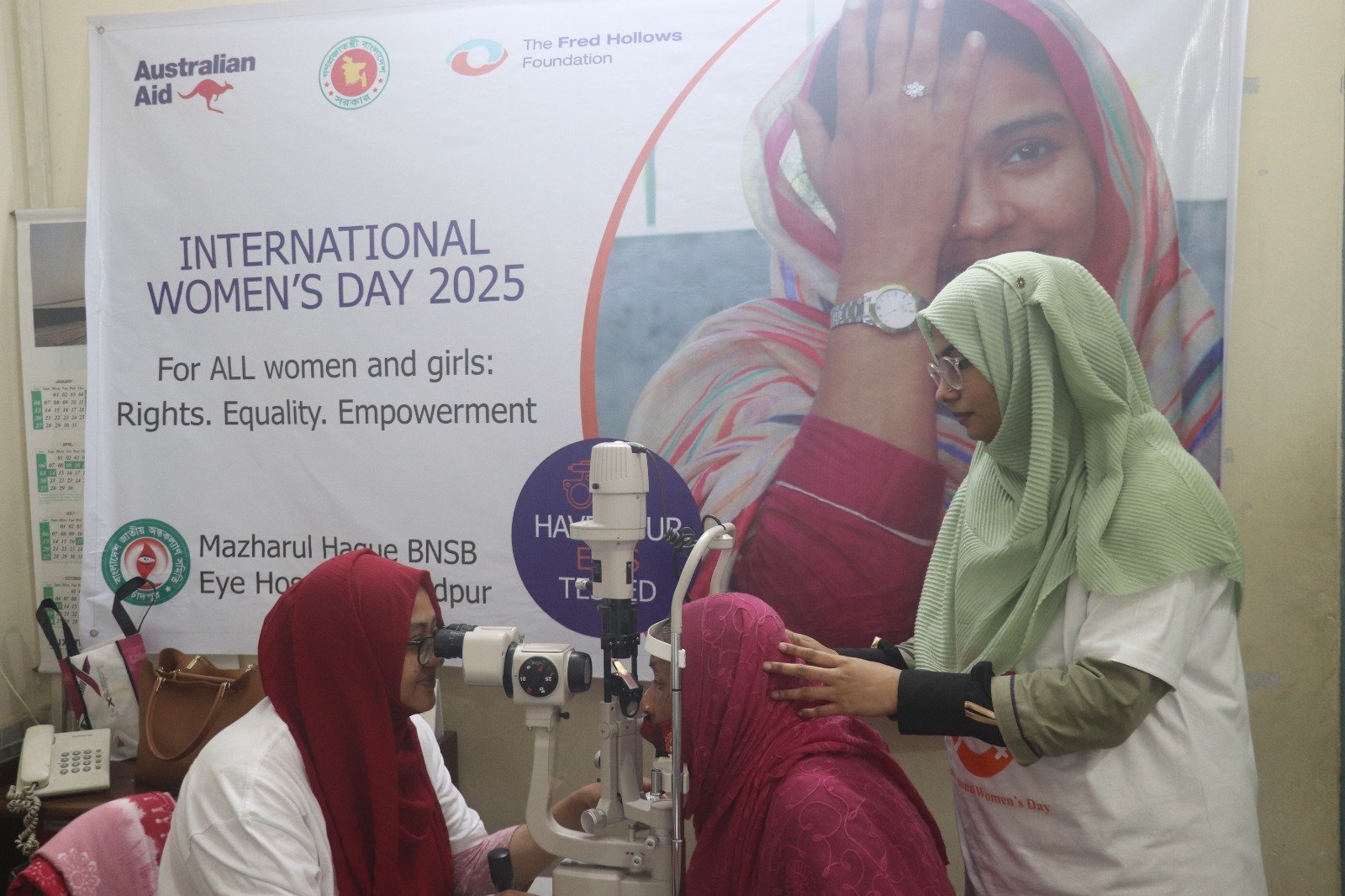
International Women’s Day outreach in Bangladesh provided vital eye health checks for nearly 200 women, helping close the gender gap in access to care.
Photo credit: Al Amin
The Foundation’s programs work proactively to address gender inequalities, especially in the many low- and middle-income countries in which we operate, by embedding equity in our approach to eye health care. In many countries, structural barriers, such as restrictive gender norms, limited economic autonomy, and the unequal burden of caregiving limit women and girls’ access to essential preventive and restorative eye care.
The Fred Hollows Foundation leadership
The Fred Hollows Foundation demonstrated global leadership by co-authoring the UN Women policy brief ‘No Woman Left Behind; Closing the Gender and Inclusion Gap in Eye Health’. This landmark document, launched in on the sidelines of the United Nations General Assembly in September 2023, provided compelling evidence of gender disparities in eye health and set out actionable recommendations to dismantle barriers faced by women and girls. By amplifying the voices of those most affected and advocating for rights-based policies.
The Foundation helped position eye health as a critical gender equality issue within the Sustainable Development Goals agenda. The brief has catalysed commitments from governments, NGOs and development partners to integrate gender perspectives into health systems, increase resources of women’s eye care and proritises women’s leadership in decision making. These shifts are already influencing national strategies and global dialogues, ensuring that eye health equity becomes a cornerstone of inclusive health policy. This helps us make a difference on a macro-level.
At The Foundation, we continue to work to ensure women who are blind or have vision impairment are meaningfully included in programs, women health care leaders are empowered in decision-making, and that there are sufficient resources for relevant policies and programs to protect the rights of women and girls when it comes to accessing eye care.
But we need your support.
How You Can Make a Difference
To help us carry out the important work we do in closing the gender gap in access to health care, please consider making a donation or contacting our team to find out how you can get involved.
Meet the authors

Louisa Syrett
Louisa Syrett is the Head of Gender Advocacy and Engagement at The Fred Hollows Foundation. She leads global advocacy to address the gender barriers that prevent women and girls from accessing eye care.

Lisa Johnson
Lisa Johnson is the Global Equity and Inclusion Lead at The Fred Hollows Foundation. She leads efforts to ensure our programs are inclusive, equitable, and accessible for all in the communities we serve.
Related articles

10 women driving change in eye health

Eyes are a window to gender equity: The Fred Hollows Foundation calls for urgent action on women’s eye health this International Women’s Day

The gift of sight transformed H'Nhi's life