
Your eyes as health monitors: what eye exams reveal about overall wellness

Eye health is important in its own right, but it actually goes far beyond that.
Your eyes are actually rather effective early-warning signals for your overall health. Many conditions, such as diabetes, high blood pressure and high cholesterol, can be revealed through eye examinations before you even notice other physiological symptoms.
That’s one of the many reasons why The Fred Hollows Foundation is so committed to ending avoidable blindness around the globe and making the world a healthier place.
What is The
Fred Hollows Foundation’s mission when it comes to eyes and vision?
Our mission is to end avoidable blindness so that no one is living blind or with poor eyesight simply because they are in a low socioeconomic community or remote community.
- We work in over 25 countries
- We partner with local communities
- We deliver health care and systems to ensure affordable eye care
- We train health workers for ongoing support
- We advocate for strong and more equitable health services
From better quality of life to maintaining independence, restoring sight through surgeries and eye care is about more than just one’s eyes. It’s about helping to improve overall health and wellbeing outcomes across the board.
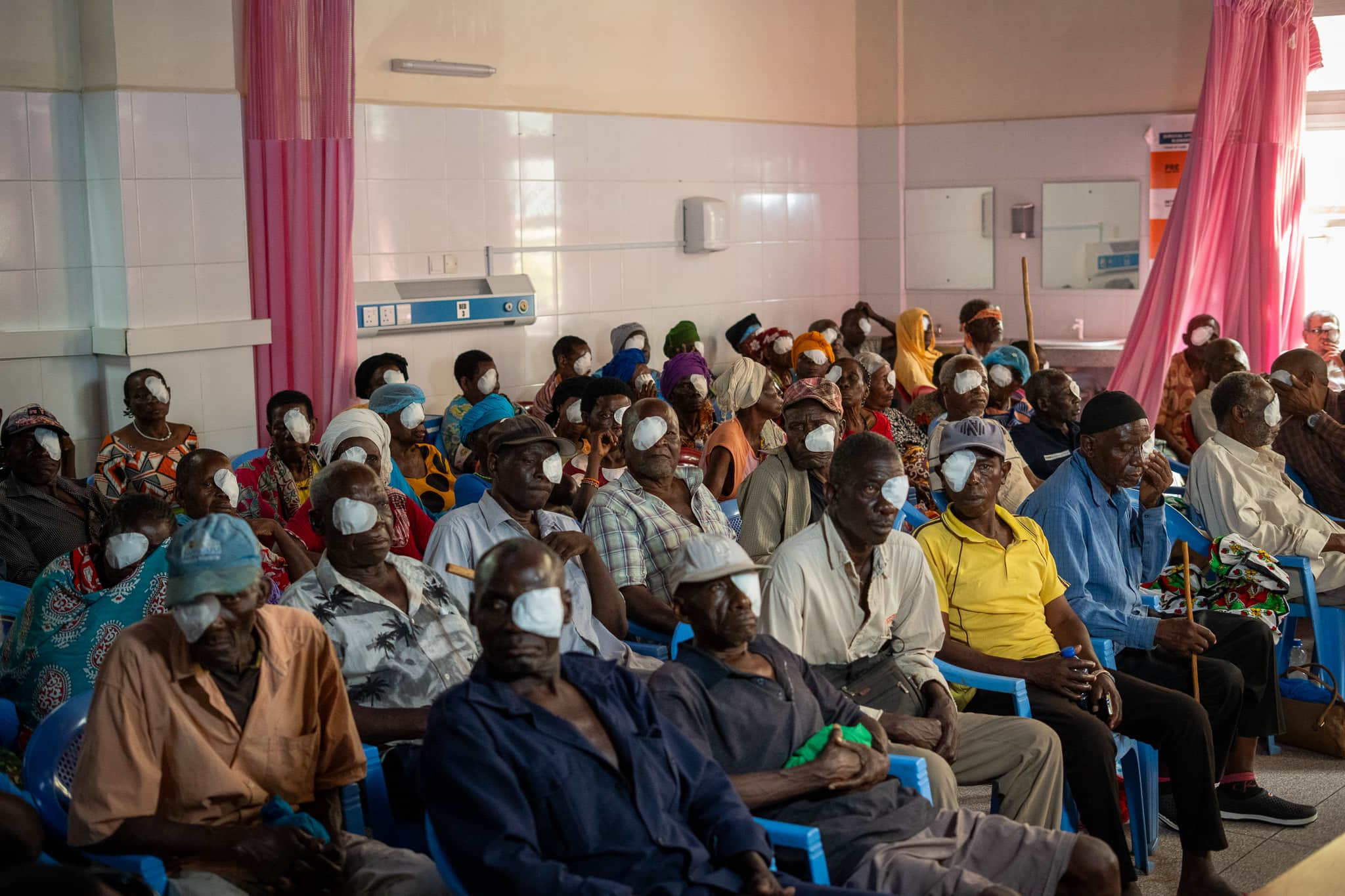
Patients wait after surgery at Kilifi Referral Hospital, where 103 sight-restoring procedures were performed and more than 2,000 people received eye health screenings.
Photo credit: Michael Amendolia
What is a comprehensive eye exam?
Regular eye exams are a simple and non-invasive way to ensure one’s sight and eye health are okay.
A comprehensive eye exam is a structured eye health check that includes much more than just chart reading to assess vision.
Ophthalmologists and optometrists look at the structures of your eyes, the blood vessels and your nerves to ensure that everything is healthy. Often, early detection of a variety of diseases and conditions can be picked up from the eyes during these examinations.
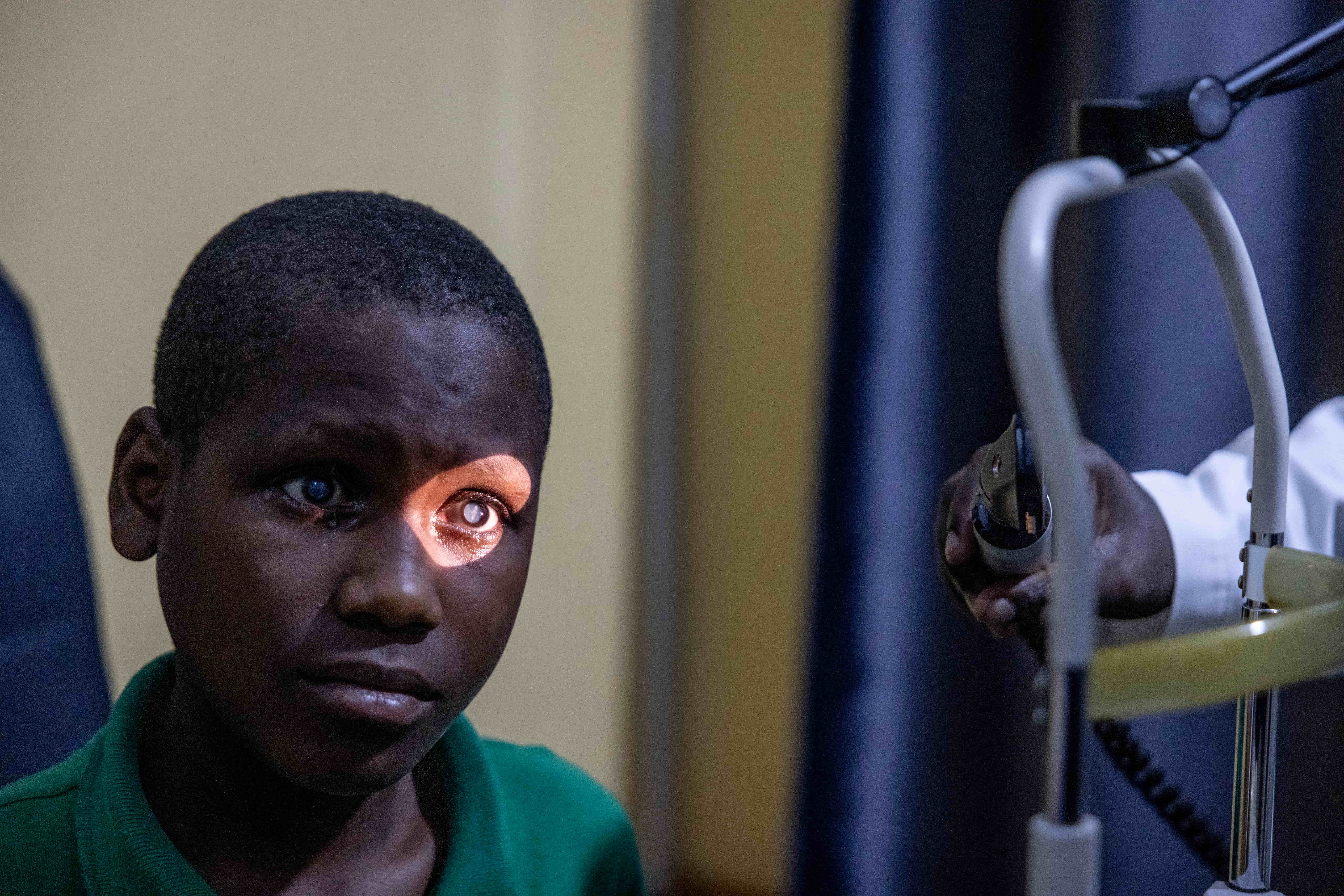
Fidel, 12, from Rwanda, receives an eye examination at Kabgayi Eye Unit supported by The Fred Hollows Foundation.
Photo credit: Mark Maina
What goes into an eye exam?
- Assessing your vision (distant and near if required)
- Review of your relevant medical history
- Assessment of current and diagnosed health issues
- Checking your eye movement and alignment
- Testing current prescriptions to ensure the correct refraction level
- Examination of the front parts of the eye, such as the eye lids, conjunctiva, cornea, lens and iris, pupil
- Measuring eye pressure to screen glaucoma
- Examining the retina, optic nerve and blood vessels at the back of the eye by dilating your pupils with special eye drops
Eye health exams are painless, relatively fast and non-invasive. But the detailed snapshot your healthcare professional will get can be a critical insight into your eye health and overall body health.
Read more about your eye anatomy here.
Why are regular eye exams important?
People assume that eye conditions are easy to notice. If their vision is impaired or reduced or if they feel pain, then they need to seek medical help.
But, unfortunately, many serious eye conditions actually develop silently and painlessly. That’s why regular eye exams are critical for detecting as early as possible.
- Early detection allows more effective treatment
- Monitoring ongoing systemic diseases improves overall health and wellbeing
- Ensuring your prescription is right will ensure better vision and greater comfort
- Regular eye exams support safer driving, better reading, more productivity and greater concentration for studying and improved performance
For rural, regional or low socioeconomic communities, regular, accessible and simple eye exams are one of the most cost-effective ways to reduce the likelihood of avoidable blindness and increase one’s quality of life.
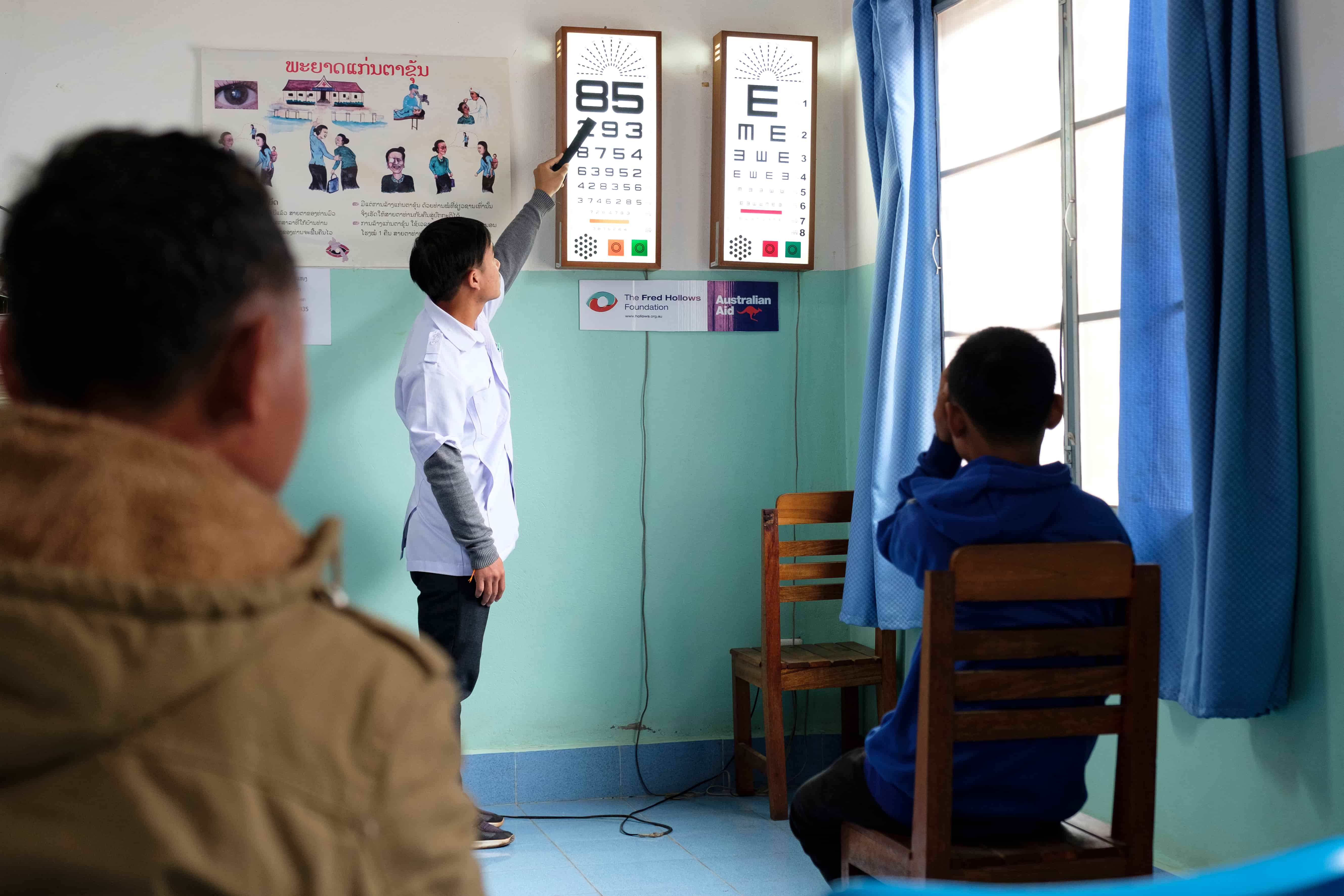
Bounthong, 13, from Oudomxay Province in Lao PDR, reads letters during an eye examination after struggling with cataract that affects his vision at school and at home.
Photo credit: The Fred Hollows Foundation
What health conditions can eye exams detect beyond vision?
Eye examination can help detect the early signs of a number of eye diseases, including:
- Glaucoma
- Macular degeneration
- Diabetes
- Hypertension
- High cholesterol
- Autoimmune diseases
- Inflammatory conditions
- Some cancers
- Some blood disorders
How is this possible? There are a number of signs that could help an eye care specialist diagnose a general health condition through the changes seen in the retina, like:
- Leaking retinal blood vessels
- Damaged blood vessels
- Narrowed or stiffened vessels
- Unusual bleeding
- Fatty deposits in blood vessels
- Inflammation
- Swelling
- Lesions
What happens when these symptoms are detected?
The earlier a condition is identified and diagnosed, the increased likelihood of effective treatment.
In most cases, if your eye health exam results in the detection of one or more of these conditions, you may be sent to a GP, general ophthalmologist or specialists.
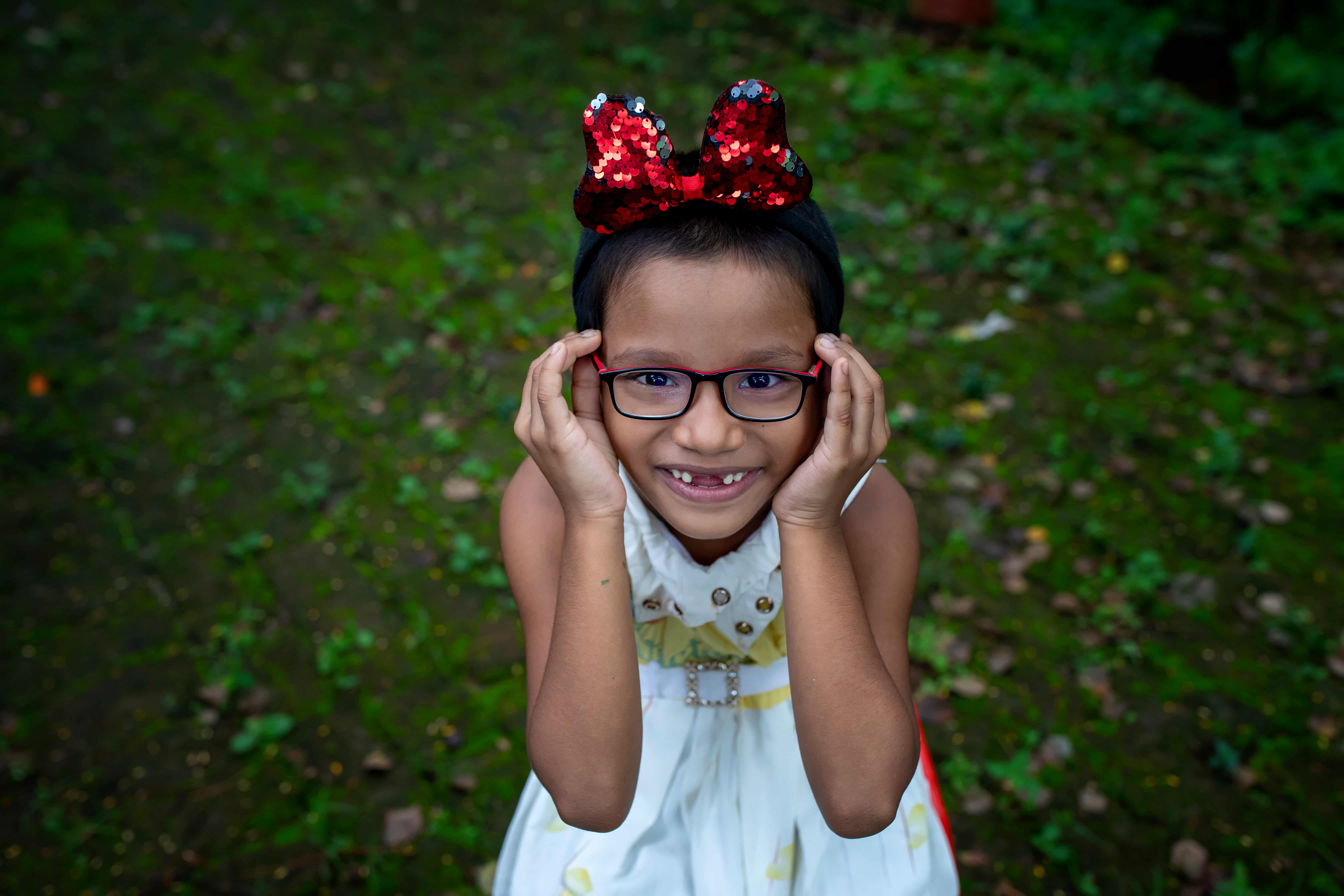
Shradhdha smiles after receiving glasses to correct her uncorrected refractive error at Grameen GC Eye Hospital in Barishal, Bangladesh.
Photo credit: KM Asad
How often should you get an eye exam?
Children
We encourage parents to have their children’s eyes checked regularly (at least annually or as recommended by doctor), as vision problems can affect learning, impact development and reduce safety. Many childhood conditions are treatable when detected early. It's also important to reduce screentime for children.
Adults
Adults with no known eye problems or health conditions should have an eye exam once every two years or so.
Over 60s
It is recommended that adults over the age of 60 have an eye exam once a year or as prescribed by your doctor.
Special conditions
If you have one of the following conditions, we recommend seeking individualised advice from an eye health specialist to determine how often you should be having an eye exam:
- If you have diabetes
- If you have high blood pressure
- If you have high cholesterol
- If you have a family history of glaucoma
- If you have a family history of macular degeneration
- If you have a family history of other eye diseases
- If you are Aboriginal or Torres Strait Islander
- If you live in a rural/remote area where access to care is limited
- If you wear contact lenses or glasses for refractive error
- If you have had previous eye surgery or injury
Eye Exam FAQs
Can an eye exam detect diabetes and high blood pressure?
Yes, they can. Changes in the tiny blood vessels at the back of the eye can be an early sign of diabetes and hypertension and be an indicator that you should seek further medical testing and treatment.
Do you need an eye exam if your vision is fine?
Yes. Many eye diseases and conditions do not have readily noticeable symptoms until the damage is far more advanced. Regular exams are therefore important to keep your eye health and general wellbeing as good as possible
Is there a difference between a vision test and a comprehensive eye exam?
A quick sight test usually checks how well you can see at different distances.
An eye exam assesses a lot more, such as your eye structures, eye pressure, retina, optic nerve and blood vessels. That’s why it can reveal a variety of other health issues as well.
Do eye exams help prevent avoidable blindness globally?
Yes. Eye exams help people identify who needs glasses, who needs medical treatment or surgery, and who is suffering from otherwise preventable blindness in a timely manner .
That’s exactly what The Foundation is working towards and why we advocate for regular eye exams so passionately.
How can you maintain strong eye health?
There are a few ways in which you can protect your eye health:
- Book regular eye exams
- Protect your eyes from UV
- Wear eye protection when necessary especially if there chance of injury like in field, factory, mechanical work etc
- Eat healthily and exercise
- Sleep well
- Practice good work and digital screen habits
- Proper use of medicine if prescribed
How can you help us achieve a world without avoidable blindness?
Around the world, millions of people are blind or have vision loss that could be prevented or treated. In fact, 9 out of 10 people who are blind don’t need to be.
The Fred Hollows Foundation works with local partners to train eye health workers, strengthen health systems and deliver sight-restoring care to communities that need it most.
Together we can help create a world where everyone has access to eye care. Support our work by donating today, or become a Visionary.
Meet the author

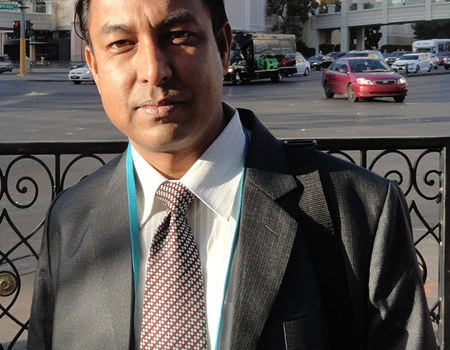
Dr Lila Raj Puri
Dr Lila Raj Puri is a Medical Adviser at The Fred Hollows Foundation, and his interest lies in research and training. Based in Nepal, he advises on national prevention of blindness strategies in the Asia region, and leads the development and implementation of clinical governance frameworks. He also supports ophthalmologist training and quality assurance at Alina Vision Hospital. He is an ophthalmologist with over 12 years of experience in clinical and surgical management of eye diseases, and hospital management. As an Associate Professor, he has trained national and international ophthalmologists in cataract surgeries, as well as overseeing the training of optometrists, residents and nurses.
Read more about eye health

How to improve eye health: A complete guide


Everything you need to know about diabetic retinopathy

Why do my eyes look and feel tired?