
Jeffrey's Story

Caring for Country takes clear sight
Jeffrey has worked as a ranger on Warumungu Country in the Northern Territory for almost a decade. It is work he takes great pride in. Protecting sacred sites, caring for native plants and animals, supporting traditional burns, and taking Elders out on Country is not just a job, it is a responsibility passed down through generations.
“It makes me feel proud of my Country,” Jeffrey says. “Looking after Country is what we do.”
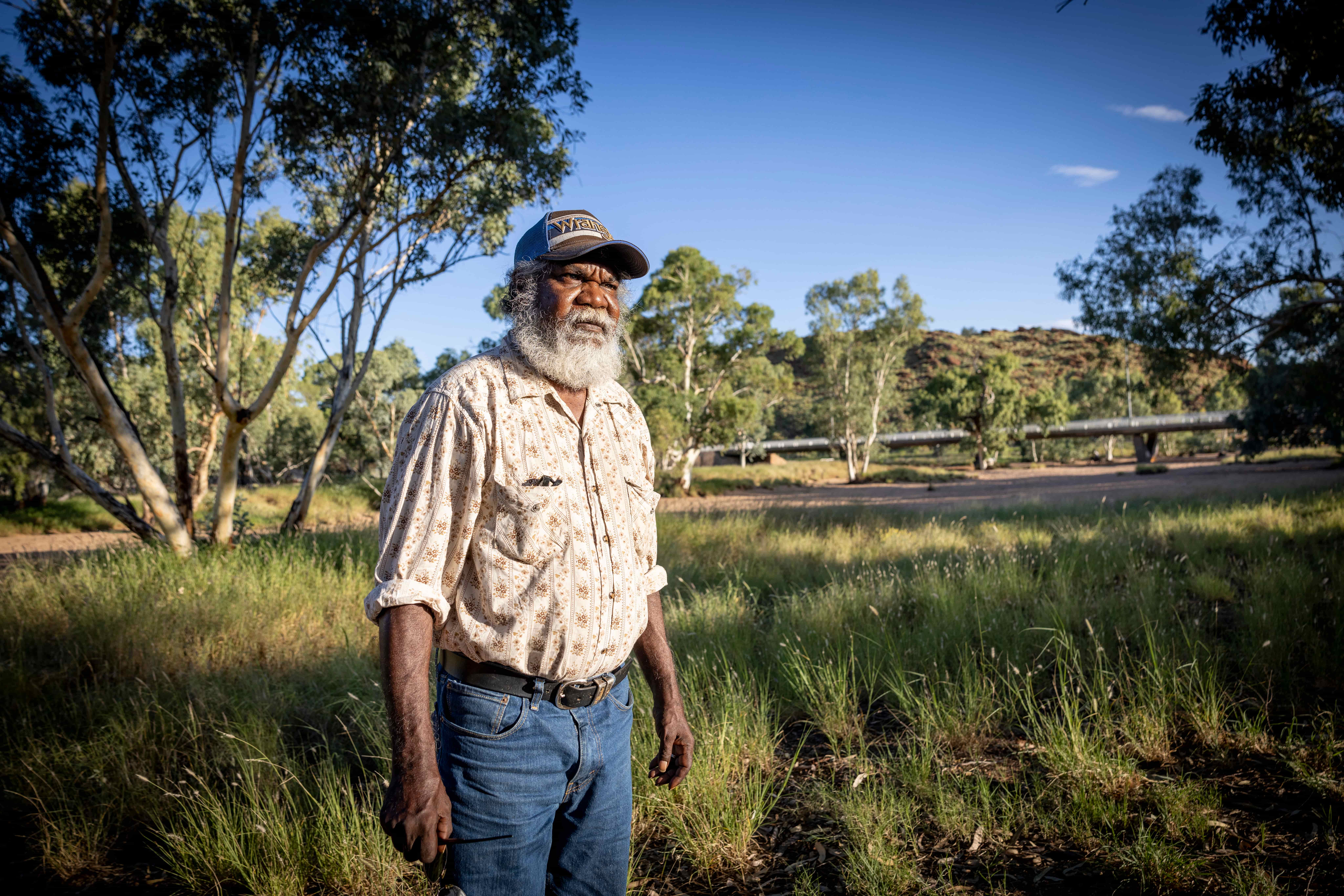 Photo credit: Michael Amendolia
But a few years ago, that work became harder. Smoke from a backburn, combined with an old welding injury, began to cloud Jeffrey’s vision. Over time, the world around him grew hazy. Tasks that once felt routine became dangerous. Working safely on Country was no longer guaranteed.
When vision loss puts everything at risk
Good vision is essential for a ranger. Jeffrey knew that more than anyone.
“It’s very important to have good vision because you don’t know what you might walk on,” he explains. “You might step on something that’s no good, like a snake.”
Fire management also became harder. The smoke irritated his eyes, and the glare from flames made it difficult to see clearly. At night, the pain worsened.
Jeffrey tried washing his eyes with water and using eye drops, but nothing helped. He knew something was wrong, and he knew he needed help if he was going to continue working.
The long journey to treatment
When Jeffrey attended an eye clinic in Tennant Creek, he learned cataract was the cause of his cloudy vision. Like many people living in remote communities, accessing surgery was not simple.
Jeffrey was one of seven patients who travelled hours from Tennant Creek to Alice Springs Hospital for surgery through an Eye Intensive supported by The Fred Hollows Foundation, working in partnership with Anyinginyi Health Aboriginal Corporation.
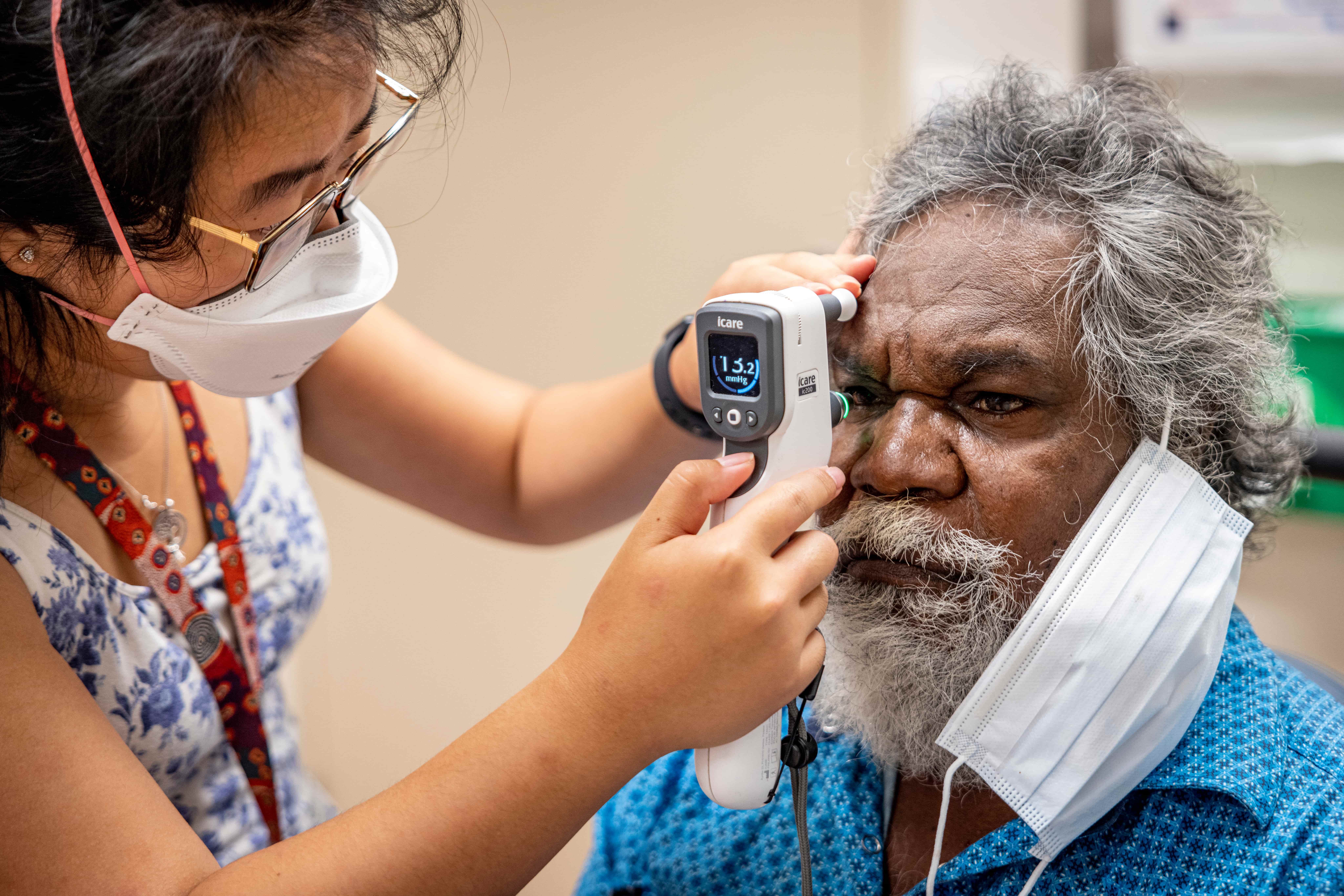 Photo credit: Michael Amendolia
Together with the hospital, the partners helped coordinate transport, accommodation, and a care plan so each patient felt supported throughout the process.
Restoring sight takes trust
Ophthalmologist Dr Tim Henderson performed Jeffrey’s surgery. He has worked alongside The Fred Hollows Foundation in Central Australia for more than 20 years.
Jeffrey’s cataract was advanced, which meant the operation was more complex than usual. Too often, people arrive late for treatment, not because help does not exist, but because distance, long waits, and concerns about how they will be treated in hospital keep them away.
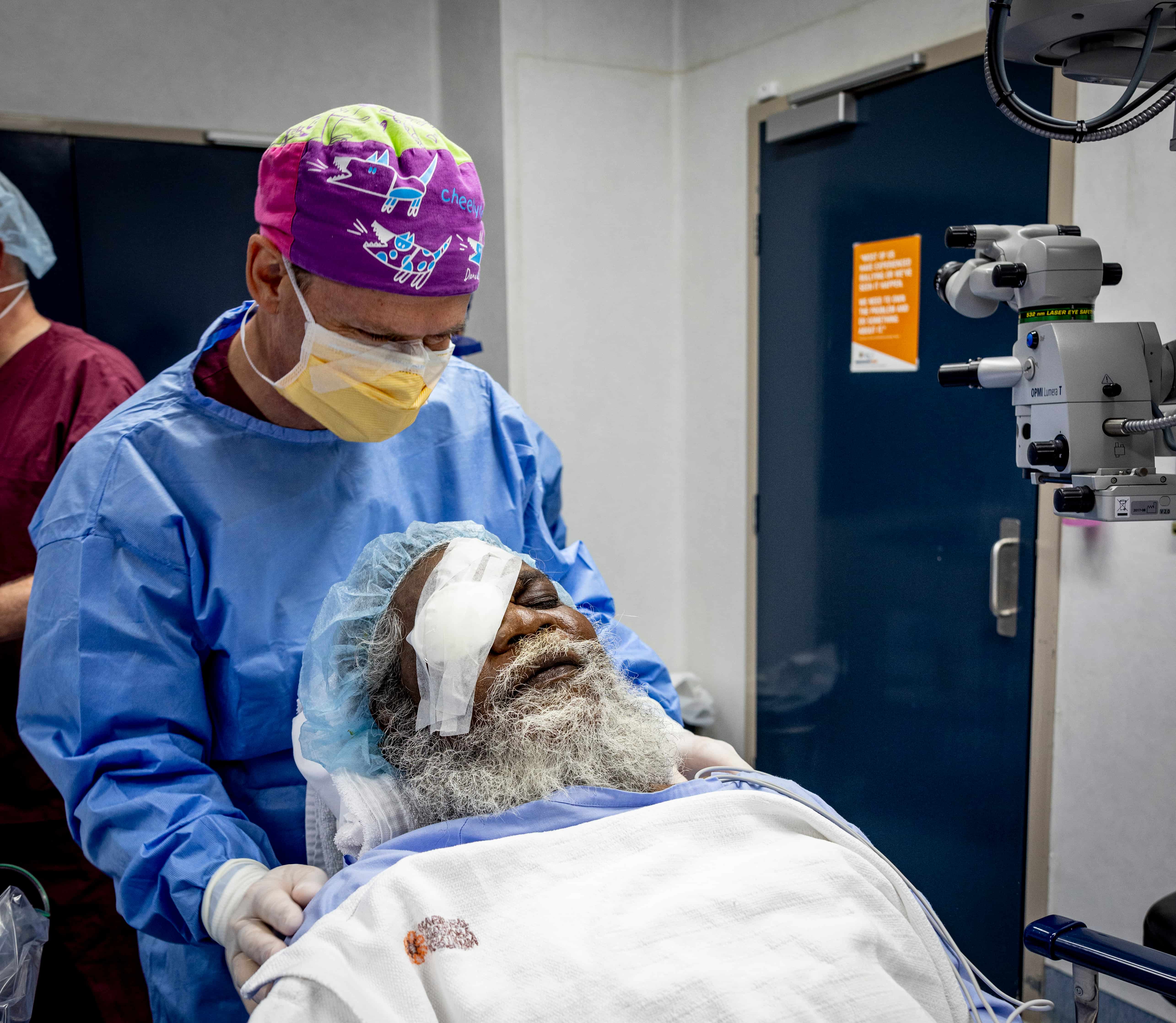
Jeffrey Foster leaves surgery with Dr Tim Henderson after his cataract operation, one step closer to regaining his independence and returning to Country.
Photo credit: Michael Amendolia
For Dr Tim, restoring sight also means restoring trust. “Eye health is about connection,” he says. “You’ve got to sit down, yarn, and build trust.”
A moment that changed everything
The morning after surgery, Jeffrey returned to hospital to have his eye patch removed. The change was immediate.
“I want to drive again,” Jeffrey said. “I want to take my grandchildren swimming. I want to go hunting again.”
With his sight restored, Jeffrey regained his independence.
“Life is so much better now,” he says. “I can get back to a normal life. I can look after myself again.”
Where this work began
The work that helped Jeffrey has deep roots. In 1968, Fred Hollows was working in his Sydney eye clinic when two Gurindji Elders arrived with eye problems he had never seen before. After treating them, Fred was invited to visit Wattie Creek in the Northern Territory.
What he saw shocked him. Blinding trachoma was widespread in remote Aboriginal communities, a disease Fred believed should not exist in modern Australia.
His outrage led to the National Trachoma and Eye Health Program. Between 1976 and 1978, Fred, Gabi and his team visited more than 465 communities, treated over 100,000 people, and halved the rate of blindness among Aboriginal Peoples.
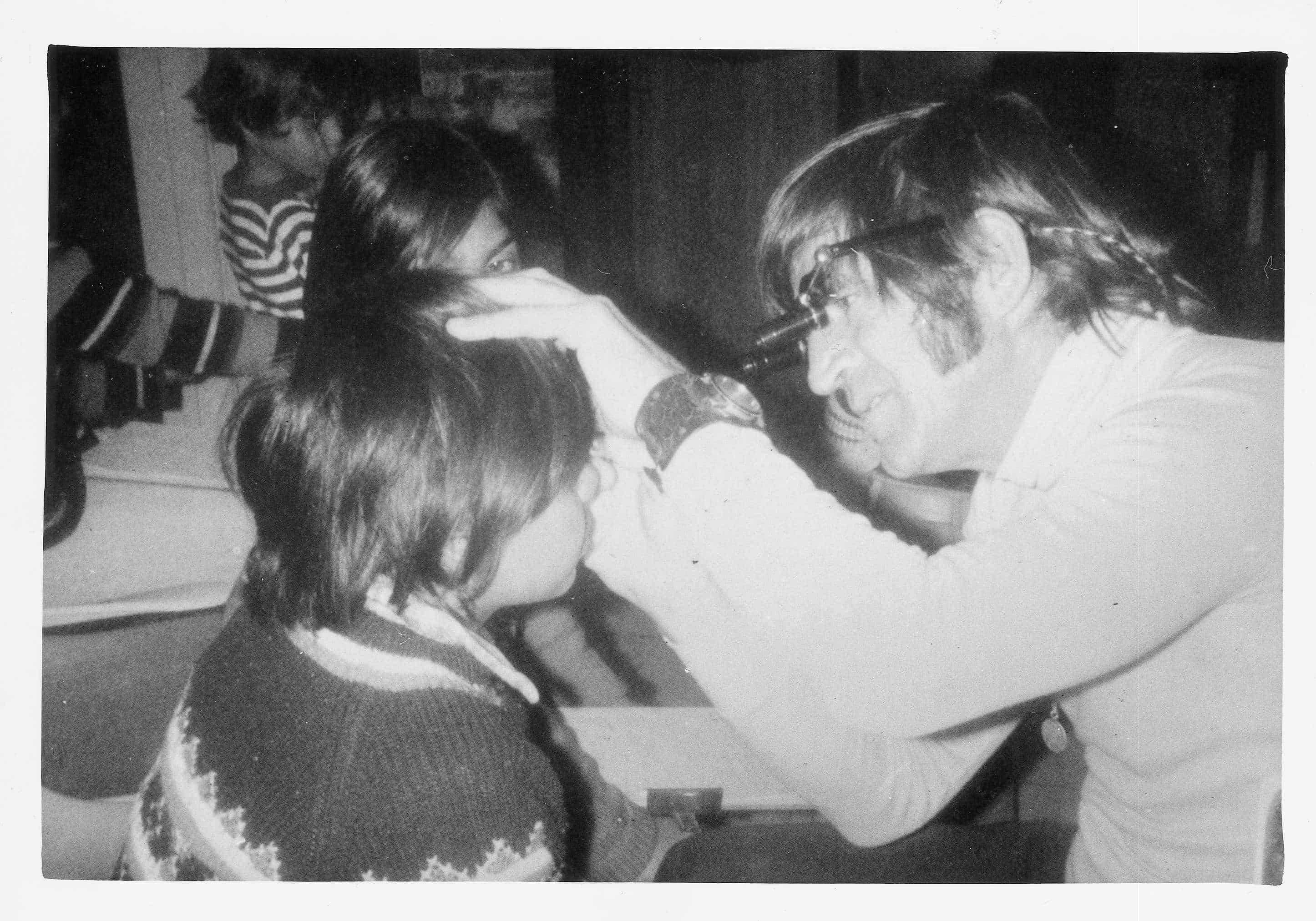 Photo credit: The Fred Hollows Foundation
What made the program groundbreaking was its approach. First Nations people were involved in the design and delivery of services, shaping care that was respectful, effective, and community led.
As Fred said himself:
“Aboriginal groups should be calling the shots, hiring and firing resource personnel, and deciding policy.”
Continuing Fred’s legacy today
Today, The Fred Hollows Foundation continues this work through the Indigenous Australia Program. Working in partnership with Aboriginal community controlled health organisations, the focus remains on patient centred, culturally safe eye care.
In 2024 alone, the program screened thousands of people, delivered thousands of eye operations and treatments, provided glasses to those who needed them, and supported the training of Aboriginal health workers and clinic staff.
For people like Jeffrey, this care means more than restored sight. It means safety, independence, and the ability to stay connected to family, community, and Country.
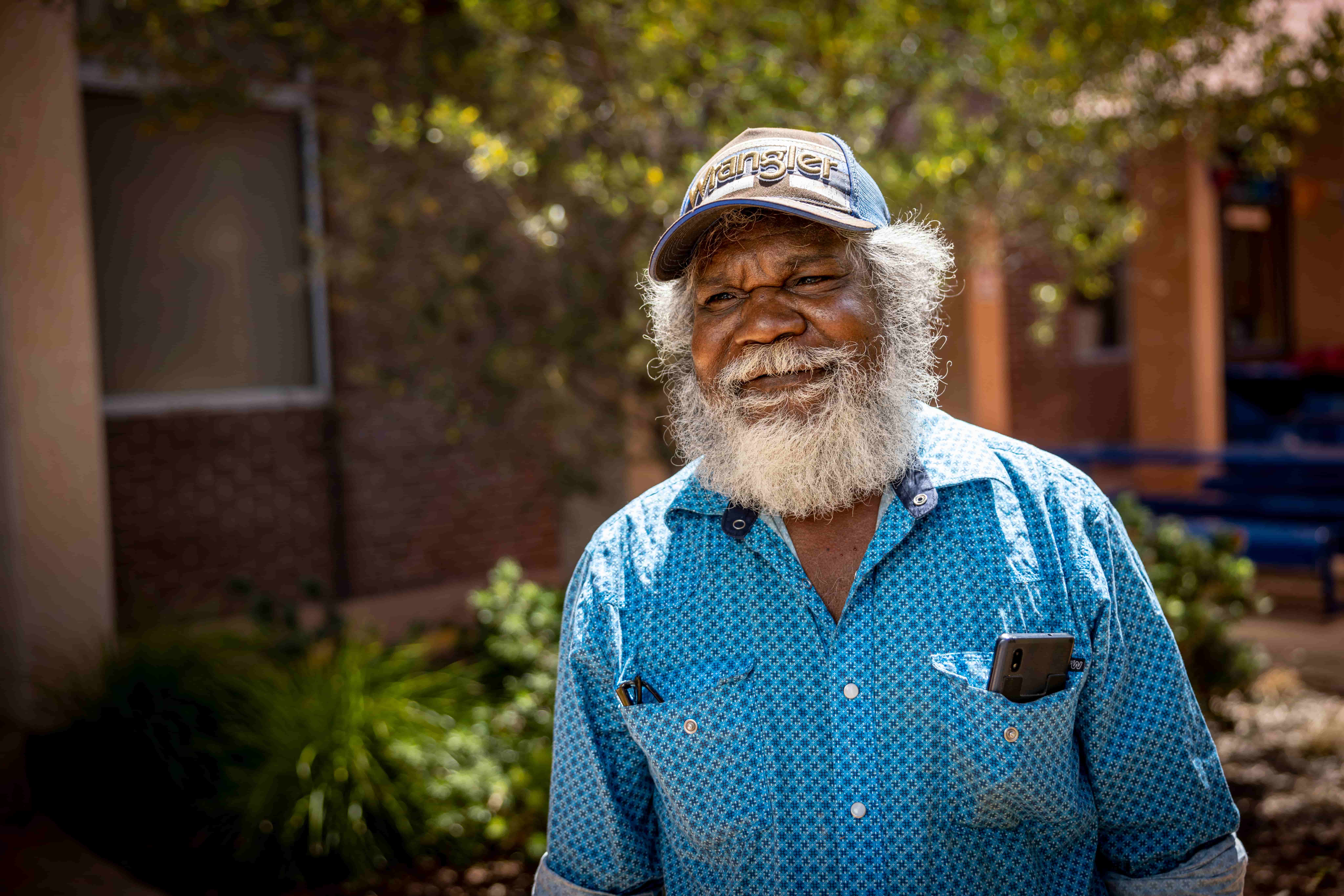 Photo credit: Michael Amendolia