
No woman should be left behind when it comes to eye health

As a young ophthalmologist in Kenya, I noticed that every one of my surgical lists started with male patients and ended with women.
When I asked why, I was told that is how it has always been.
One day a man and his wife arrived for cataract surgery. Both were blind. The man was first on the list and his wife so far down the list she didn’t receive surgery that day.
Instead, she continued to look after her husband, cleaning and feeding him until it was her turn.
When we discharged the man from hospital, he said he could not leave his wife at the hospital because no-one would be at home to look after him.
This triggered me – I realised the tables were not equal and women would always have more to do, even if they were blind.
From that moment, women appeared on the top of my surgical list, we made the environment more supportive for female patients – and before any male patient was booked in for surgery, they were asked to bring their wives with them so they could be tested.
Globally, women account for 55 percent of people who are blind or living with a vision impairment – 609 million women and girls.
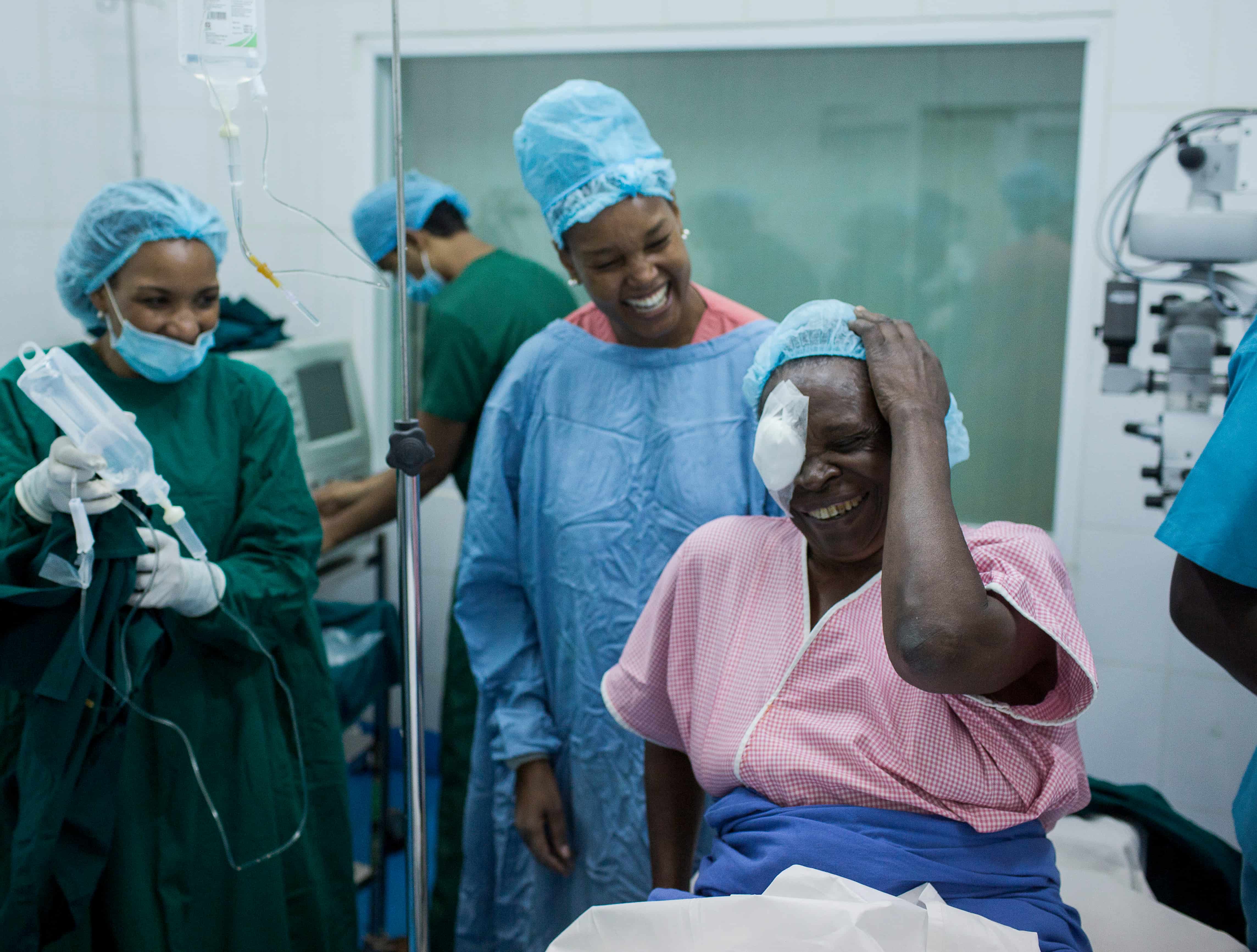 Dr Ciku Mathenge with Francine, whose sight was restored through cataract surgery after more than three years of blindness.
Photo credit: Michael Amendolia
The barriers that prevent women and girls from accessing the eye health they need must be broken down – and this is why we need more senior female leaders in health.
And again there are barriers that prevent women leaders from having a greater say in how programs and services are delivered.
Eye health organisation The Fred Hollows Foundation has joined with UN Women to launch a policy brief to drive progress towards gender equity in health.
World Health Organization data shows that while women make up almost 70 percent of the global healthcare workforce, they account for less than 25 percent of the most influential leadership positions.
As a female ophthalmologist, I have lived experience of gender discrimination.
I was six months pregnant with my first child when I joined my ophthalmology residency, a situation that did not please my lecturers.
One day in class, I was asked our class a difficult question. Often, the teachers did not bother asking me but because no one knew the answer, I spoke up.
The teacher looked at the others and said: “You are not serious. You don’t know the answer yet the pregnant woman knows!”
At the time, I giggled and thought it was funny and only afterwards did I realise it was an insult.
When I requested maternity leave, I was told I would have to do another year of training to make up for the time away.
I had no desire to stay in training longer than necessary. So instead of a three-month maternity leave, I opted to take three weeks of sick leave during which I had my caesarean section.
I vividly remember sitting on the floor four weeks after my delivery, with my back against the foot of the bed, breastfeeding my baby in one arm and making study notes with my other arm with a determination to top the class.
I succeeded but that first year of residency was tough. When I graduated, I was seven months’ pregnant with my second child and this time my situation was more acceptable.
A few months after I graduated, I learnt that my experiences and fight saw the rules change for women who had babies during training – no extra year.
These experiences stay with me and motivate me to look out for other young women and to push for the leaders we need to ensure no woman is left behind when it comes to eye health.
The Fred Hollows Foundation and UN Women’s policy brief calls on governments, donors and health organisations to address the gender barriers that leave millions of women without access to eye care while increasing women’s representation in health leadership. Access the report here.
Meet the author

Dr Ciku Mathenge
Dr Ciku Mathenge is President of the Africa Ophthalmology Council and a founder of the Rwanda International Institute of Ophthalmology.
Read more about our gender equity work

The power of sight for mothers and their families

Shifting the dial on women in health leadership

Papua New Guinean eye health leader wins inaugural Gabi Hollows Award