
Dr Tuyisabe Theophile: Restoring sight, changing lives in Rwanda

For Dr Tuyisabe Theophile, a paediatric ophthalmologist in Rwanda, restoring sight is about more than medicine. It starts with understanding children and their families. Every child’s needs are different and every parent faces unique challenges.
Seeing the whole picture
Before surgery, Dr Theophile meets separately with children and their parents. This allows him to observe how a child plays and communicates while listening closely to the parent’s concerns.
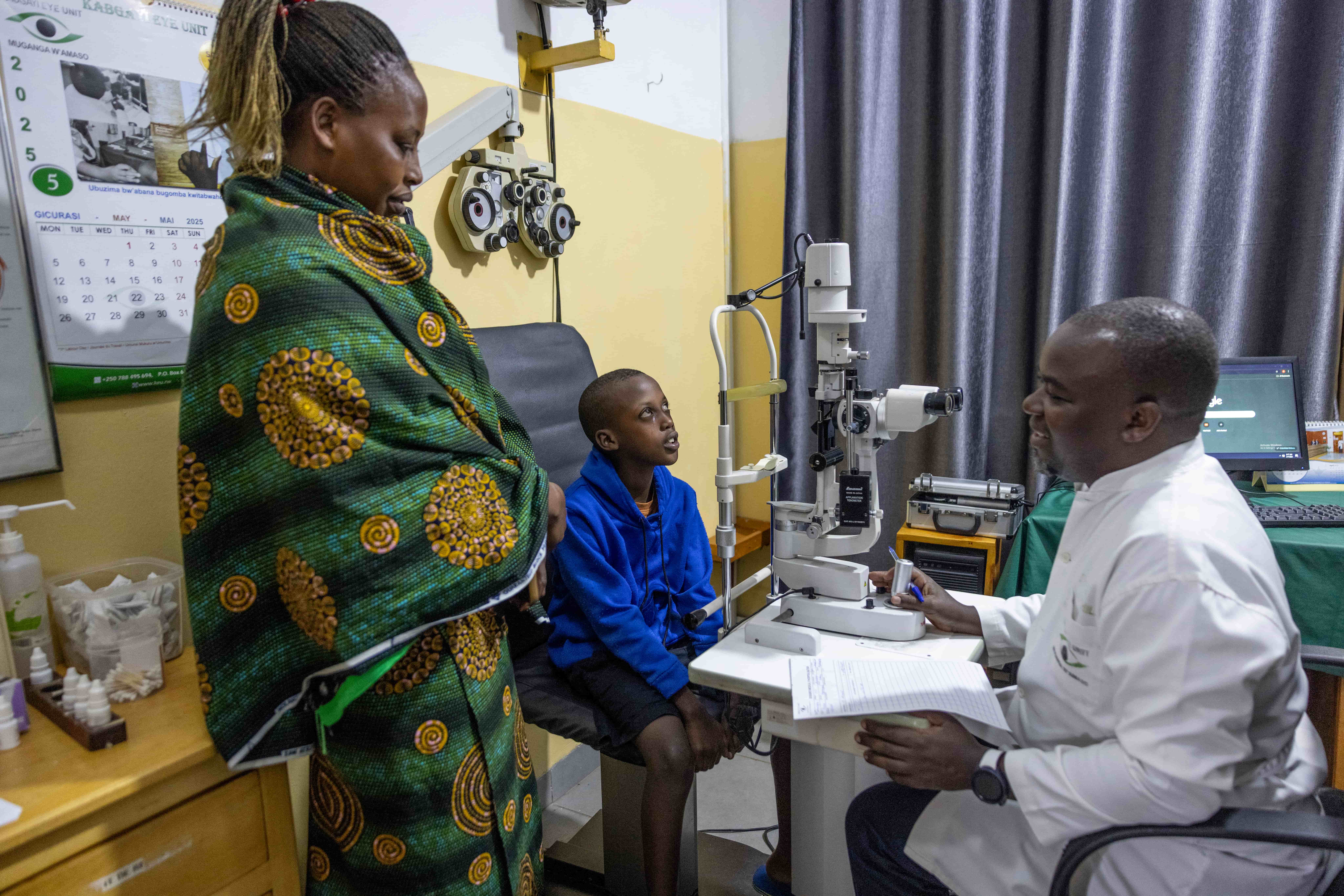 Dr Tuyisabe Theophile assesses Bright before surgery, ensuring the 12-year-old receives personalised care to restore his sight and support his dreams for the future.
Photo credit: Michael Amendolia
"If you are not careful, you may just listen to the parents and you do not observe the children," he explains. "So you give them attention, you give them time, you listen to what they are saying, observe how they are playing and talking. All this helps you make a proper diagnosis."
It is this combination of medical skill and attentive care that helps Dr Theophile deliver life-changing outcomes for children who otherwise might lose their sight.
What are the barriers to eye care in Rwanda?
Despite Rwanda’s progress in healthcare, access to eye treatment remains a challenge, especially for families living in rural areas. For many, getting to an eye hospital can mean travelling hundreds of kilometres and spending several days away from home.
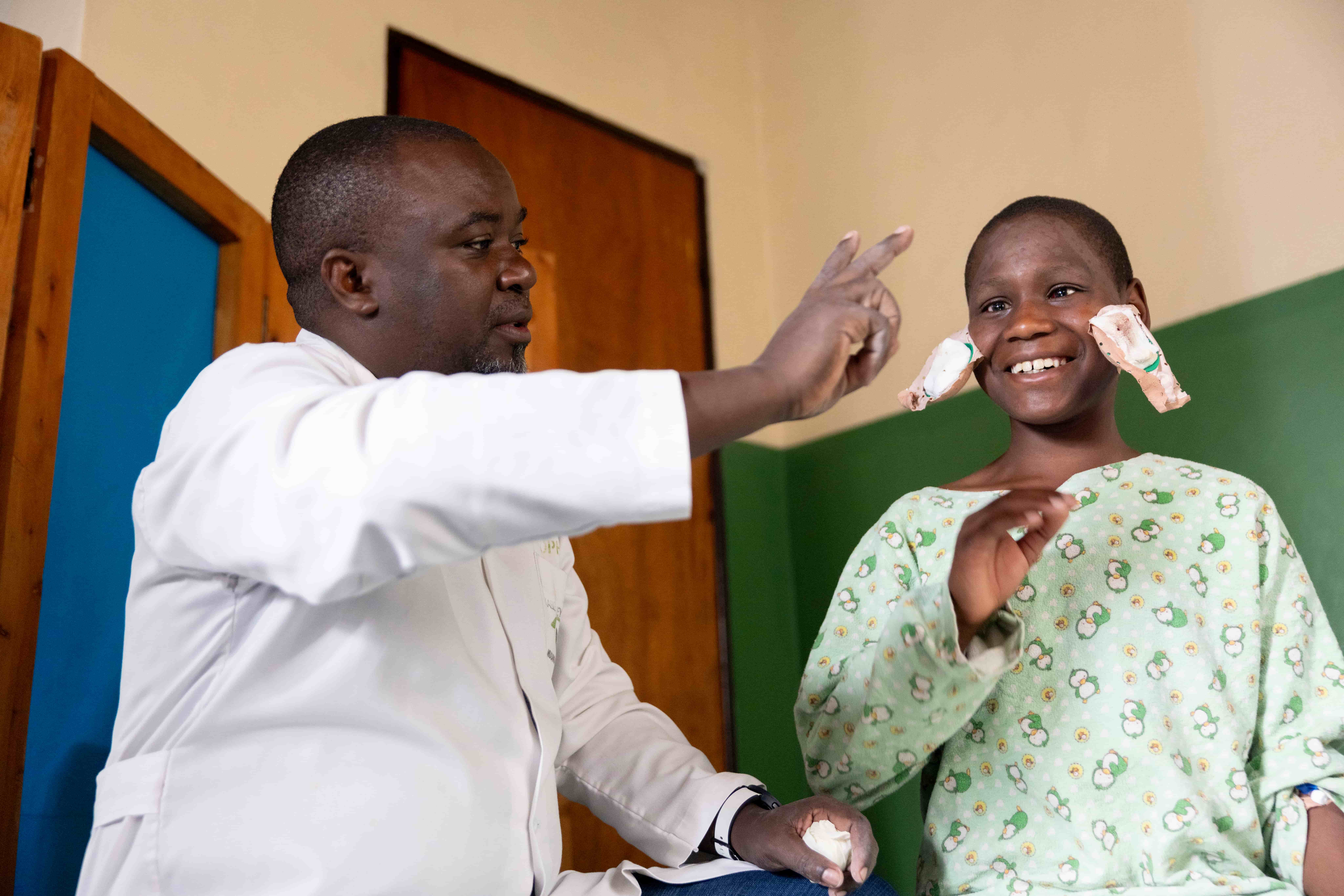 Fidel, a 12-year-old from Nyarugugu district, was identified through an outreach program supported by The Fred Hollows Foundation. Despite significant barriers to eye care in rural Rwanda, he and his family accessed specialist support at Kabgayi Eye Unit, where ophthalmologist Dr Tuyisabe Theophile provided treatment and guidance.
Photo credit: Michael Amendolia
"If you ask parents why they did not go to hospital, the common denominator is financial issues. They need to feed those children. They need to bring them to school. They need to buy clothes for them. So to take that single one to a doctor might not be a priority and they delay coming to the hospital," Dr Theophile explains.
Even with community health insurance covering some medical costs, transport, meals, and other expenses can be prohibitive. For a family of five, spending the equivalent of 30 US dollars on transport or spectacles can compete with essentials like food and school uniforms.
"Someone who was working with you now has to take care of you. That is why investment in eye health is so important," he says.
- Long distances to eye hospitals, often requiring travel of hundreds of kilometres
- Need to spend multiple days away from home, disrupting work and family responsibilities
- Financial pressure prioritising essentials like food, schooling and clothing over healthcare
- Cost of transport to reach treatment facilities
- Delayed treatment due to competing household priorities
- Limited accessibility for rural communities despite broader healthcare progress
- Reliance on family members for care when vision is lost, reducing household productivity
- Indirect economic impact where one person’s vision loss affects the income and stability of the whole family
Training the next generation
Rwanda currently has only 22 ophthalmologists, one for every million people.
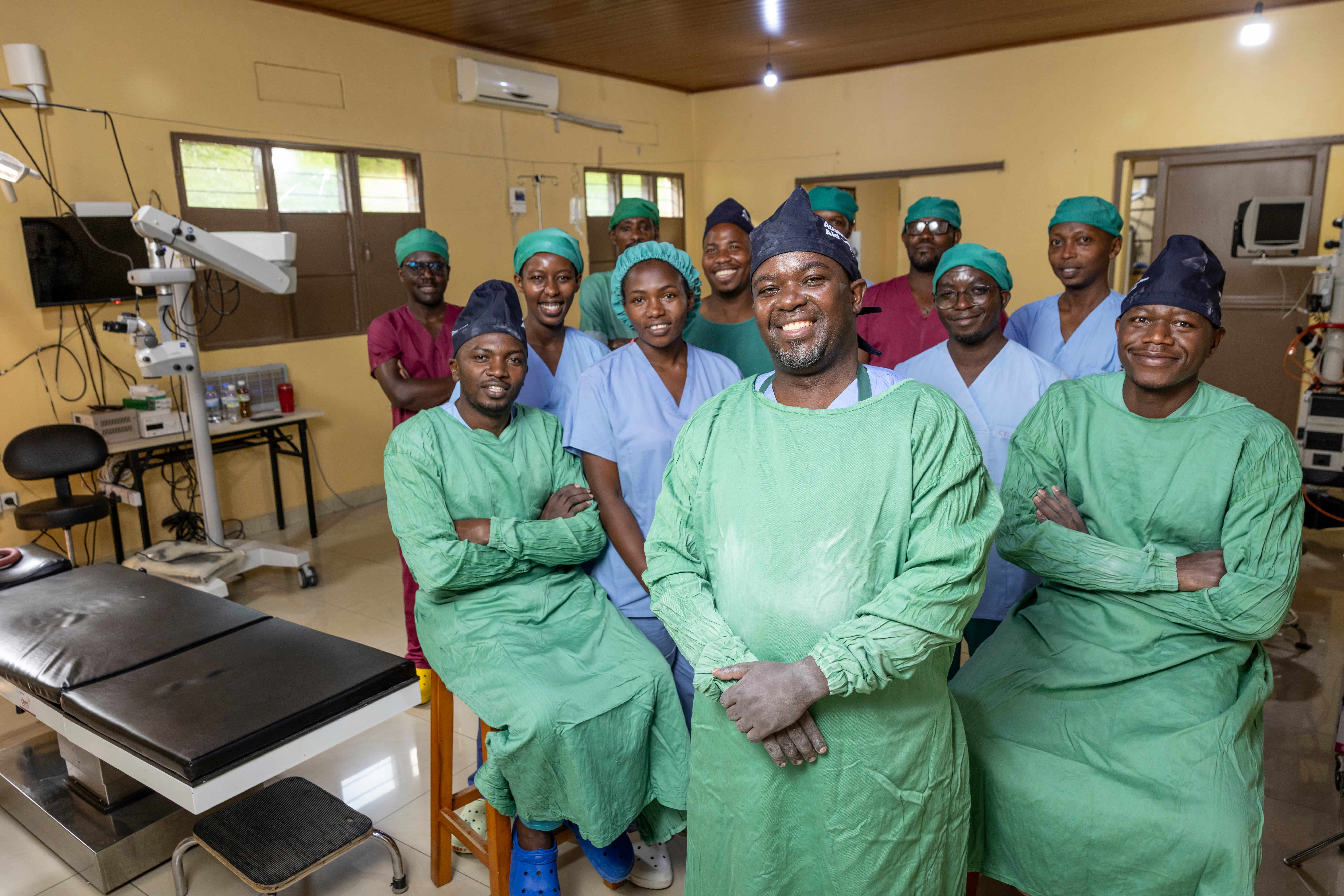 Photo credit: Michael Amendolia
"It is not sustainable because you get tired and you are rushing to finish the patients," Dr Theophile says. "If you have enough ophthalmologists who are well-trained, you do the surgeries, you treat people, and you also have time to develop yourself by improving your knowledge and skills. But if you are overloaded, you cannot."
Through The Fred Hollows Foundation’s support, the number of trained ophthalmologists in Rwanda is increasing. This allows doctors like Dr Theophile to provide high-quality care while continuing their professional development.
Investing in a brighter future
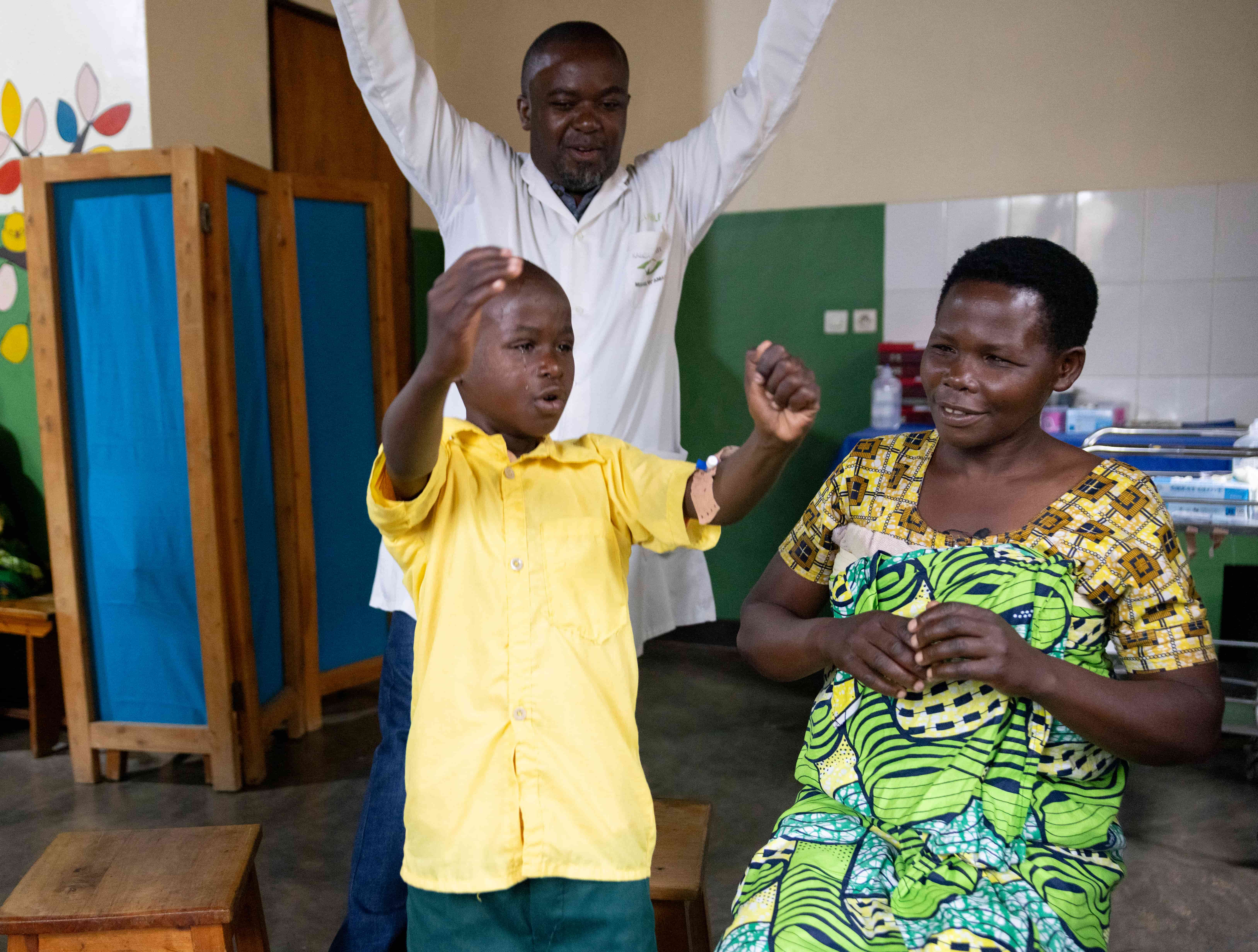 Photo credit: Michael Amendolia
Dr Theophile is clear about where investment is most needed: awareness, education, and the eye health workforce.
"People with low incomes have a high risk of getting severe blindness. And once they have severe blindness, it is like salt in the wound. You have to work to get a small coin, and then you become blind and you become a dependent," he says.
By strengthening Rwanda’s eye health system and training skilled professionals, The Fred Hollows Foundation is helping children like Blaise and families across the country access timely, life-changing care. Dr Theophile’s work shows that with support, knowledge, and compassion, the future of Rwanda’s children can be seen clearly, just as Fred Hollows always envisioned.
Help change a life
You can help children in Rwanda see again. Your support helps train surgeons, expand services, and ensure families in rural areas can access the care they need.
Make a tax-deductible gift today and be part of transforming lives.
Read more about our work in Rwanda

Ending cataract blindness in Rwanda: Building a national eye health system by 2040

Blaise's Story

Eric's Story