
About Rwanda
Rwanda is one of Africa’s fastest growing and most forward looking nations. Home to 13 million people, it is known for its political stability, strong community health system, and ambitious national development agenda. The country has made significant progress in expanding health insurance coverage, improving service delivery, and investing in digital innovation.
Despite this progress, eye health has not kept pace with Rwanda’s broader development gains. Many people, especially in rural areas, still struggle to access timely and high quality eye care. Cataract remains the leading cause of blindness, and the shortage of trained specialists and essential equipment limits the quality of services available.
The Fred Hollows Foundation has been working in Rwanda since 2006 to strengthen the eye health system, train local teams, and expand access to affordable, high quality care so that every person has the chance to see clearly.
The eye health challenge in Rwanda
Many people in Rwanda can’t get the eye care they need, putting them at risk of avoidable blindness.

A growing need
Around one in three people with cataract in Rwanda don’t know their condition is treatable.

Limited access
In 2022, five of the seven hospitals offering regular cataract surgery were in or near Kigali, leaving most rural areas underserved.

Children and adults at risk
Delayed treatment can lead to permanent blindness, even when surgery could restore sight.

Workforce limitations
Rwanda has just 1.7 cataract surgeons per million people, well below the WHO recommendation of 4 per million — highlighting the urgent need to train more specialists.
Our work in Rwanda
The Fred Hollows Foundation has worked in Rwanda since 2006, partnering with the Ministry of Health to expand access to eye care, strengthen the workforce, and embed eye health into national systems.
Our work focuses on four key levers for long-term, sustainable change:
Training and equipping Rwanda’s eye health workforce
Building local skills — from ophthalmologists to primary eye care workers — and improving surgical quality and outcomes.
Strengthening infrastructure and health systems
Expanding eye care units, improving referral pathways, and increasing access to services beyond Kigali.
Integration and scale through the Performance-Based Financing (PBF) model
Embedding eye health into Rwanda’s national health financing system to improve quality, accountability, and sustainability.
Supporting long-term independence
Ensuring Rwanda can sustainably manage and fund its own eye health services, with The Foundation stepping back over time.
Our partnership with the Ministry of Health
Since 2019, The Foundation and the Ministry of Health have integrated eye health indicators into Rwanda’s national Performance-Based Financing (PBF) system. This approach ties funding to quality and performance, ensuring sustainable, accountable service delivery.
Through PBF:
- Health facilities receive incentives for meeting eye care targets.
- Results are independently verified.
- Funding is linked to quality, not volume alone.
This partnership is transforming cataract services and strengthening Rwanda’s national eye health system.
The Fred Hollows Foundation has supported six ophthalmologists who are now working in provinces with the highest need. There is a lot of work to do, but this is just one example where supporters have improved access to eye health in Rwanda.

Our achievements
Since 2006, in partnership with the Ministry of Health, we have:
- Expanded access to eye care from 8 to 22 hospitals nationwide.
- Established two high-volume cataract centres at Kabgayi Hospital and Rwanda Charity Eye Hospital.
- Screened 2.6 million people.
- Performed 57,000 cataract surgeries.
- Trained 6 ophthalmologists and strengthened the broader eye health workforce.
- Integrated eye care into the national PBF system, increasing the cataract surgery rate by 80%.
Scaling up: the next phase
We are scaling our investment to ensure every province has at least two fully equipped comprehensive eye care units, supported by skilled staff, strong referral systems, and integrated outreach services.
With increased investment, we will:
- Expand service coverage nationwide
- Strengthen the eye health workforce
- Improve community awareness and early detection
- Build a cohesive, integrated eye care network

Invest in sight. Transform a nation.
Rwanda has made significant progress in strengthening eye health, but many people still face barriers to accessing the care they need. With the right investment, we can help expand access to quality eye care, strengthen health systems and reduce avoidable blindness across the country.
Explore our Rwanda Country Impact Plan.
Discover the opportunity, the impact and how philanthropic investment can help transform eye health across Rwanda.

Helping children like Blaise
Blaise is a 7-year-old from Kayonza who was going blind from cataract. He was already blind in one eye and rapidly losing vision in the other. His mum, Redempta, could not afford treatment, but when a community health team supported by The Fred Hollows Foundation visited their village, everything changed.
He was referred for surgery at Kabgayi Eye Unit. The next morning, when his bandage came off, Blaise could see again. Colours, shapes, and most importantly, his mum’s face.
Redempta says, “I left with a child who was blind and came back with a child who can see.”
With restored sight, Blaise is back at school and ready to climb from fifth in his class to the very top.
In 2025, The Foundation and its partners made great progress in key strategic areas in Africa:
3,002,237
People screened.
12,762,789
People treated with antibiotics for trachoma.
20,345
Pairs of glasses distributed.
171
Facilities built, equipped or renovated.
26,295
People trained including community health workers, surgeons and teachers.
225,203
Eye operations and treatments performed including cataract operations, surgeries to treat trachoma, diabetic retinopathy treatments and other sight saving or improving interventions.
1,802,177
School children and community members educated in eye health and sanitation.
The countries in Africa that The Foundation works in are Ethiopia, Kenya, Eritrea, Rwanda, Burundi, Uganda, Tanzania and Cameroon.
Read more about our work in Rwanda

How many eye doctors are there in Rwanda and why it matters
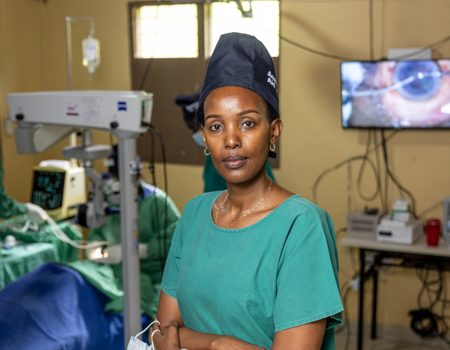

Ending cataract blindness in Rwanda: Building a national eye health system by 2040
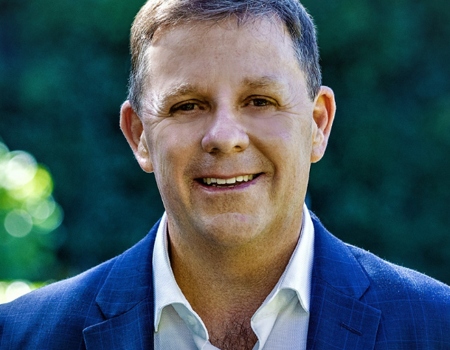

Dr Tuyisabe Theophile: Restoring sight, changing lives in Rwanda