
Eye care and life in Cox's Bazar

When Obaidul lost his sight, he lost more than his vision.
The 32-year-old father of three from Cox's Bazar had been struggling with blurry vision for two years. He could not afford to see a doctor. He kept working, processing betel leaves for 200 to 300 taka a day, (about $AU4), to feed his family.
Then, six months ago, he lost his sight.
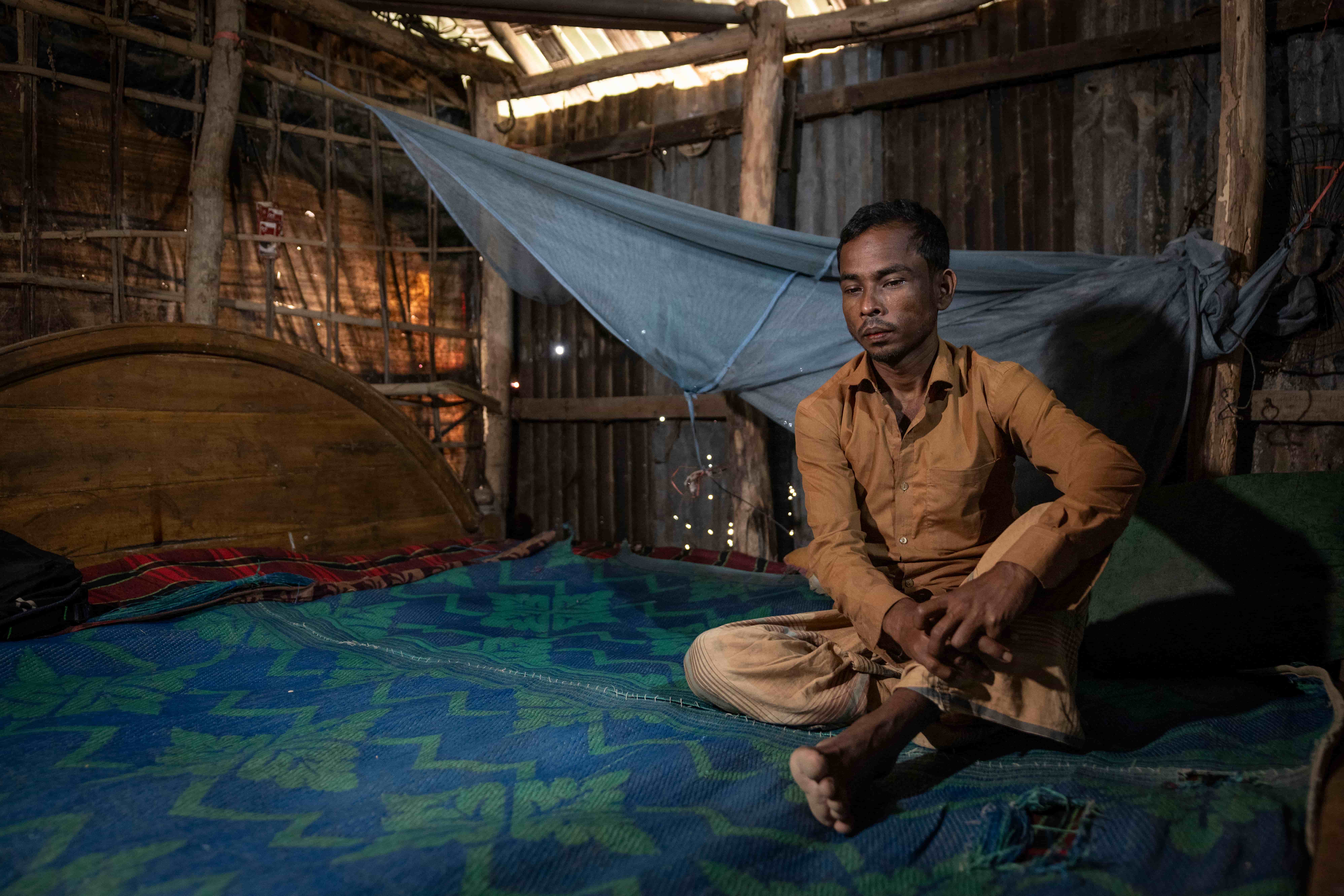
Cataract stole Obaidul’s sight and his income. A simple surgery in Cox’s Bazar restored both.
Photo credit: Michael Amendolia
“I was totally upset,” he said. “I have three kids and a wife. My only thought was how can I manage my family?”
With no income, Obaidul had no choice but to pull his eldest son, Ridowan, out of school and send him to work.
“It’s so pathetic for me,” he said. “My son is earning and I am taking food with his income.”
In Cox’s Bazar, sight often means survival.
Life and work on the coast
Cox’s Bazar sits on the Bay of Bengal in southern Bangladesh. It is home to hosts the world’s largest refugee camp and more than one million Rohingya refugees who fled persecution in Myanmar.
The region is also known for its fishing and dried fish industry. Workers at the Nazirartek Dry Fish Hub labour from 7am to 7pm, seven days a week.
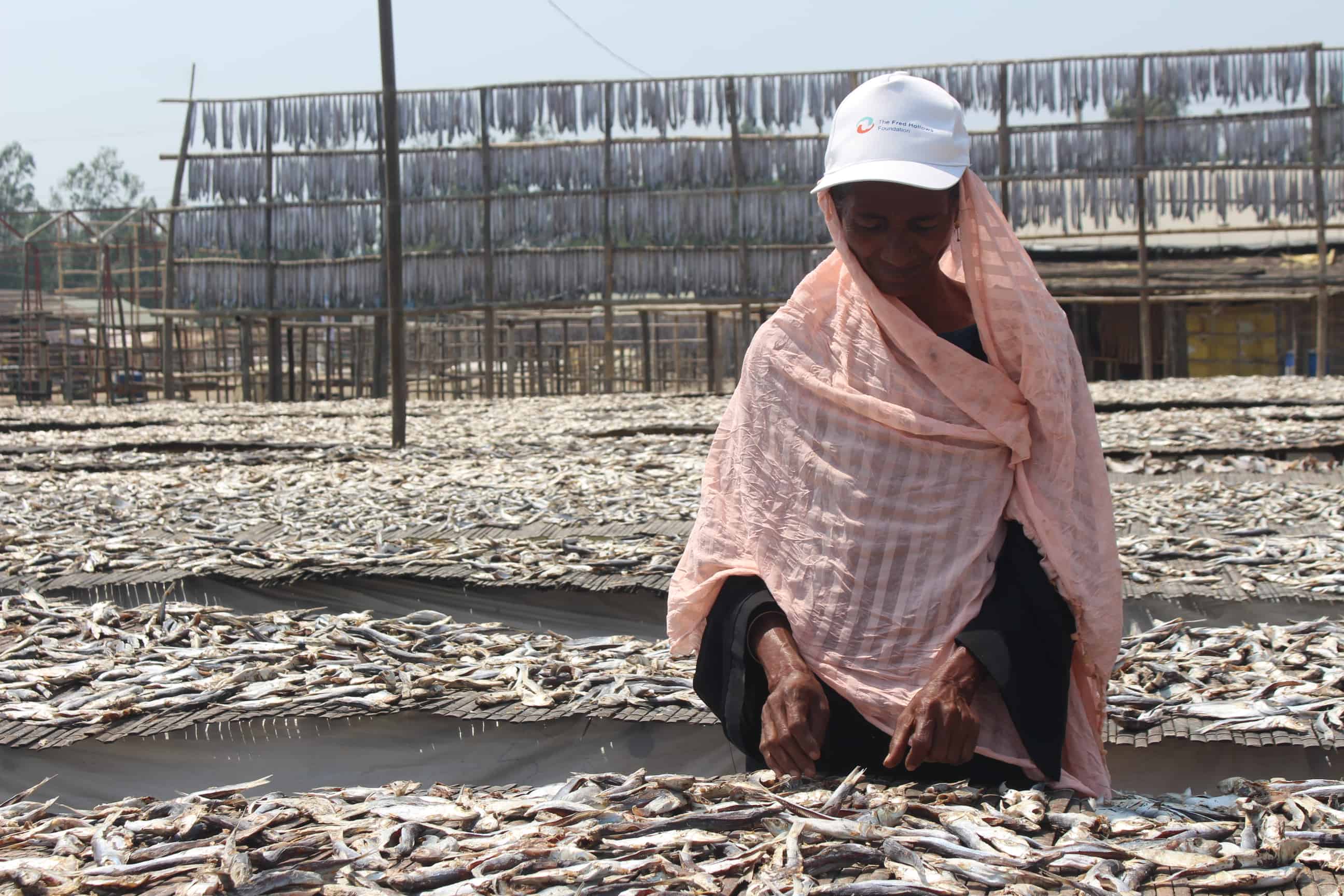
From dawn to dusk, 55 year-old Bulu Ara processes dried fish in the harsh coastal heat of Cox’s Bazar. There is no shelter from the sun or salt-laden air, and the work requires sharp vision and steady hands.
Photo credit: Roksana Kamal
There is no shade from the sun. The work is repetitive and precise. Sardines must be cleaned and tied with small knots at the tail before drying. It demands sharp eyesight.
“Your vision should be 100 percent,” said community leader Helal Uddin. “If your vision is no good you won’t be able to do the job.”
Many of the workers are women. When their vision starts to fade, they often stay silent. They fear losing their income and their jobs. For some families, there is no backup plan.
“If they have this vision problem, at a certain point they will not be able to work and will have to go to the streets to beg because there is no other way to survive,” Helal said.
Eye care that reaches people early can prevent these outcomes.
Bringing eye care closer
The Fred Hollows Foundation works with local partners and receives support from the Australian Government through the Australian NGO Cooperation Program to deliver community eye care in Cox’s Bazar.
Through eye camps operated by Cox’s Bazar Baitush Sharaf Hospital, screening and referrals happen locally. Loudspeaker announcements spread awareness. Temporary clinics are set up in union parishad buildings so people can access services close to home.
At one recent camp in Zilongja Union Parishad, about 250 people were screened in a single day.
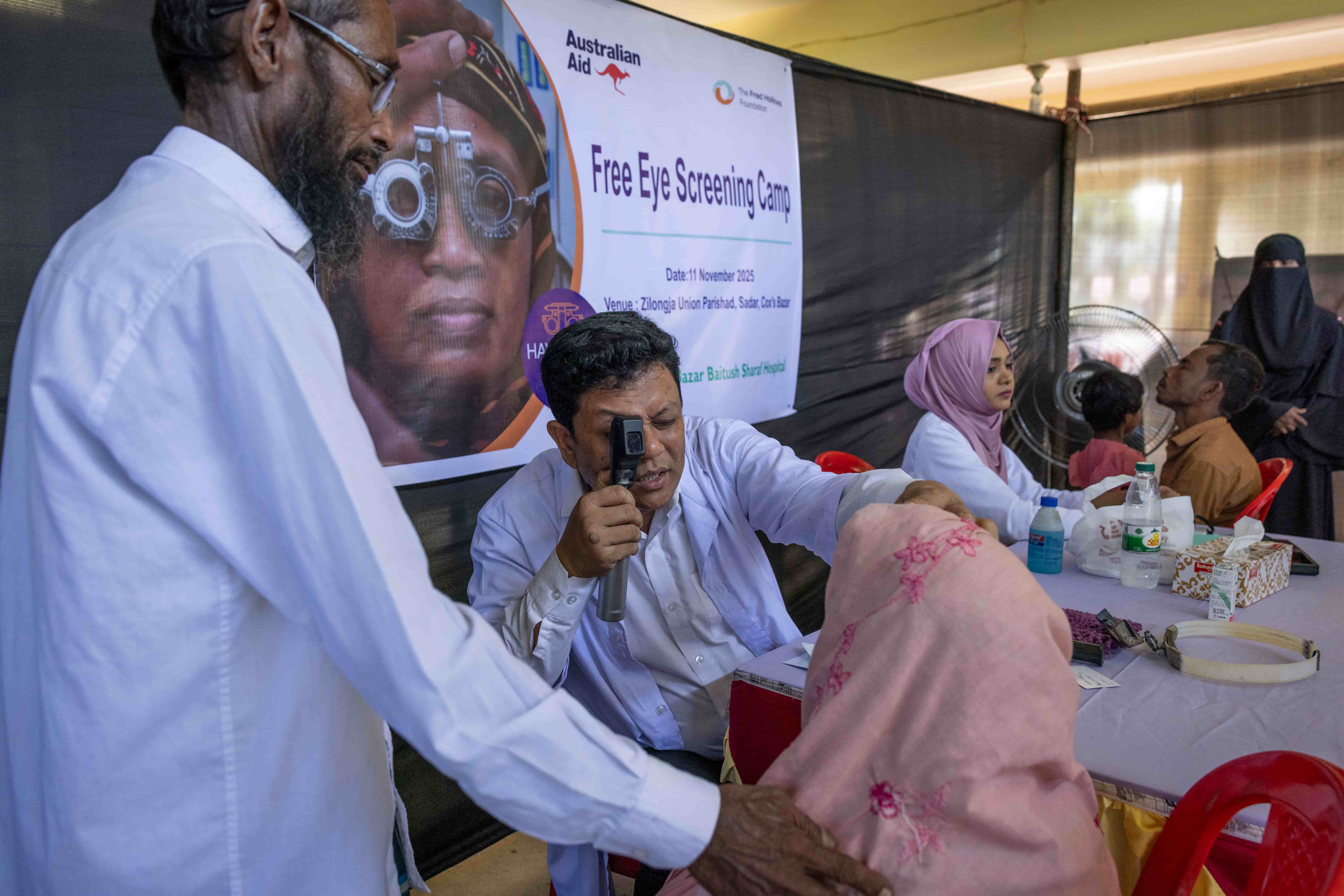
At an eye camp in Zilongja Union Parishad in Cox's Bazar, community members received screening and referrals close to home through services delivered by Coxs Bazar Baitush Sharaf Hospital with support from The Fred Hollows Foundation and the Australian NGO Cooperation Program.
Photo credit: Michael Amendolia
Since awareness activities began at the dry fish hub six months ago, 150 workers have received glasses. For many, that means being able to continue working and supporting their families.
“I can see your face now”
Obaidul heard about a free eye health service through a loudspeaker announcement and attended an eye camp. Doctors diagnosed cataract and referred him for surgery at Cox’s Bazar Baitush Sharaf Hospital.
Cataract surgery is relatively routine, but for Obaidul it changed everything.
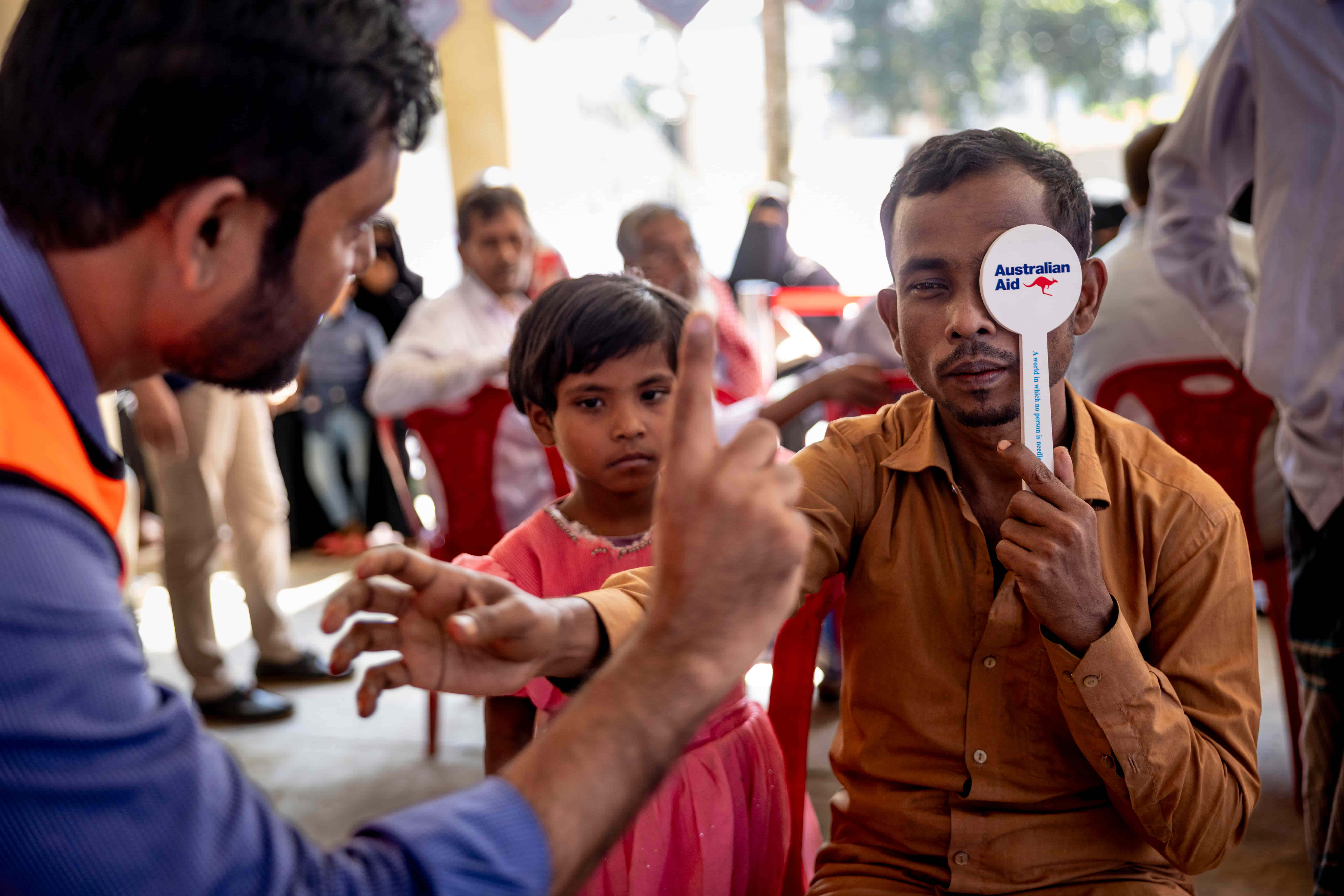
Obaidul reaches for the clinician’s arm during screening in Cox's Bazar showing how cataract blurred his vision and made simple movements difficult even as help was close.
Photo credit: Michael Amendolia
After the operation, the eye patch was removed.
“I can see everything,” he said, turning to his son. “I can see your face now.”
Ridowan smiled. Soon, he would return to school.
Back home the next morning, Obaidul stood in the sunlight.
“For the last two years I couldn’t see anything, but suddenly I am seeing everything,” he said. “Now I am thinking I will start and work, earn money. With this money I hope to open a grocery shop.”
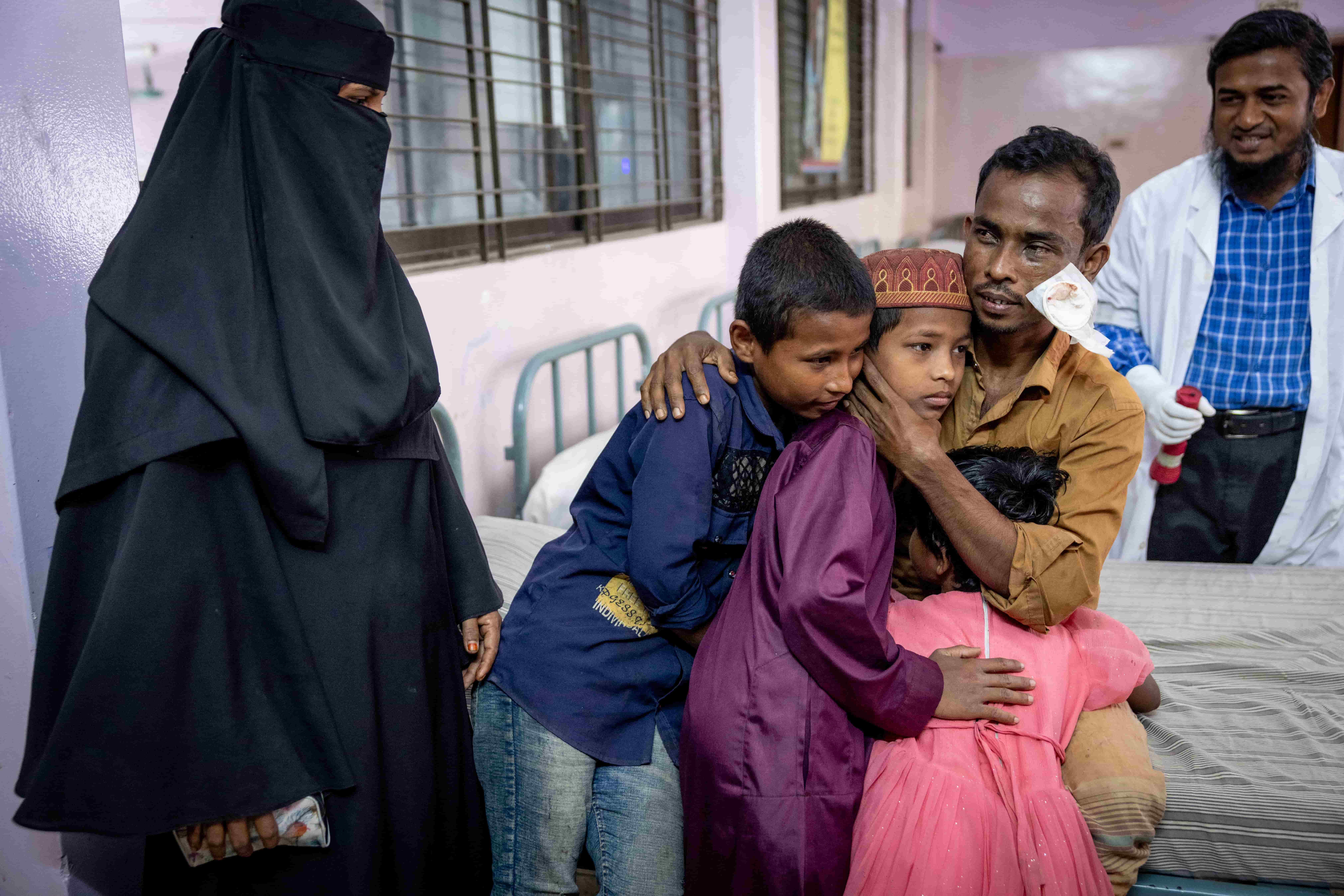
Sight restored more than his vision. It restored his role as a father.
Photo credit: Michael Amendolia
Restoring sight at any age
Seventy-five-year-old Hajera Khatun also attended an outreach camp after losing her sight to cataract.
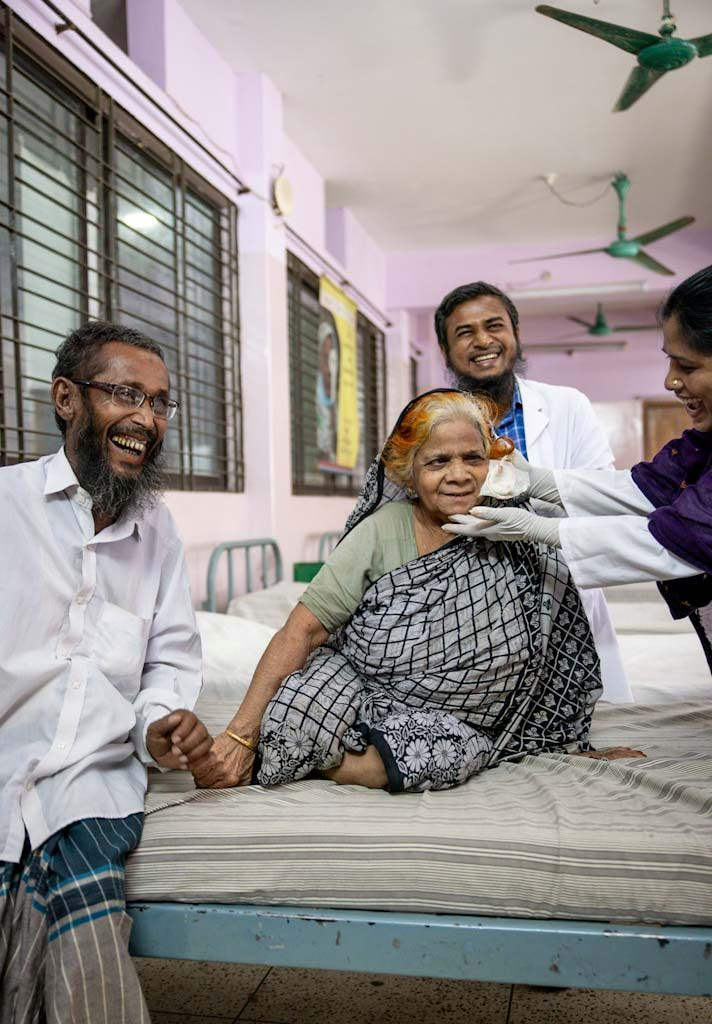 Photo credit: Michael Amendolia
She travelled 85 kilometres from her village in Lohagara to reach services. Abandoned by her sons, she depended on her grandson’s family for basic care.
Doctors diagnosed cataracts in both eyes and arranged surgery through The Foundation’s program.
After the operation, she smiled when her eye patch was removed.
“Now I won’t feel like a burden to my family,” she said.
Why this work matters
Across Bangladesh, nearly 750,000 people are blind and more than six million live with vision impairment. Cataract is the leading cause of blindness, responsible for more than 75 per cent of cases. For people aged over 50, 87 per cent of blindness is avoidable. The good news is that 9 out of 10 people who are blind or vision impaired don’t need to be. With access to treatment, sight can often be restored.
Diabetic eye disease is also increasing. More than 10 million people in Bangladesh have diabetes and an estimated 25 per cent are at risk of developing diabetic retinopathy, which can lead to irreversible blindness. Eye care and diabetes care must work together so people receive early screening and treatment.
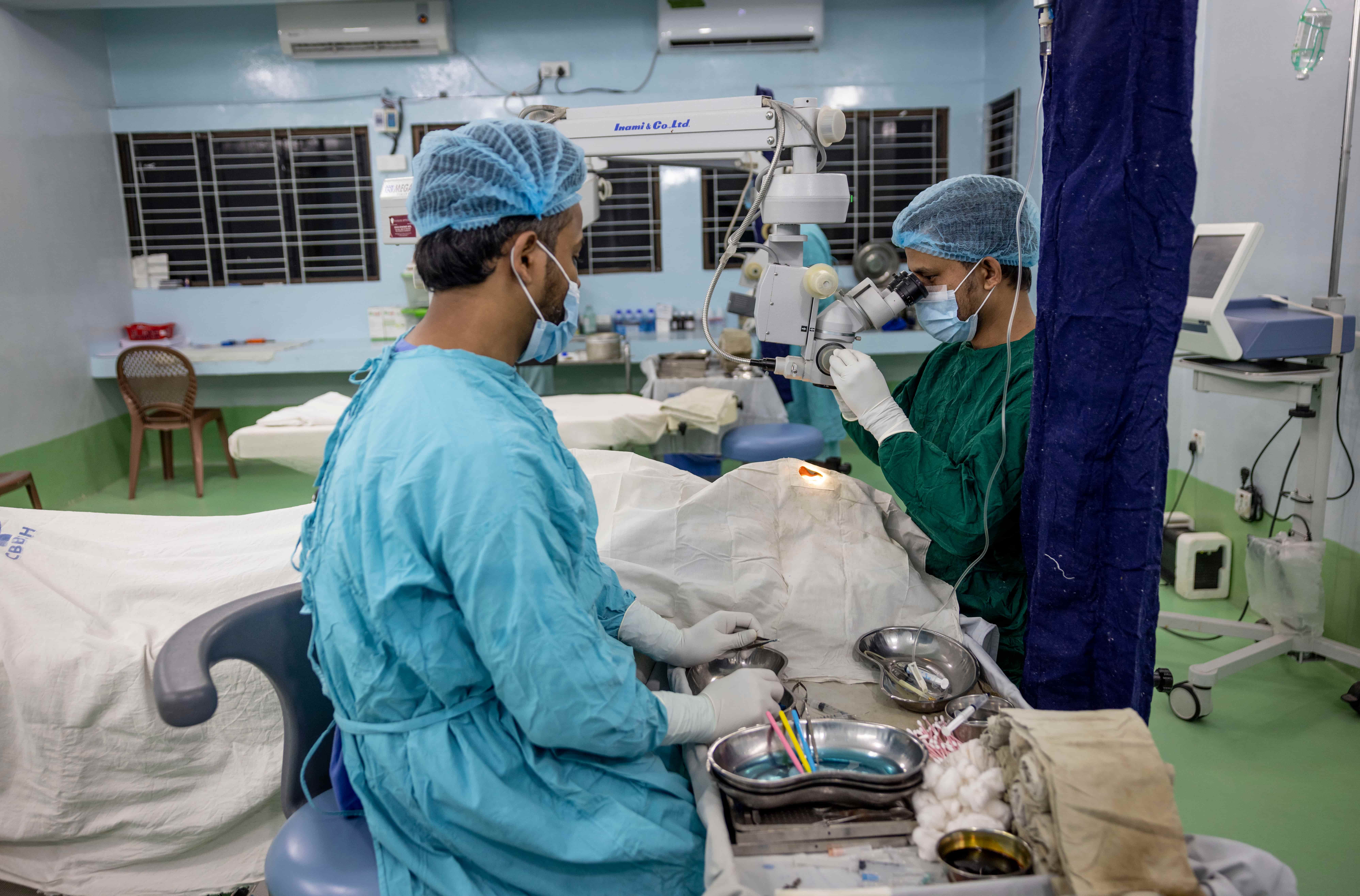 Photo credit: Michael Amendolia
Poverty and limited access to health services make treatment difficult. In rural areas, clinics may be far away and transport costs high. Workers often delay seeking help because they cannot afford time off or fear losing income. These barriers mean families sometimes make impossible choices between health and work.
The consequences are profound. Children may leave school to support their families. Adults may lose employment. Older people may become dependent on others for basic needs. Avoidable blindness has ripple effects that reach every part of family and community life.
The Foundation’s work focuses on eliminating avoidable blindness by addressing these barriers. We train doctors and nurses, strengthen hospitals, deliver community outreach and integrate eye health into broader health systems. You can restore sight for as little as $25 in some countries, changing lives in ways that extend far beyond vision.
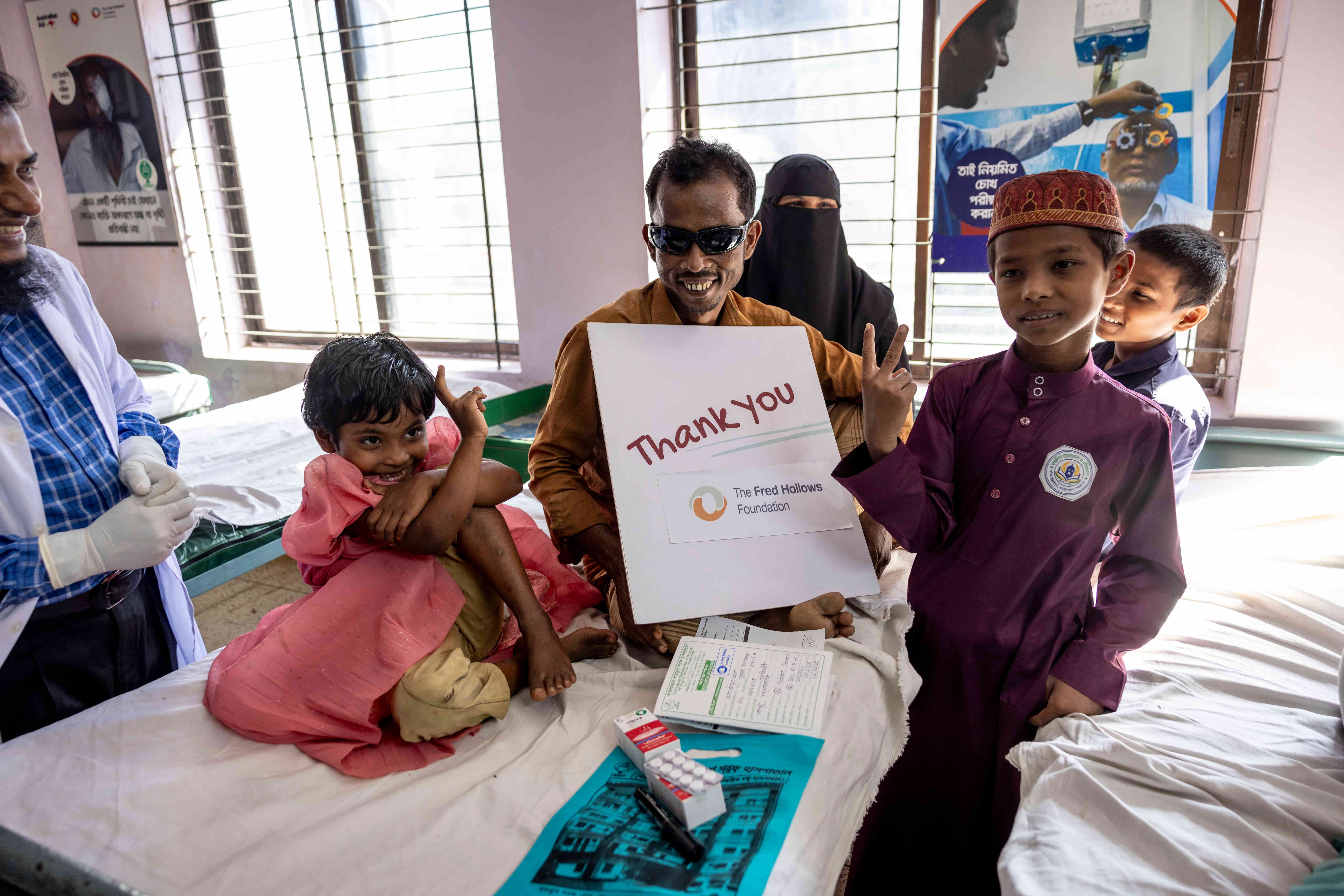
Obaidul holds a handmade thank you sign for supporters of The Fred Hollows Foundation and the Australian NGO Cooperation Program whose generosity helped restore his sight and hope.
Photo credit: Michael Amendolia
Since 2008, The Foundation has worked in Bangladesh to restore sight and improve access to care. Community eye camps bring services closer to people who would otherwise go without. Training programs build local capacity so eye care can be delivered sustainably. We have restored sight to more than 3 million people globally.
When people can see again, the impact extends beyond health. They can work, learn and participate fully in community life. Families remain strong. Communities become more resilient. Sight should not depend on where someone is born or how much they earn. It should be a right. Together we can carry on Fred’s vision and help end avoidable blindness.