
Obaidul's Story

A father’s sight stolen by cataract
Obaidul is a 32-year-old father of three living in coastal Bangladesh. Each day he worked long hours processing betel leaves to support his family, earning just 200 to 300 taka a day, about $4 AUD.
But when his vision began to blur, everything changed.
 Photo credit: Michael Amendolia
For two years Obaidul struggled to see clearly. He couldn’t afford to visit a doctor, so he kept working, hoping the problem would go away.
Instead, six months ago, he lost his sight completely.
Without vision, Obaidul could no longer work.
“I was totally upset,” he says. “I have three kids and a wife. My only thought was how can I manage my family?”
With no income, the family faced an impossible choice. Obaidul had to pull his eldest son, Ridowan, out of school and send him to work.
“It’s so pathetic for me – my son is earning and I’m taking food with his income.”
When care is out of reach
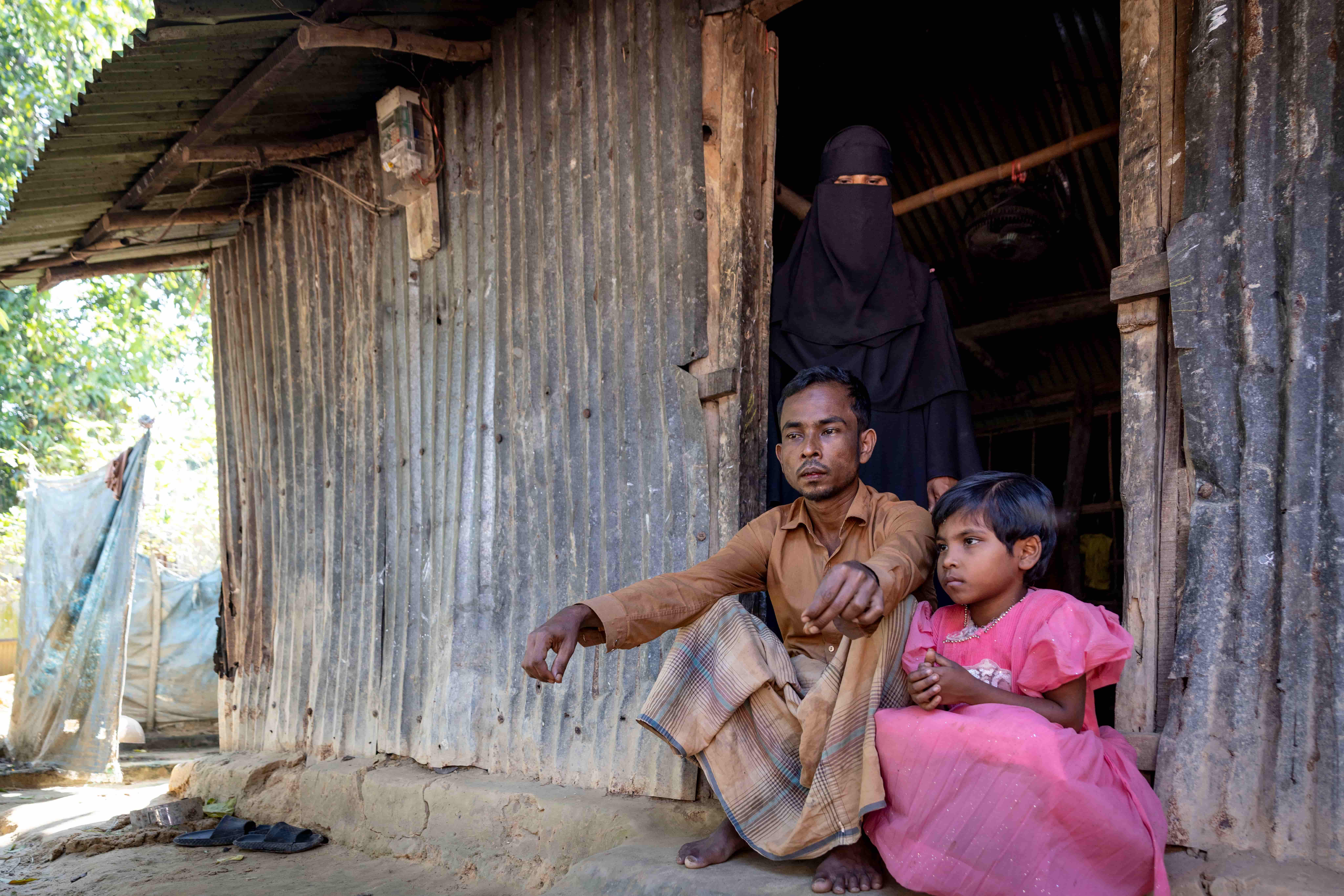 Photo credit: Michael Amendolia
Obaidul lives in Cox's Bazar, a coastal region in southern Bangladesh known for its fishing and dried fish industry.
Many families survive on small daily wages. Missing even a single day of work can mean going without food.
Accessing medical care is often difficult. Hospitals can be far away and travel costs are high for families already struggling to make ends meet. Many people delay seeking treatment because they cannot afford to stop working.
For people like Obaidul, a treatable eye condition can quickly become life-changing.
Cataract, a clouding of the eye’s lens, is the leading cause of blindness in Bangladesh. Yet the surgery to restore sight is simple and can take less than 20 minutes.
Without access to affordable services, thousands of people continue to lose their vision unnecessarily.
The scale of avoidable blindness in Bangladesh
The need for eye care in Bangladesh is significant.
Nearly 750,000 people are blind and more than six million live with vision impairment. Cataract is responsible for more than 75 per cent of blindness.
Among people over 50 years old, an estimated 87 per cent of blindness is avoidable.
The good news is that solutions exist. In fact, 9 out of 10 people who are blind or vision impaired don’t need to be.
With early diagnosis and treatment, sight can often be restored.
But many communities still lack access to nearby services, trained eye health workers and affordable care.
The moment everything changed
Obaidul’s life began to change when his brother heard a loudspeaker announcement about a free eye health service in their area.
An outreach eye camp had been set up close to his home.

Obaidul reaches for the clinician’s arm during screening in Cox's Bazar showing how cataract blurred his vision and made simple movements difficult even as help was close.
Photo credit: Michael Amendolia
There, Obaidul received a vision screening. Doctors quickly diagnosed a dense cataract and referred him for surgery at Cox’s Bazar Baitush Sharaf Hospital.
The operation was routine, but for Obaidul it meant everything.
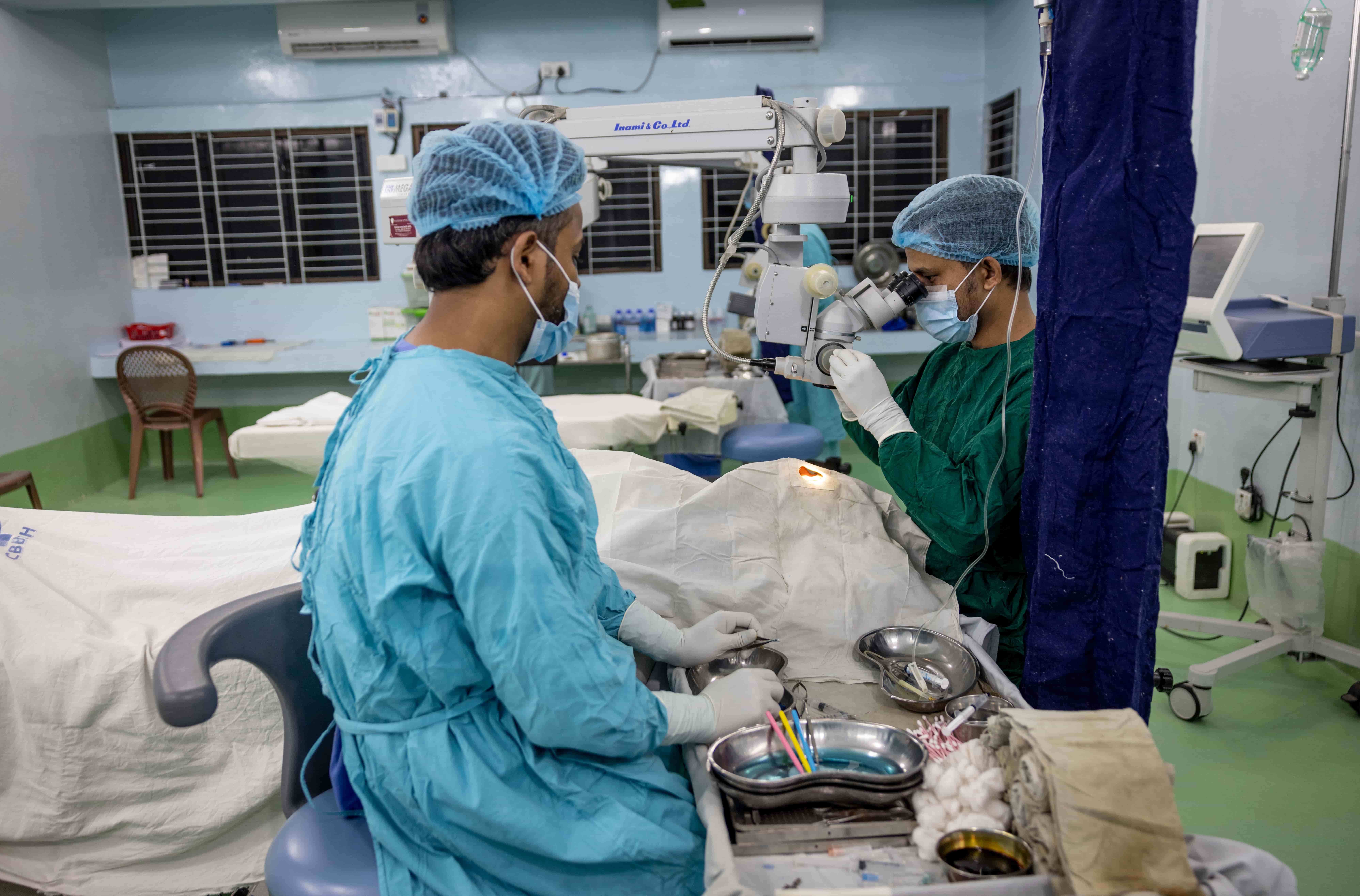
Photo credit: Michael Amendolia
The next day, he waited anxiously as his eye patch was removed.
Then the world came back into focus.
“I can see everything,” Obaidul said, turning to his son. “I can see your face now!”
Ridowan smiled. Soon, he would be able to return to school.
Bringing eye care closer to communities
Obaidul received treatment through services supported by The Fred Hollows Foundation and the Australian NGO Cooperation Program.
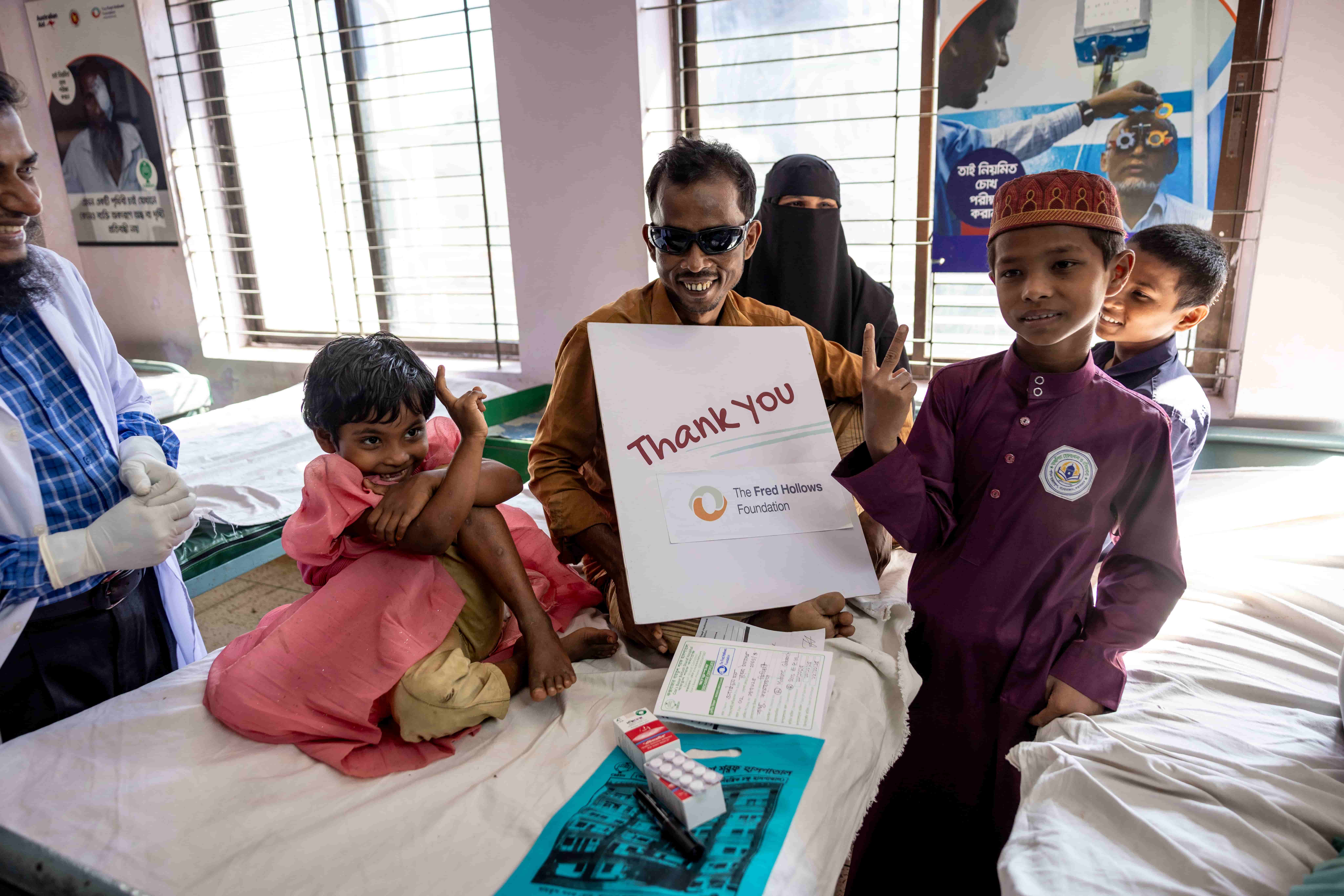
Obaidul holds a handmade thank you sign for supporters of The Fred Hollows Foundation and the Australian NGO Cooperation Program whose generosity helped restore his sight and hope.
Photo credit: Michael Amendolia
In Bangladesh, The Foundation works with local partners to bring eye care closer to communities that would otherwise go without.
This includes supporting hospitals, training doctors and nurses, and delivering outreach programs such as community eye camps.
These camps provide vision screening, referrals and treatment in places where services are not normally available.
By strengthening local health systems, more people can access affordable, quality eye care close to home.
Seeing the future again
The morning after surgery, Obaidul stood outside his home in the sunlight.
For the first time in years, he could see clearly again.
“It’s really unexplainable – the emotion and the feeling,” he says. “For the last two years I couldn’t see anything, but suddenly I’m seeing everything.”
With his sight restored, Obaidul can return to work and support his family once more.
“Now I’m thinking I will start working and earn money,” he says. “With this money I hope to open a grocery shop.”
A simple surgery restored more than Obaidul’s vision.
It restored his ability to provide for his family and look toward the future again.
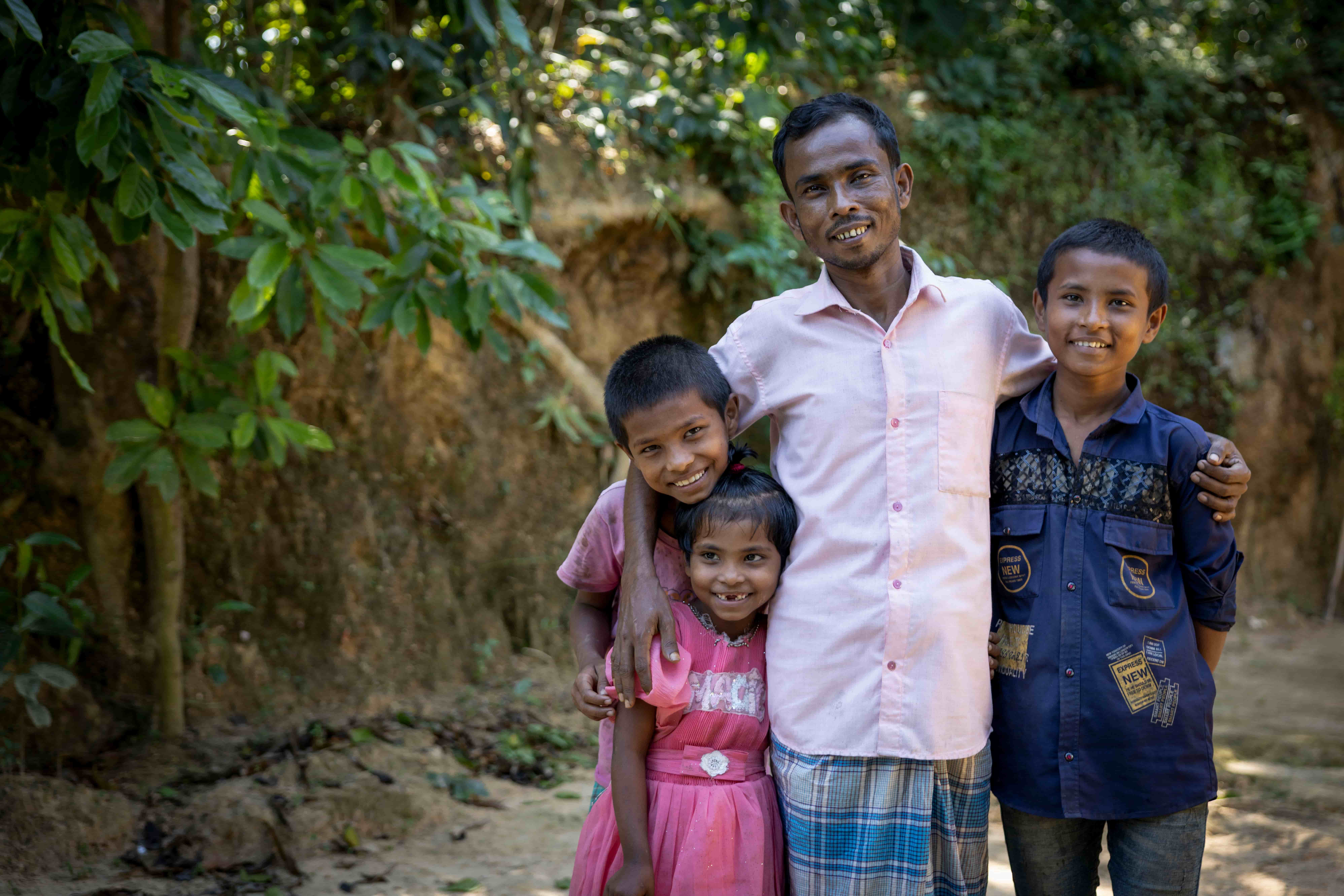
Obaidul stands outside his home with his three children in Cox’s Bazar, seeing clearly for the first time in years after cataract surgery.
Photo credit: Michael Amendolia