
5 signs of cataract to look out for

In this blog, we will explore the warning symptoms/signs of cataract and how to recognise them, helping you to take proactive steps towards good eye health.
In a hurry?
Click on the link below to go directly to what you’re most interested in:
- Changes in your vision
- Sensitivity to light
- Difficulty with night vision
- Colour distortion/perception abnormalities
- Frequent changes your glasses prescription
You may notice that your vision becomes increasingly blurred or hazy, as if you are looking through a cloudy lens. This blurriness may affect your ability to read, drive, or perform everyday tasks that require clear vision.
Double vision or seeing multiple images in one eye is another potential warning sign of cataracts. This phenomenon occurs because cataracts can interfere with the light passing through the lens, causing it to scatter and create duplicate images. If you experience double vision, it's crucial to seek a comprehensive eye examination to determine the underlying cause.
Sensitivity to light
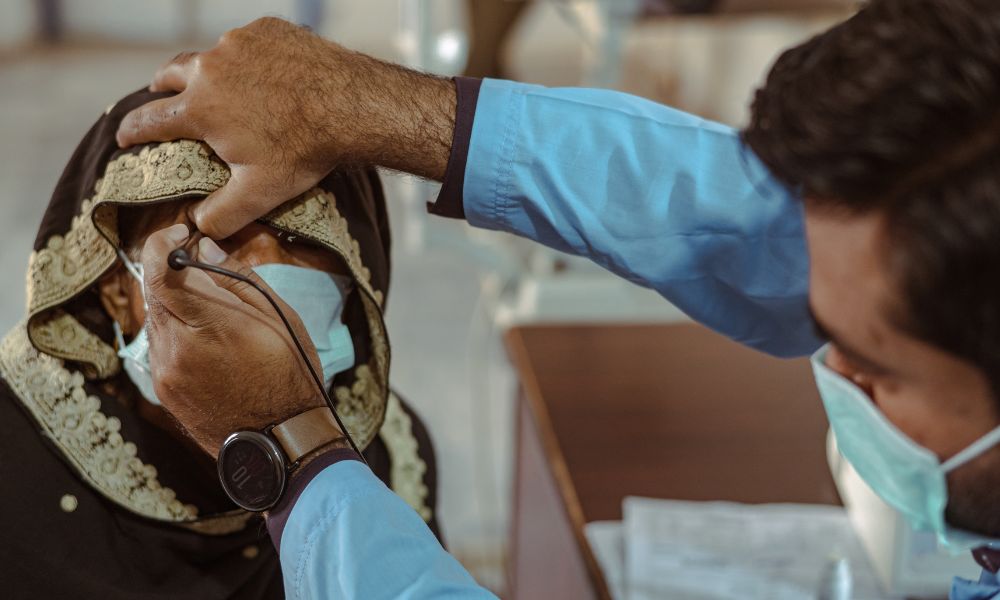
Photographer: The Fred Hollows Foundation
Difficulty with night vision
If you find it challenging to see in dimly lit environments or notice a significant increase in glare during nighttime activities, it could be a sign of cataracts. Driving at night can become particularly challenging and potentially dangerous due to reduced visibility and increasing glare.
Cataracts can also affect your ability to discern contrast between objects, making it challenging to differentiate between shades of gray or objects of similar colors. This loss of contrast sensitivity can be particularly problematic in low-light conditions or when distinguishing between objects with subtle variations.

Photographer: The Fred Hollows Foundation
Frequent changes in eyeglass prescription
COVER PHOTO: The Fred Hollows Foundation
DISCLAIMER:
The content on this page is not intended to be medical advice. For specific medical advice, please contact your health professional.
Meet the author

Dr Lila Raj Puri
Dr Lila Raj Puri is a Medical Adviser at The Fred Hollows Foundation, and his interest lies in research and training. Based in London, he advises on national prevention of blindness strategies in the Asia region, and leads the development and implementation of clinical governance frameworks. He also supports ophthalmologist training and quality assurance at Alina Vision Hospital. He is an ophthalmologist with over 12 years of experience in clinical and surgical management of eye diseases, and hospital management. As an Associate Professor, he has trained national and international ophthalmologists in cataract surgeries, as well as overseeing the training of optometrists, residents and nurses.
Related articles

Why global action on eye health matters now
Why global action on eye health matters now

Dr Visay’s dream to help everyone see