
Restoring sight where life floats on rivers

For the Bede, life flows along the rivers of Bangladesh. This nomadic community lives on boats that drift through the country’s vast network of waterways, rarely leaving the water. Their homes float just a short distance from the shore, but for the Bede, that gap is a world apart and keeps essential health care out of reach.
Life on the water
Fishing is the lifeblood of the Bede. Many rely on catching fish to feed their families and earn a living. Others perform acrobatic shows, snake charming, or entertain local communities with magic, passing down skills from generation to generation. Daily life is shaped by the rhythm of the river with children playing on decks, women cooking on small stoves, and the constant hum of boats moving along the waterways.
Yet this nomadic lifestyle comes with challenges. Because community members rarely leave their boats, anchored less than 100 metres from the shore, they often miss out on basic health services. Eye care, in particular, has been almost impossible to access, leaving many to accept vision loss as a natural part of ageing.
Taking eye care to the river
In Chandpur district, The Fred Hollows Foundation, with support from the Australian NGO Cooperation Program (ANCP), is changing that. Partnering with Mazharul Haque BNSB Eye Hospital, The Foundation brings eye health directly to the Bede.
A small wooden boat carrying a medical team travels short distances up the Dakatia River, screening community members for eye conditions and following up on patients who recently received cataract surgery.
Seventy-year-old Kala Mia was the first patient screened during a recent visit. Diagnosed with cataracts in both eyes, she was referred to the hospital for surgery. The Foundation and ANCP cover his treatment, transport, and accommodation, removing the barriers that previously made surgery impossible.
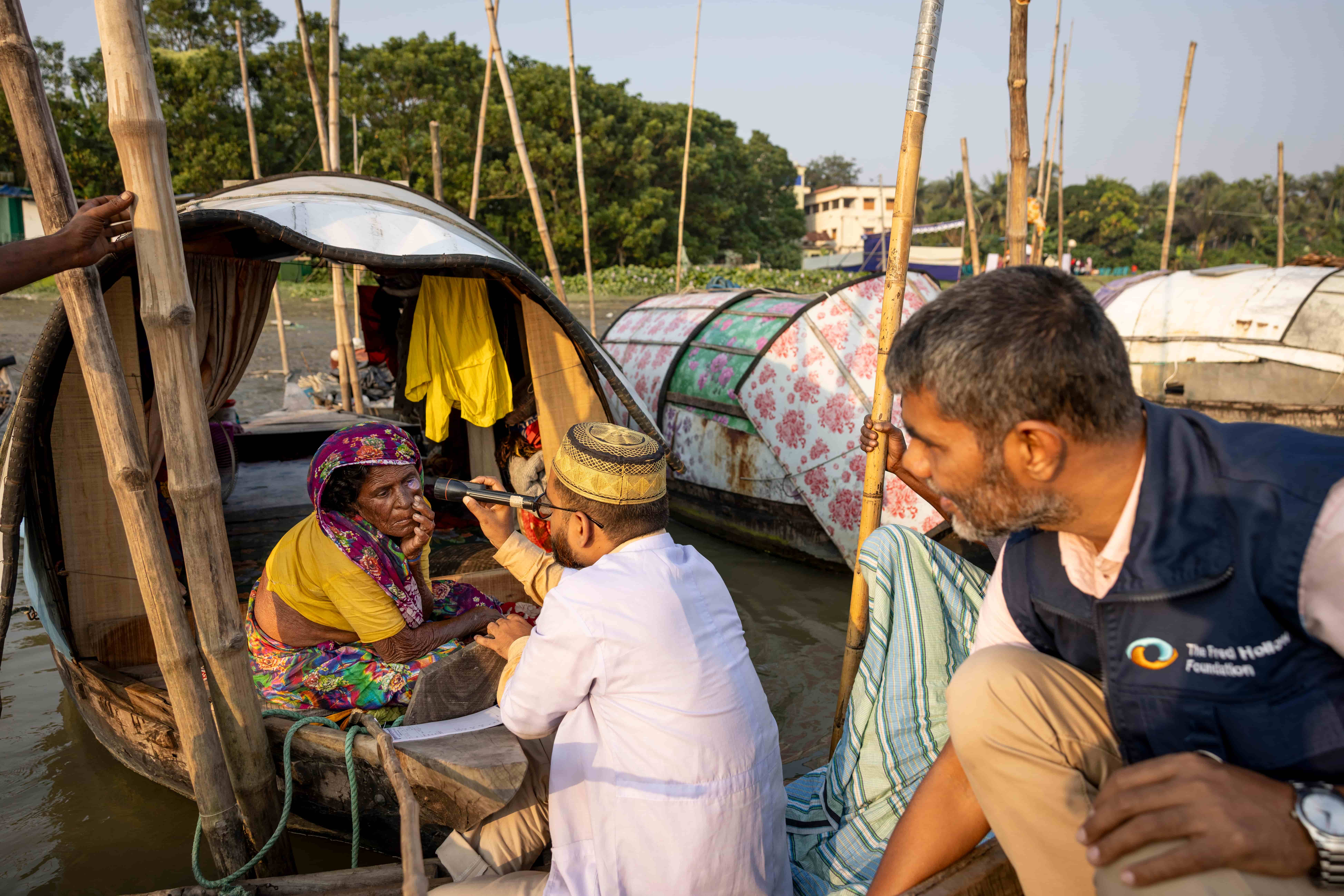 Photo credit: Michael Amendolia
Nearby, 65-year-old Nazar Ali, who had cataract surgery a year ago, greeted the team wearing his new glasses and received a follow-up check-up, showing the difference access to eye care can make.
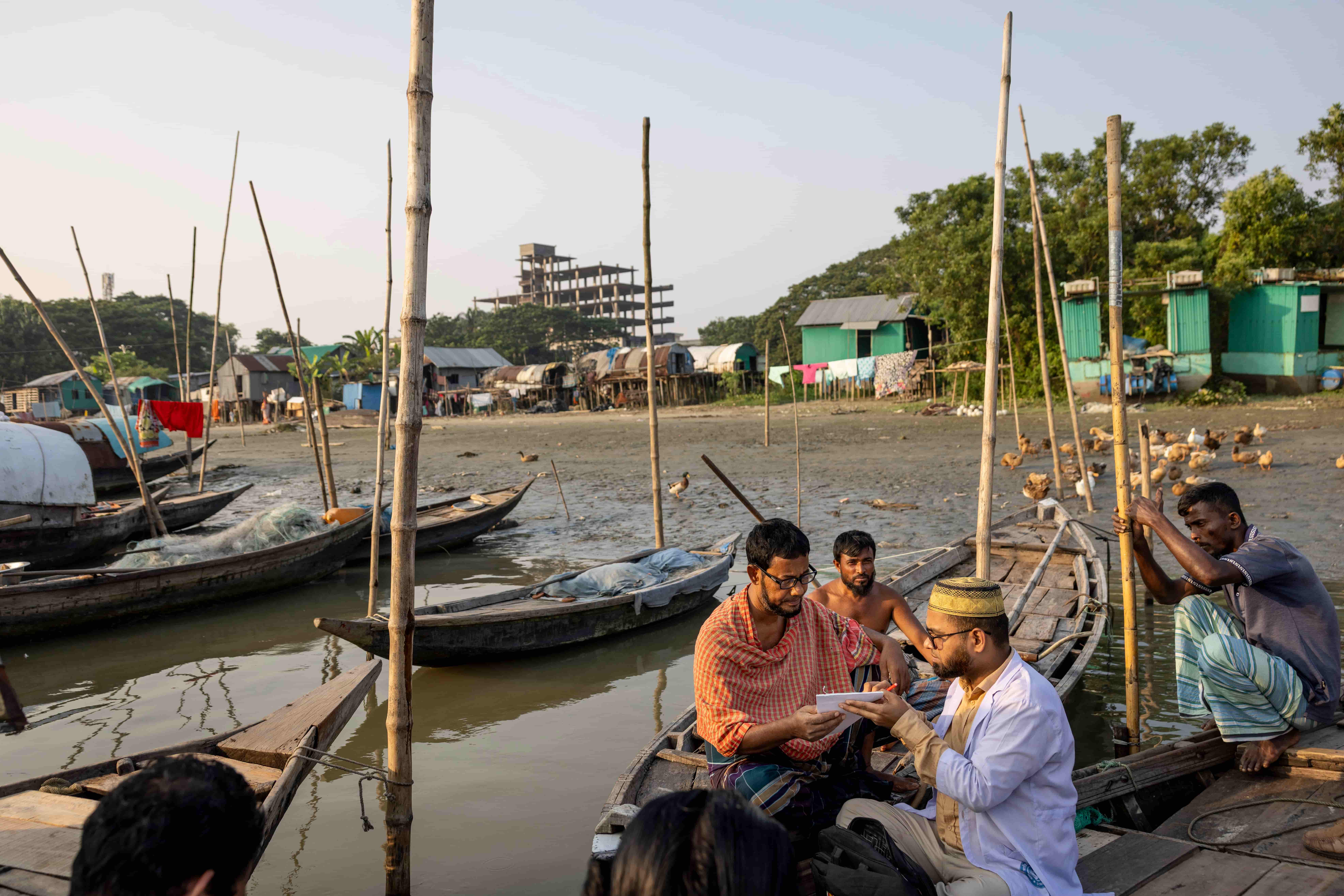 Photo credit: Michael Amendolia
Restoring sight and livelihoods
Senior Ophthalmic Paramedic Md Nasir Ahammad of Mazharul Haque BNSB Eye Hospital says the outreach program has made remarkable progress since it launched five months ago.
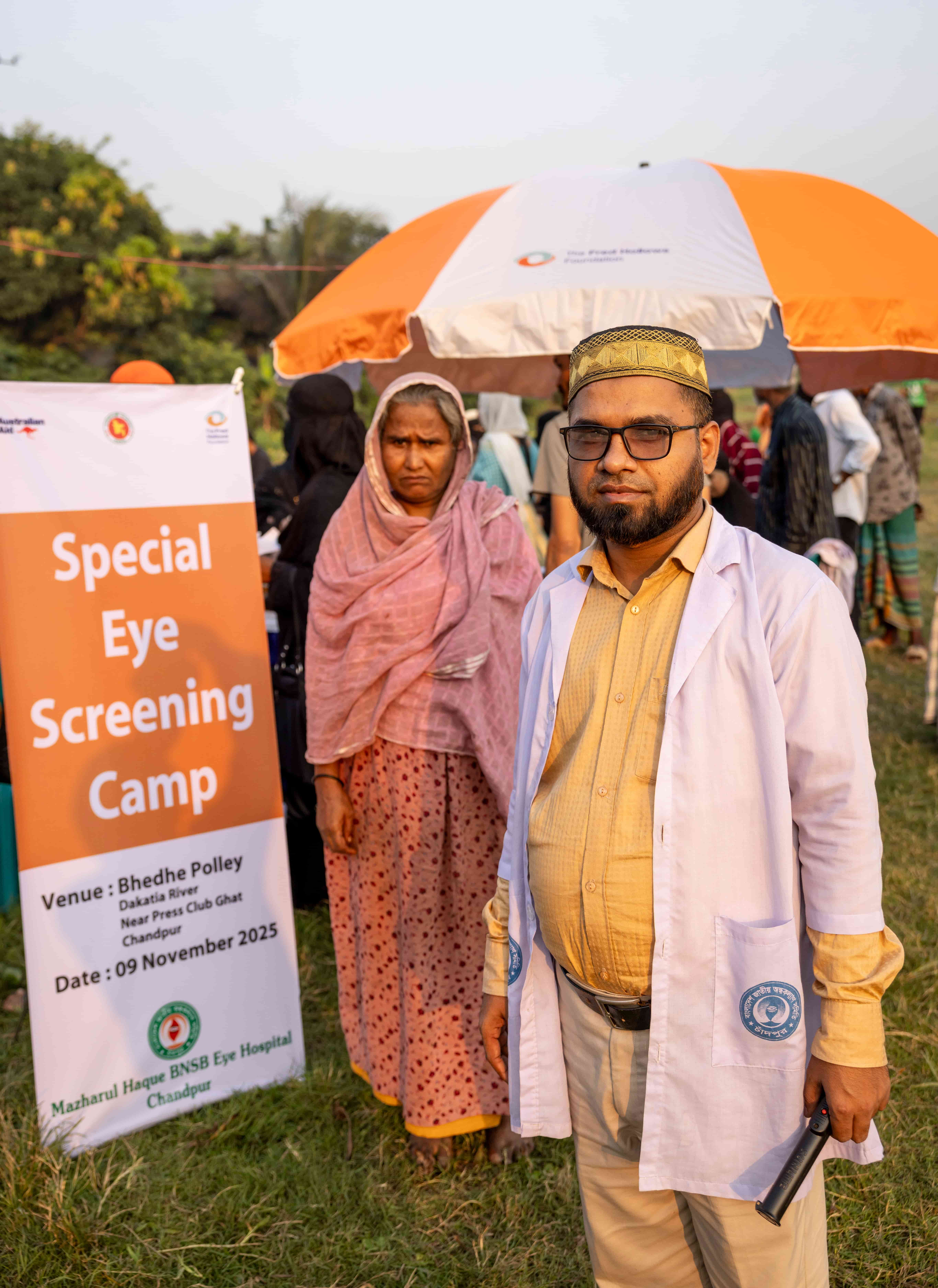 Photo credit: Michael Amendolia
“Under this initiative, 95 percent of identified cataract patients are having their surgery,” he said. “Before, community members accepted blindness as inevitable as they aged. Now, we have gained their trust. Those who have undergone surgery share their experiences, encouraging others to seek help.”
For the Bede, sight is more than health. Community leader Farhad Ali Bepary explains, “They have to do the fishing. This is their earning, this is their living. If they have cataract, they cannot work.”
The Foundation’s impact in Bangladesh
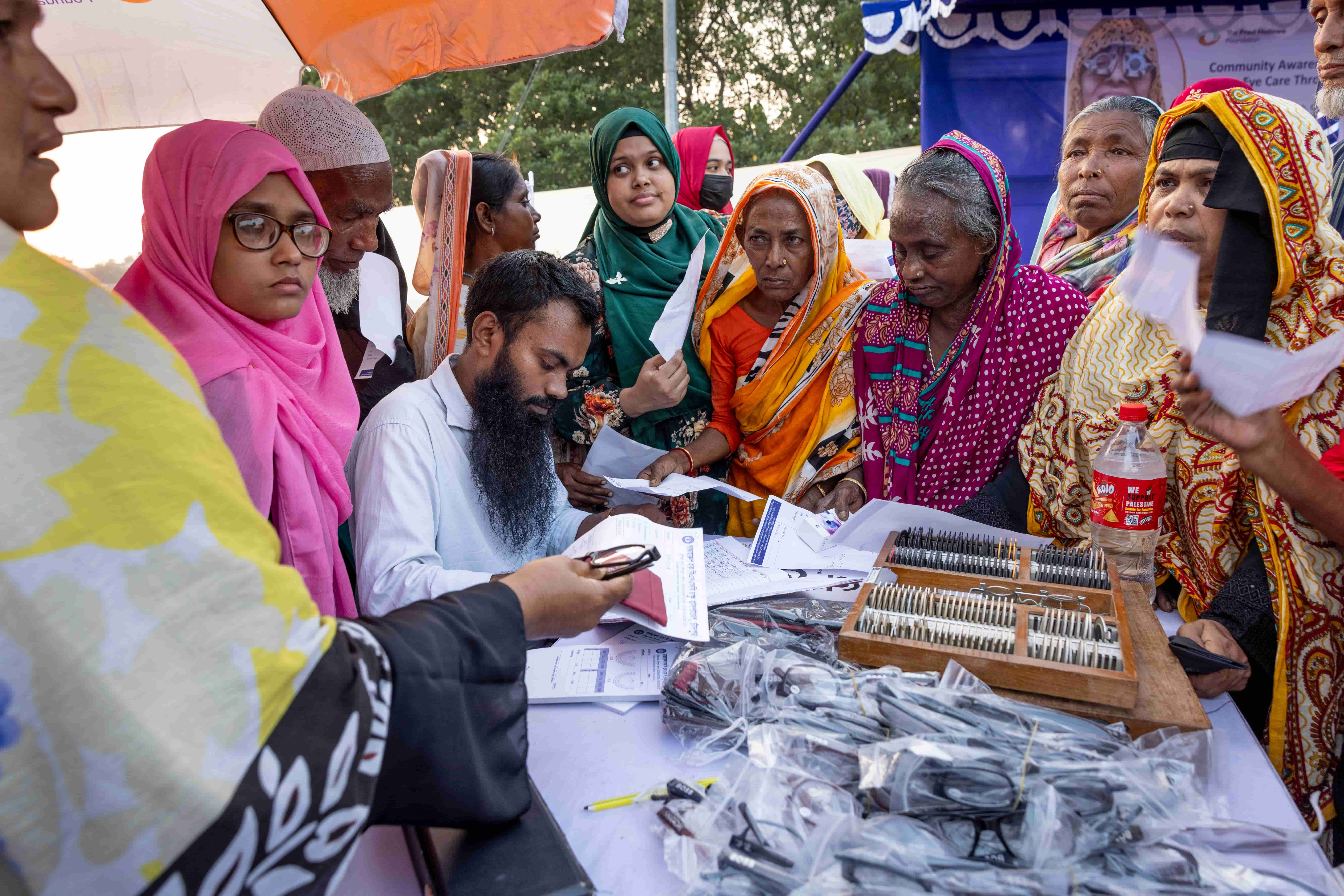 Photo credit: Michael Amendolia
The Fred Hollows Foundation has been working with partners in Bangladesh since 2008, delivering life-changing eye care to millions. To date, more than 3.9 million people have received eye screenings, and 272,400 cataract surgeries have been performed. This work has helped reduce the cataract prevalence rate from 1.53 percent in 2000 to 1.03 percent in 2020.
Despite this progress, vision loss remains a major challenge. The Nationwide Blindness Survey conducted in 2020 found that 1 in 10 adults aged 40 years or older experience low vision or blindness, with cataract as the leading cause. About 14.3 million people, or 7.2 percent of the national population, live with some form of visual impairment. Major barriers include limited government services, high out-of-pocket costs, and the distance to facilities, with significant gaps between urban and rural areas.
Gender is another critical factor affecting access to eye care. Women are less likely to receive treatment due to lower awareness, limited family income, and societal bias. Globally, women make up 55 percent of people with blindness and vision impairment, despite comprising only 49.6 percent of the population. The Foundation addresses these disparities through a gender equity approach, including evidence-based program design, advocacy, and staff training.
Key priorities for The Foundation in Bangladesh include:
- Scaling up community awareness and integrating eye health into primary care nationally.
- Expanding access to specialist services through vision centres and digital innovations.
- Strengthening workforce capacity to improve referrals and treatment delivery.
- Clearing the cataract backlog and building stronger programs for diabetic retinopathy prevention and treatment.
Through these efforts, The Foundation is creating a health system that can sustain comprehensive, inclusive, and affordable eye care for all. This work is transforming lives across Bangladesh, ensuring that even the most remote communities, such as the nomadic Bede, can access life-changing treatment, regain their sight, and thrive.
Meet the author

Roksana Kamal
Roksana Kamal is a Project Officer for The Fred Hollows Foundation in Bangladesh. Roksana works closely with partners to help end avoidable blindness in the Chittagong and Khulna Divisions.
Read more about our work in Bangladesh

Eye care and life in Cox's Bazar

Taking eye care to potters in Bangladesh

Closing the Gender Gap in Eye Health in Bangladesh