
Public-Private approach tackling avoidable blindness

With China experiencing great demographic and social change, China’s health needs – including eye health – are expanding and placing pressure on the public health system’s ability to fully meet the diverse needs of vulnerable groups and rural communities.
About 20 percent of the world’s people living with blindness are in China and 80 percent of them live in rural areas.
For people living in the Inner Mongolia Autonomous region in China’s north, accessing eye care remains a challenge.
The region is characterised by vast grasslands, sparse populations and most areas are 1,000 metres above sea level.
In the regional capital Hohhot, the capacity of county level hospitals for eye care is severely limited.
There are about 800 eye doctors in Inner Mongolia, but less than half of them can perform cataract surgeries.
Most eye doctors are based in urban centres, leaving the rural population underserved and many patients must endure long waits for the visiting surgeons from provincial hospitals.
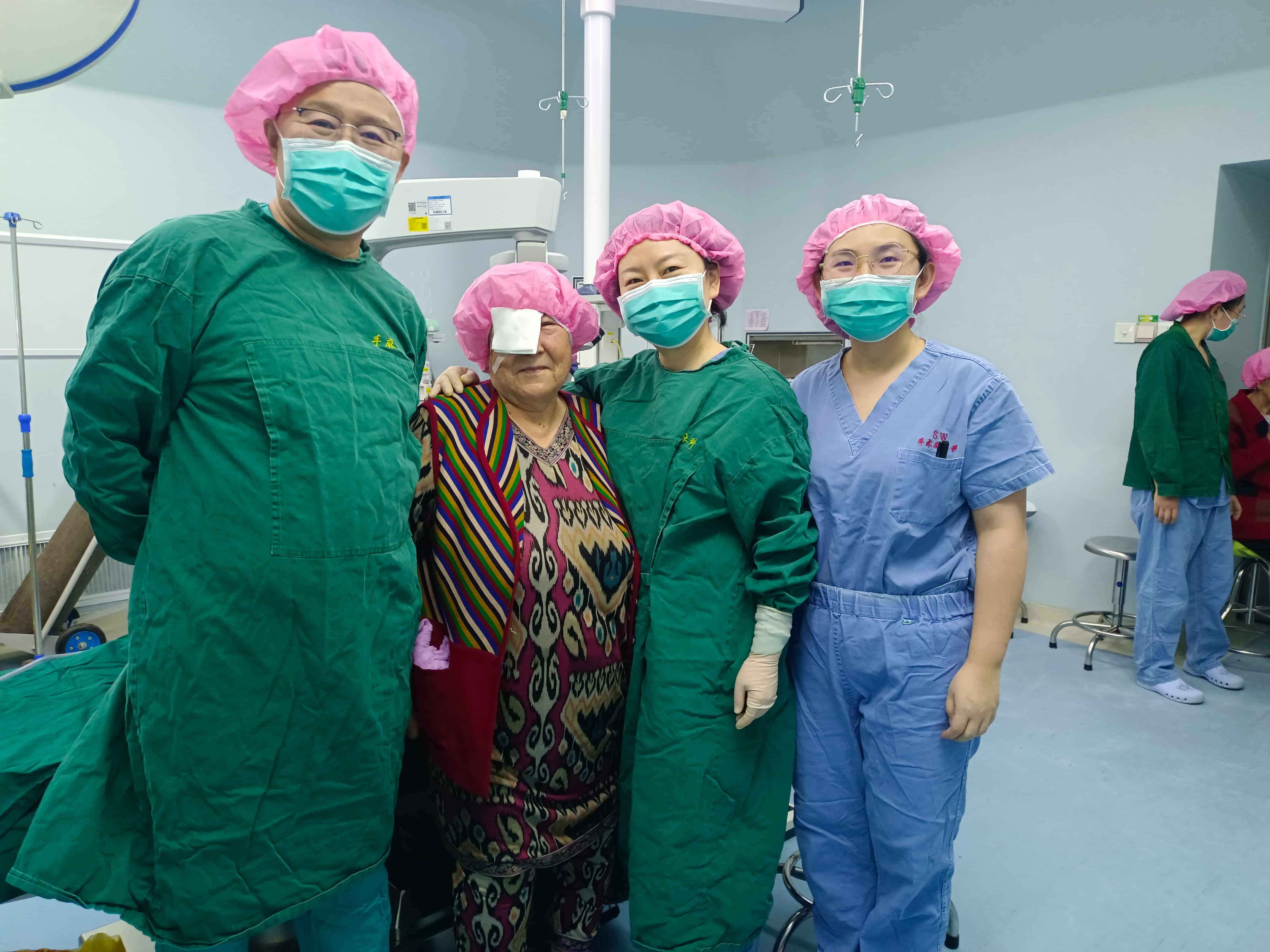 Photo credit: Len Yun
According to the most-recent 2021 eye health resource survey, only 60 percent of the 90 county level hospitals in Inner Mongolia can provide basic sight restoration, such as cataract surgeries, further underscoring the gaps in the eye health system.
Under China’s recent medical reforms, there is a growing emphasis on private sector participation to bolster the country's health system.
Over the past five years, private eye hospitals have extended into rural counties, providing cataract surgery and refractive error services to fill gaps in the underserved rural areas.
Leading international eye health development organisation The Fred Hollows Foundation is partnering with one local private hospital group in Inner Mongolia, Chaoju Eye Hospital Group, in a project supported by the National Foundation For Australian-China Relations (NFACR).
The four-year project aims to support building up eye care services capacities at secondary and primary levels within the public health care system and to contribute to ending avoidable blindness in the region.
Engaging the private sector and building public–private cooperation is an innovative way to deliver comprehensive eye health services at scale for the huge unmet needs in Inner Mongolia and in China.
By investing in the eye health workforce, the project aims to reach 160,000 people, provide 6,000 pairs of glasses, conduct 600 cataract surgeries, and treat 80,000 patients with other eye conditions.
One of the ophthalmologists trained under the project – Dr Liang Jun Feng from Dorbod Banner People’s Hospital – can now perform cataract surgery as a result of this project.
This means local patients no longer need to wait for specialists to visit the hospital or travel long distances for the treatment they need. This focus on people-centered eye care – where eye health services are delivered closer to where people live – is priority for The Fred Hollows Foundation in China and throughout the Asia-Pacific region.
We welcome corporate partners who are interested in eye health investment or incorporating eye health into their ESG/CSR programs to contact us and help us in our journey to end avoidable blindness.
Meet the author

Amanda Huang
Amanda has nearly 20 years' experience in the international development sector in China, with a focus on children’s welfare, community development and eye health. She has been with The Fred Hollows Foundation for more than 15 years and is now the Chief of Programs and Partnership. Having experienced working with a variety of health facilities, government sectors, and rural communities, she has a keen understanding of China's health system. Amanda holds a master's degree in Public Health for Eye Care from the London School of Hygiene and Tropical Medicine.
Related articles

Why global action on eye health matters now
Why global action on eye health matters now

Dr Visay’s dream to help everyone see