
New glasses for members of the “cool group”

In Indonesia, about 10 percent of schoolchildren struggle with vision problems, which can often be corrected with a pair of glasses.
But the stigma of wearing glasses remains a barrier to efforts to improve their vision.
In West Java, The Fred Hollows Foundation is working with the Ministry of Health and Ministry of Education to explore new ways to encourage the take up of glasses.
At a primary school in Sukarame, children are showing off their new glasses to their classmates and asking each other how they look.
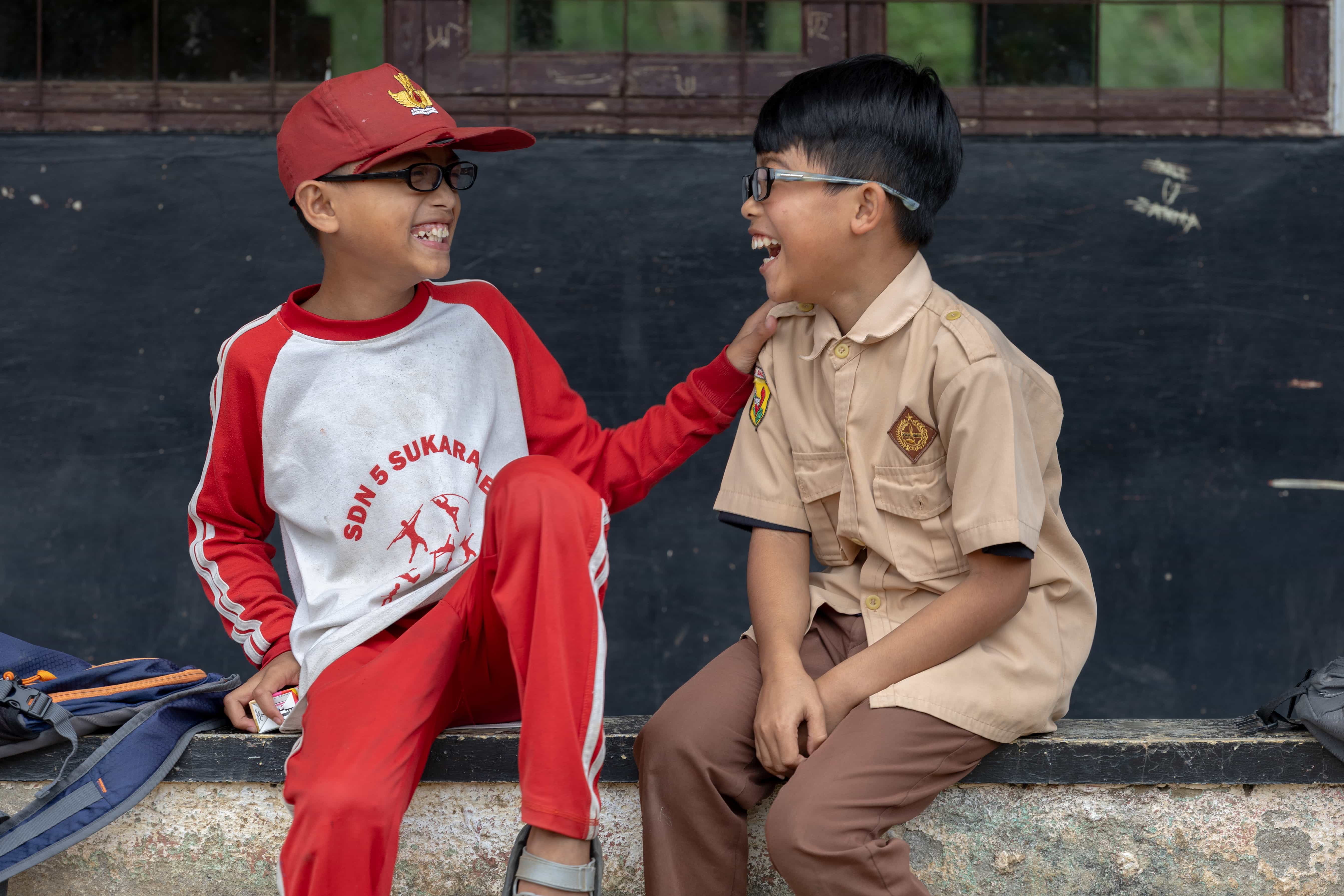 Photo credit: Mr. Choeun Sothun
“The students feel like they’re part of the cool group because of their new eye glasses,” The Foundation’s Elizabeth Zedhityasmi said.
“Because they received their eyeglasses as a group, the children didn’t feel isolated.
“It gave them confidence, not just better eyesight,” she said.
Under the National Integrated Cicendo Eye Health (NICEH) project, more than 1,000 primary and secondary school students in West Java have received free prescription glasses.
The Foundation’s Indonesia Program Manager Anna Yulia said the project aims to make eye care services more accessible by connecting eye health to the classrooms.
“Previously, schools would send children to community clinics for eye check-ups but now teachers are trained to screen basic eye conditions in the classroom.
“The eye check-up is the first step to detect eye problems. The teachers conduct screenings during school activities – usually once a month.
“Teachers are required to screen all students in their schools and refer those with potential vision problems to clinics for further assessment,” she said.
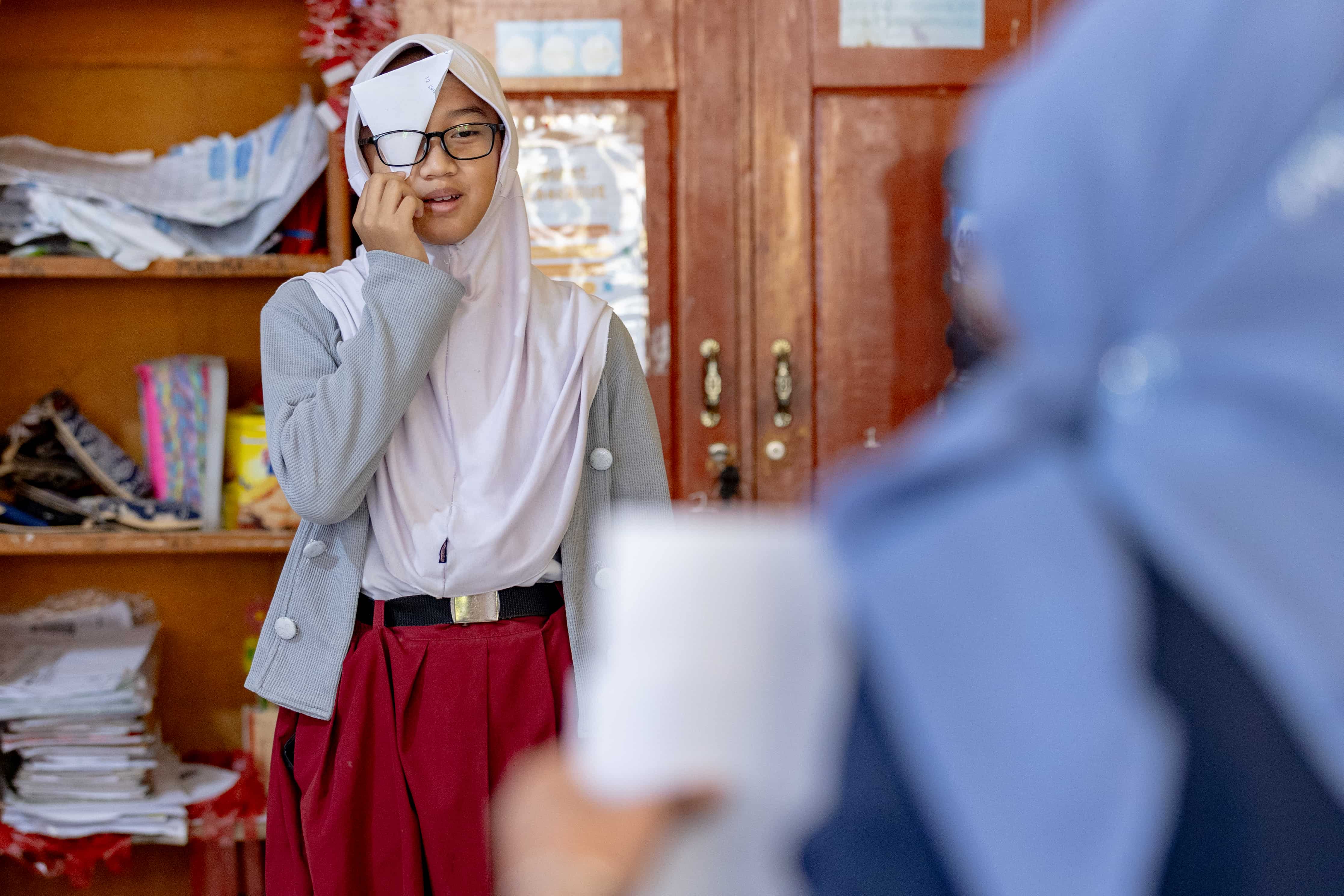 Photo credit: Mr. Choeun Sothun
School eye health initiatives are also underway in Nusa Tenggara Barat province where efforts are focused on reaching the most vulnerable in the community.
“We all know that without good eyesight, children struggle in school,” project officer Sri Maryani said.
“If they can’t see clearly they can’t learn well or reach their full potential,” she said.
The Fred Hollows Foundation believes the NICEH project can make inroads in ending avoidable blindness among children in Indonesia.
One of the major challenges is creating awareness about eye health.
In a report co-authored by The Foundation, almost 80 percent of parents in Nusa Tenggara Barat province have never received information about eye health.
Ms Yulia said The Foundation was committed to working with government ministries of health and education to create awareness at the community level.
“Eye health is one of the most cost-effective interventions in health and is the key to unlocking a child’s potential and educational pathway.
“For many children, a simple pair of glasses or timely treatment can transform their lives. That’s why this work matters,” she said.
Related articles

Why global action on eye health matters now
Why global action on eye health matters now

Dr Visay’s dream to help everyone see