
Why is Fred Hollows buried out the back of Bourke?

In a hurry?
Click on the links to go directly to the information you're most interested in:
1. When did Fred pass away?
Professor Fred Hollows passed away on 10 February 1993 at the age of 63.
He was diagnosed with metastatic renal cancer in 1987, with it affecting his lungs and brain.
Fred had this to say about his diagnosis: "The gift of life has been given to me with an abundance known to very few. So, I can have no complaints about the hand that I've been dealt."
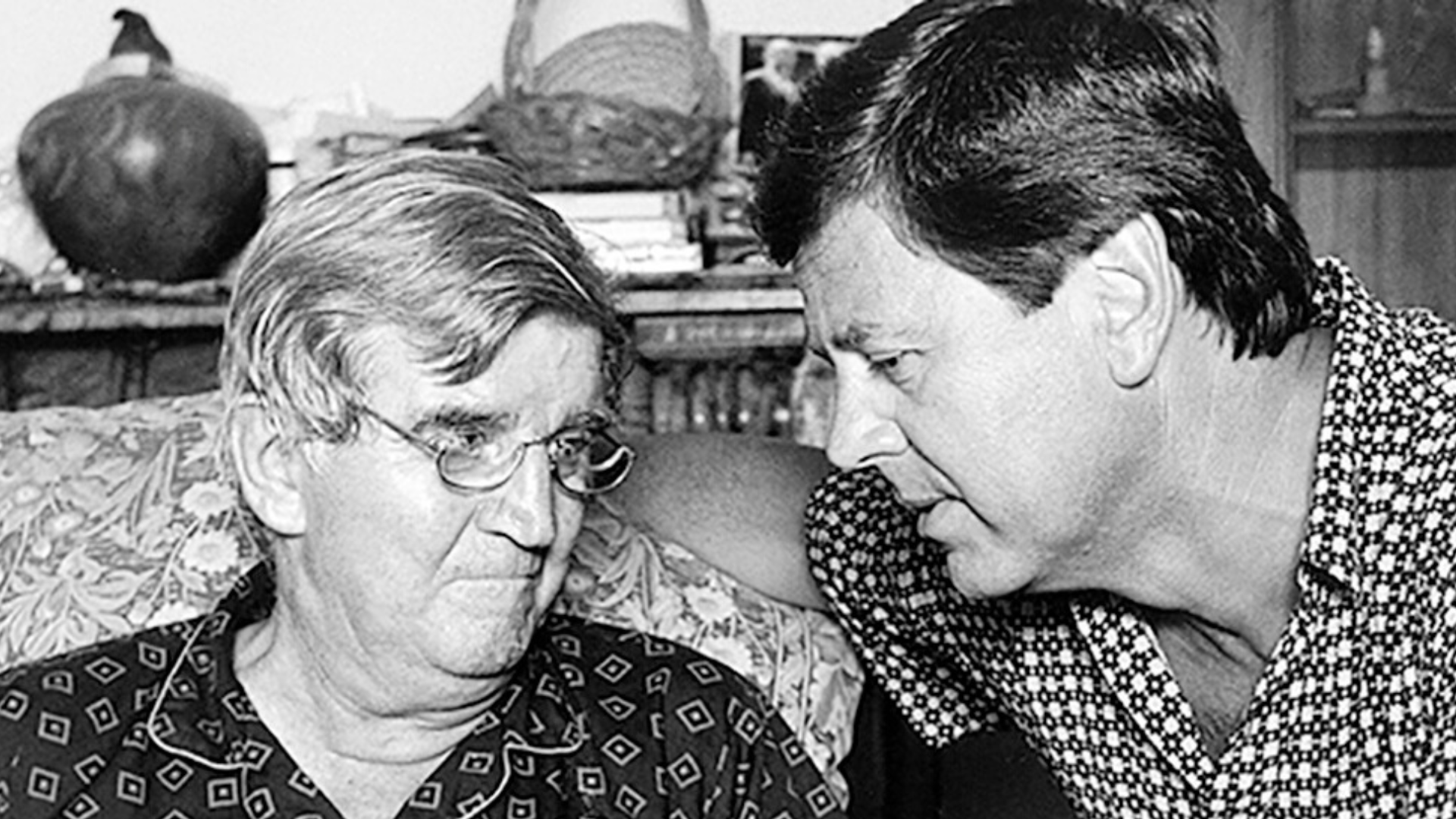
He passed away at home surrounded by his wife, children and close friends.
2. What was Fred's funeral like?
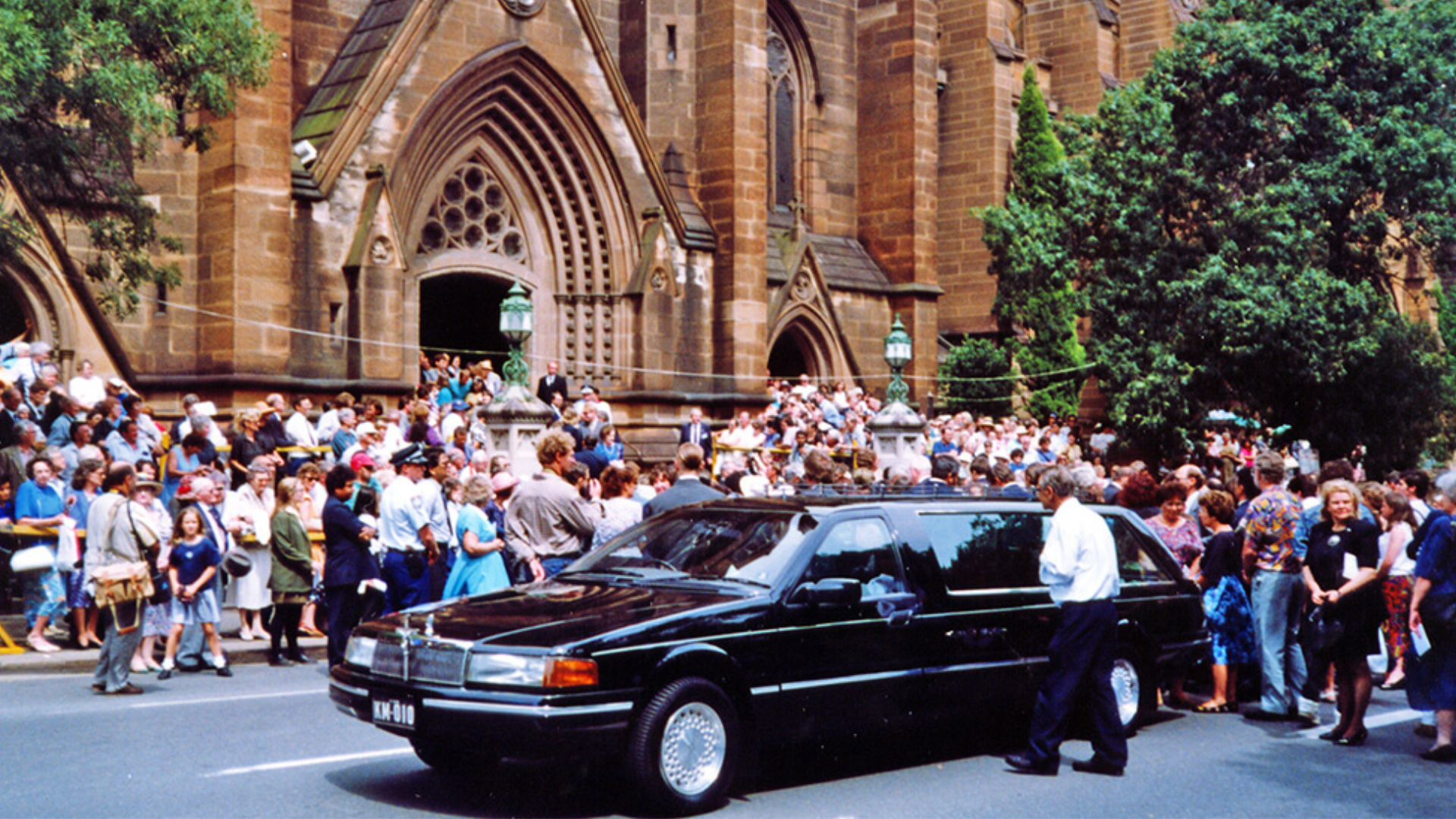
The funeral procession travelled down College Street in Sydney from the cathedral and the street was filled by the crowds there to pay respect to Fred.
Notable attendees at the funeral included then Prime Minister Paul Keating, the Opposition Leader John Hewson, and former PM Bob Hawke, who had presented Fred with his Australian of the Year award in 1991.
Fred's coffin was then loaded onto a plane in Sydney and flown to Bourke, in north-west NSW.
3. Where is Fred buried?
Gabi placed a locally hand-woven Aboriginal cloth over Fred's coffin for the journey from the airport to the gravesite and it's still with her today at Farnham House.
Once interred, Fred's grave had local stones and native flowers placed on top.
4. Why is he buried in Bourke?
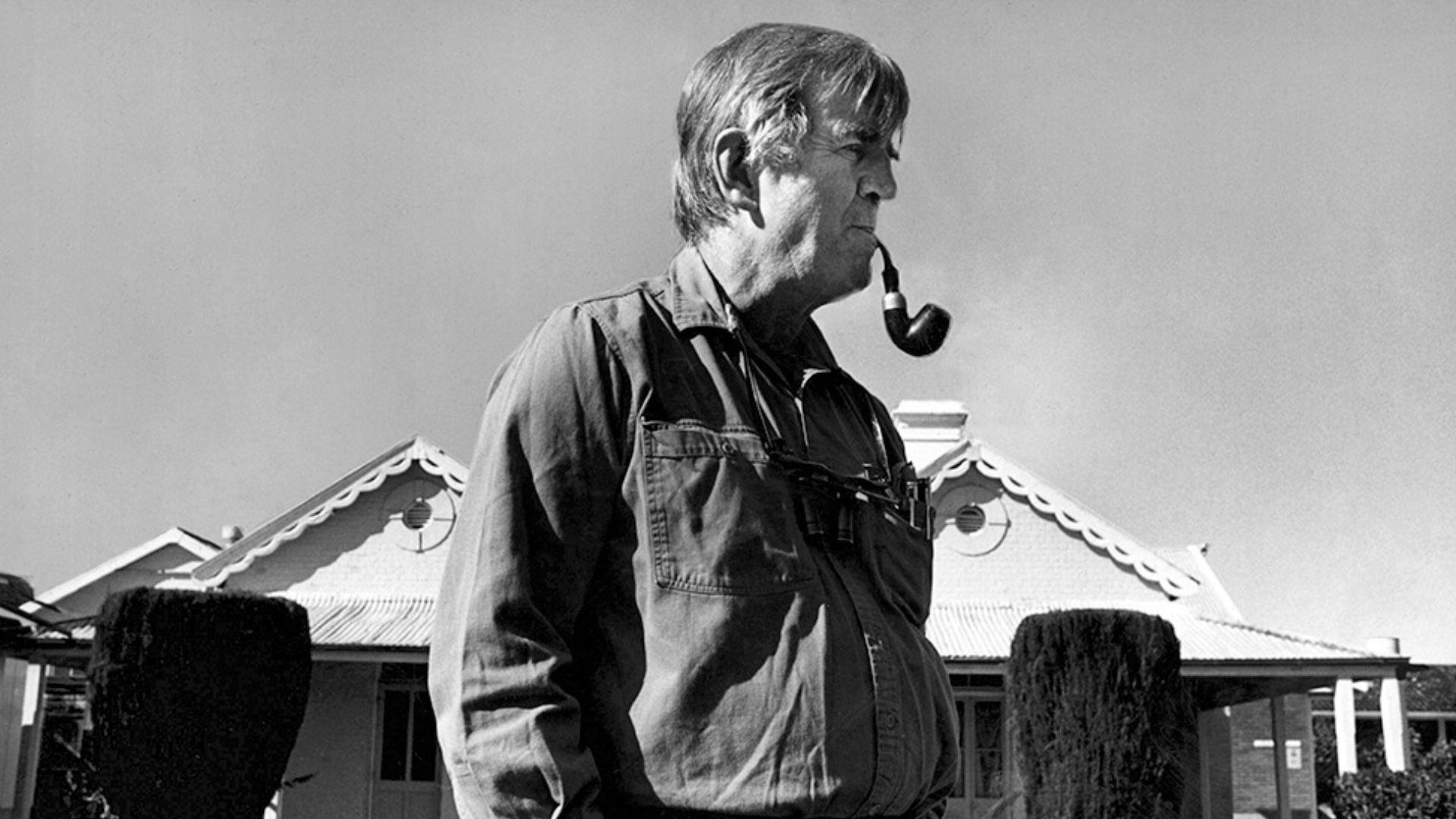
Fred’s work in remote Aboriginal communities through the 1970s took him to Bourke and beyond. During this time, he saw firsthand the impact of trachoma, a painful and preventable eye disease that was still causing blindness in many communities. It strengthened his determination to act and helped lead to one of Australia’s most significant public health efforts, The National Trachoma Program.
It was work that shaped him deeply. Bourke held a special place in his heart from then on, and we continue his connection to the region by working in and around it today.
5. What is Fred's burial site like?
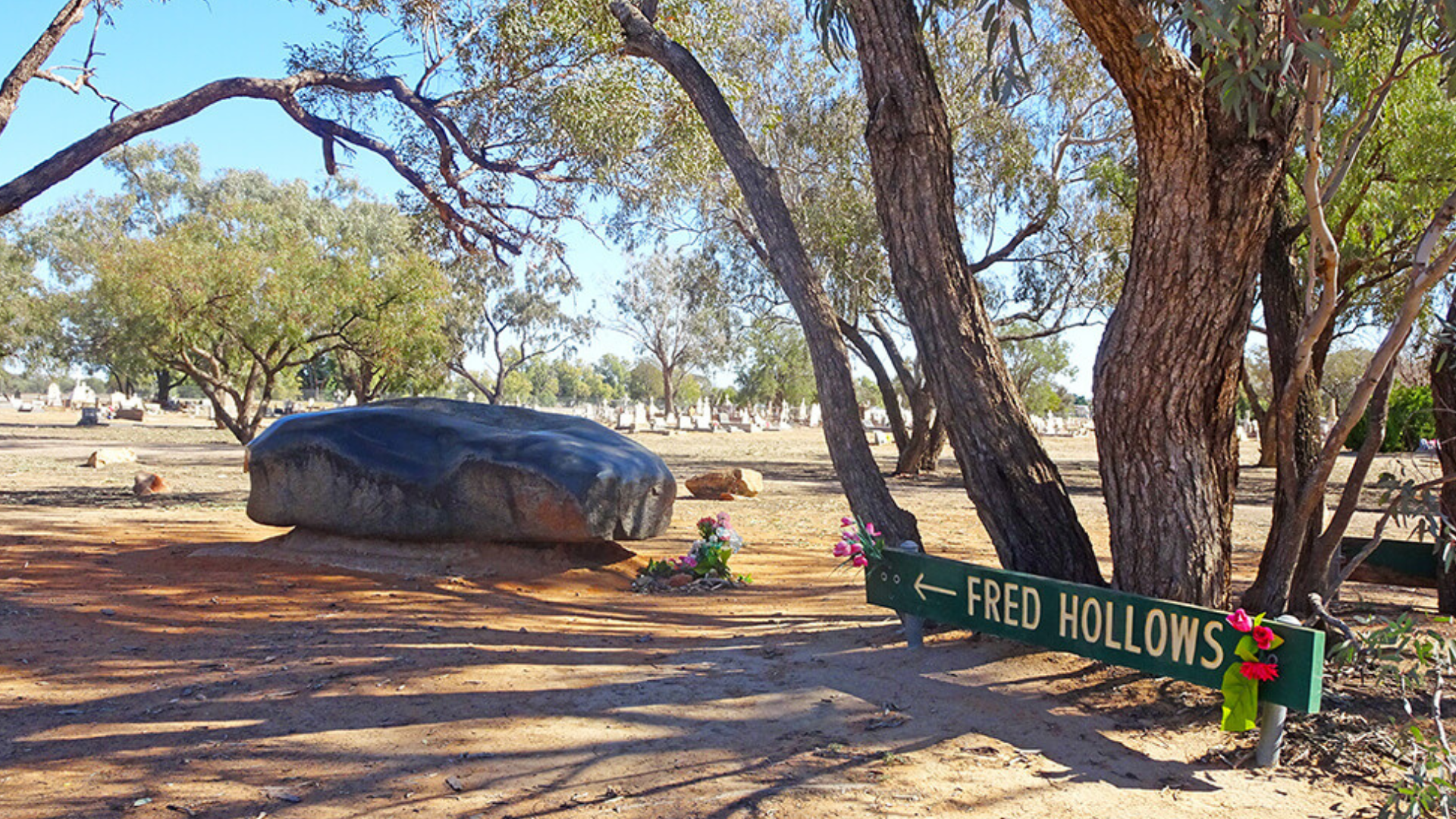
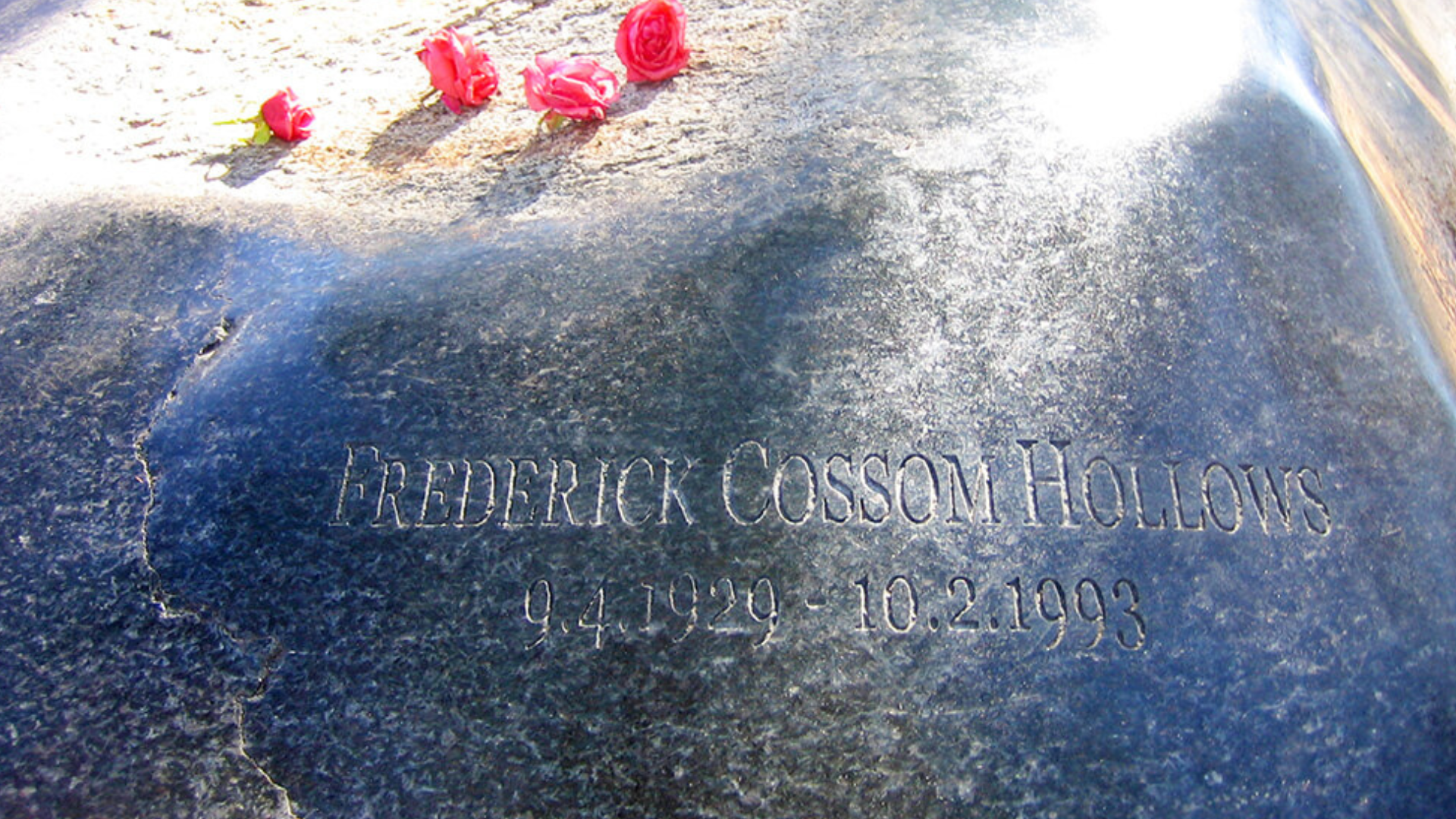
Ahead of you is a group of gum trees that shade a large piece of dark, smooth, shiny granite.
It was created by Austrian sculptor Andreas Buisman and replaced the original gravestone in February 2006 after he was commissioned to make it by the Hollows family.
"The idea was to make a rock that was convex and, therefore, from all directions that you approach it, would have a reflection on to you," Mr Buisman explains.
"The sun, the light always comes back on to you... like a beacon light, referring to an intraocular lens," he adds.
The intraocular lens is used in cataract surgery to replace the cloudy lens and the cheaper production of this small piece of plastic is how surgery is possible for as little as $25 in some places and is how Fred helped to change the world of eye health.
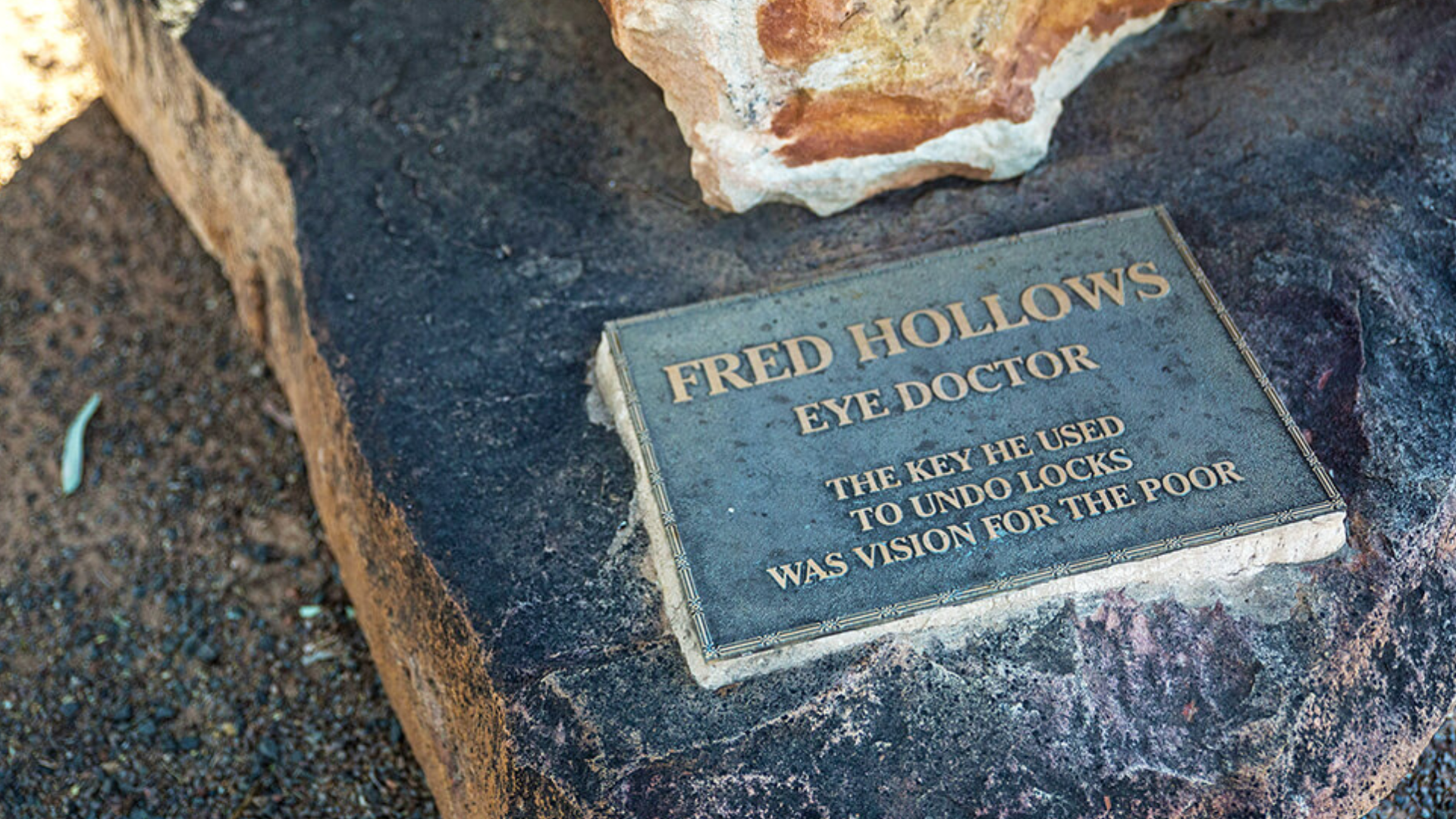
Around the rest of the site there are boulders from nearby Mt Oxley laid out in the shape of an eye and a sandstone monolith that was carved by local Aboriginal artists, international sculptors and Bourke residents. On this memorial there is a plaque that reads, "Fred Hollows, eye doctor. The key he used to undo locks was vision for the poor" from a poem written by NSW bush poet Bruce Walker.
All these elements together make for a magical site well worth visiting.
Cover photo credit: The Fred Hollows Foundation
Meet the author

Matthew Perkins
Matthew is The Fred Hollows Foundation's social media specialist. Previously, Matthew has worked as ABC Radio's online and on-air producer in Kalgoorlie-Boulder. He then found his way to Perth, and on to Sydney, helping establish the social media presence of both 702 ABC Sydney and ABC current affairs program, 7:30. These days, Matthew uses those skills in the campaign to end avoidable blindness.
Learn more about Fred Hollows

Fred Hollows' story: from his early years to his work overseas

How Fred Hollows made cataract surgery affordable for millions

Times Fred Hollows stood up against injustice