
Africa Microsurgical Training Program leaves lasting legacy

Dr Ciku Mathenge is a world-renowned ophthalmologist and leader in eye health and she credits one initiative as the most impactful moment in her 30-year career.
In 1995, The Fred Hollows Foundation developed a bold idea to make a long-term investment in Africa’s eye health workforce - the Africa Microsurgical Training Program.
Between 1995 and 1999, The Foundation trained 124 surgeons from 11 countries in the latest modern cataract surgery techniques.
Dr Ciku was the first female ophthalmologist trained by The Foundation and started training a week after her graduation.
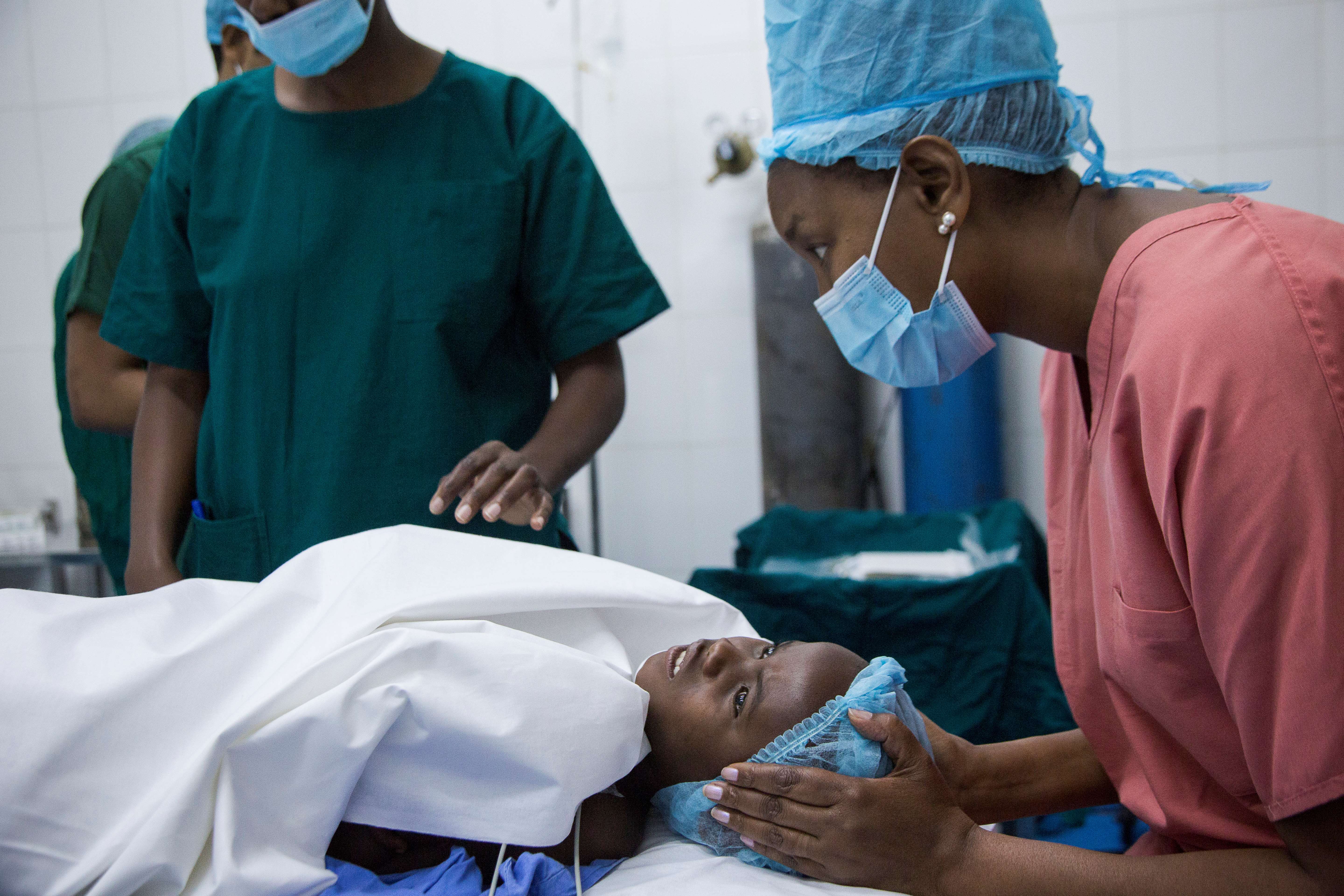 Dr Ciku Mathenge restores sight to nine-year-old Eric in Rwanda in 2017. Born with bilateral cataracts, Eric received life-changing surgery after being brought to Kigali for treatment. Today, he can see and is thriving.
Photo credit: The Fred Hollows Foundation
“The program empowered us as African ophthalmologists – both with the skills but also the equipment we needed to practice what we’d been trained to do,” she said.
“Up to that point, that was a major barrier for ophthalmologists across Africa. So I feel like it gave me a great start to my career, but it also changed the way ophthalmology was practiced in Africa.
“The microscope and equipment from The Foundation made all microsurgery and not just cataract surgery possible,” she said.
Dr Ciku recalls The Foundation’s determination to continue with the program despite the doubters.
The training was endorsed by the IAPB in 1999 – a remarkable turnaround as The Foundation had been ridiculed for considering the idea only five years earlier.
“There were some beliefs that his was probably really difficult to do. It was too expensive and people were looking for easier solutions for Africa. The Fred Hollows Foundation said no, we’re going to do this, even in Africa,” Dr Ciku said.
“What I remember is the boldness – not just of the trainers who came to Africa, but their convictions that this was possible and they were just going to prove that it was possible.
“I remember that and it has continued to be, to me, the ethos of The Fred Hollows Foundation.”
The Foundation’s commitment to investing in Africa’s workforce was backed with training, resources and capacity building to strengthen eye health systems.
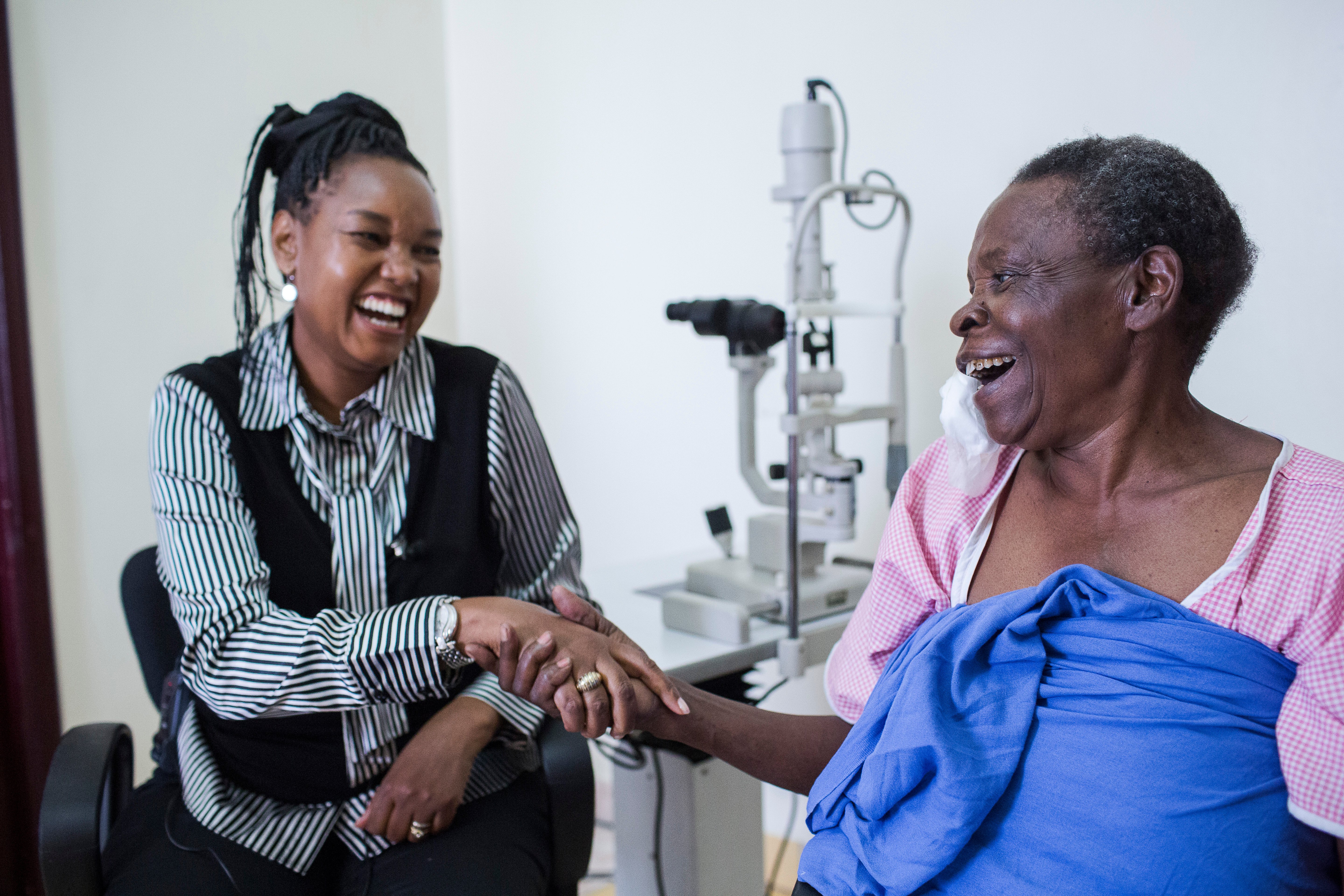 Francine celebrates with Dr Ciku Mathenge after successful cataract surgery restored her sight in Rwanda. Blind for more than three years, the 76-year-old was overjoyed to see her home, community and daily life once again.
Photo credit: The Fred Hollows Foundation
The program was not just about training the doctor – it was also about training the people who support the doctor. And program leads Dr Richard Le Mesurier and Gillian Cochrane were equipped and determined to do exactly that.
“How do you clean the surgical instruments? How do you sterilise them and keep them working for as long as possible? It was also about teaching the assistant who is going to scrub for the surgeon, learning how to track what lenses you are using and how to monitor the quality of the surgery,” Dr Ciku said.
Dr Ciku was selected as a trainer after a few weeks, replacing an Australian ophthalmologist Dr David Moran – the train-the-trainer model was now in place.
“When the program started we were supposed to train just under 70 doctors. That’s what the funding was supposed to be for. We made it spread to train over 140 doctors.
“From faculty to practicing ophthalmologists to non-physician cataract surgeons – we trained them all.
“But of course the beneficiaries of that training have themselves become trainers. They’ve since trained hundreds in different countries,” she said.
The Foundation’s commitment to investing in Africa’s eye health workforce remains. In 2025 alone, The Foundation trained more than 26,000 people including community health workers, teachers, clinic support staff, educators and surgeons.
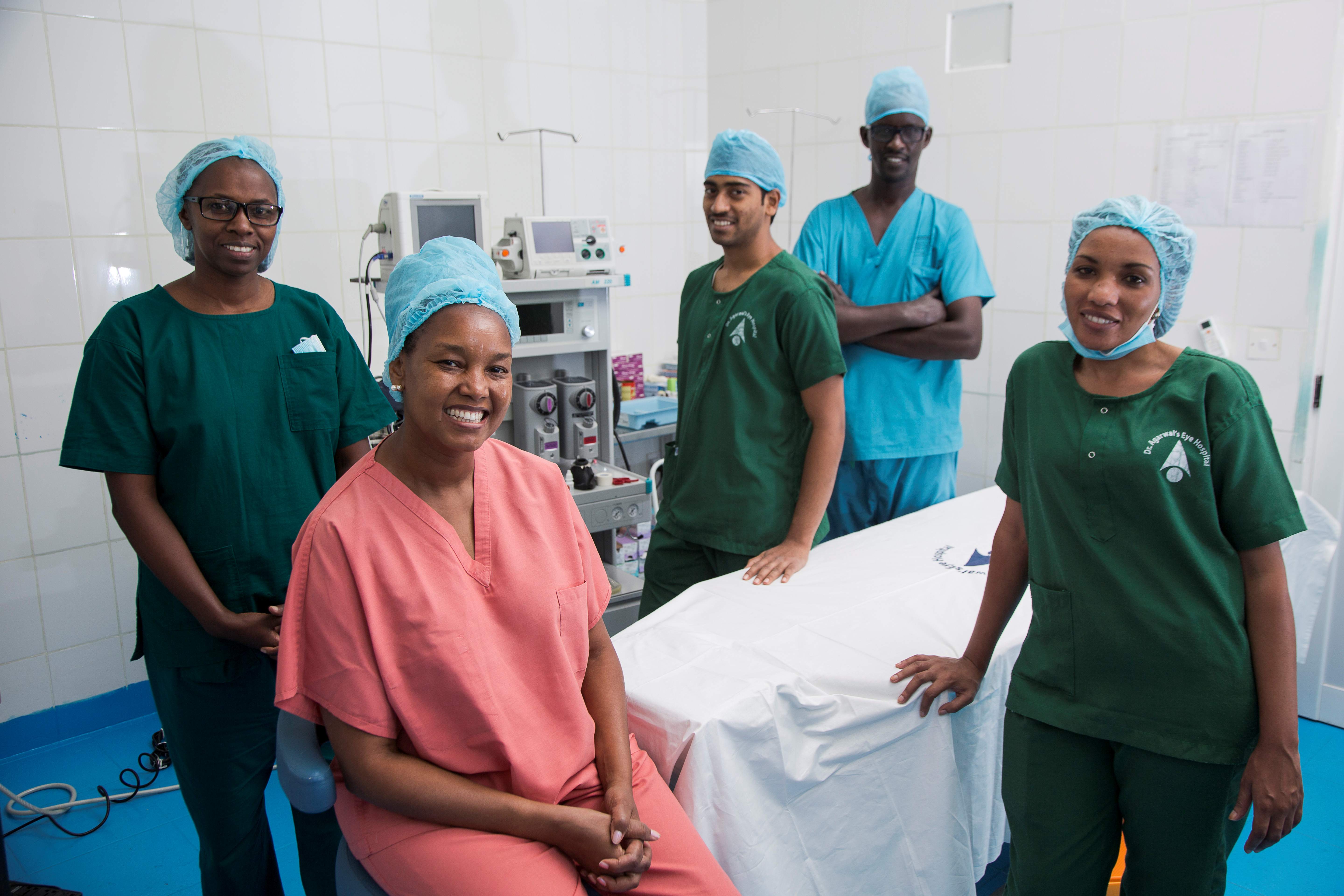 Photo credit: The Fred Hollows Foundation
Dr Ciku went on to help establish The Foundation’s East Africa programs, in Kenya and Rwanda, where she is a Director and Co-Founder of the Rwanda International Institute of Ophthalmology which provides training, research and community services in the region.
Read more about eye doctors restoring sight

How many eye doctors are there in Rwanda and why it matters

Dr Tuyisabe Theophile: Restoring sight, changing lives in Rwanda

The eye doctor helping communities see again in Laos