
A witness to Fred Hollows’ legacy in Vietnam

Dr Pham Binh says he is one of the few remaining witnesses to the legacy Fred Hollows left to eye health in Vietnam.
The retired Director of the Danang Eye Hospital first met Fred in 1992 and was among the first Vietnamese surgeons trained in modern cataract surgery.
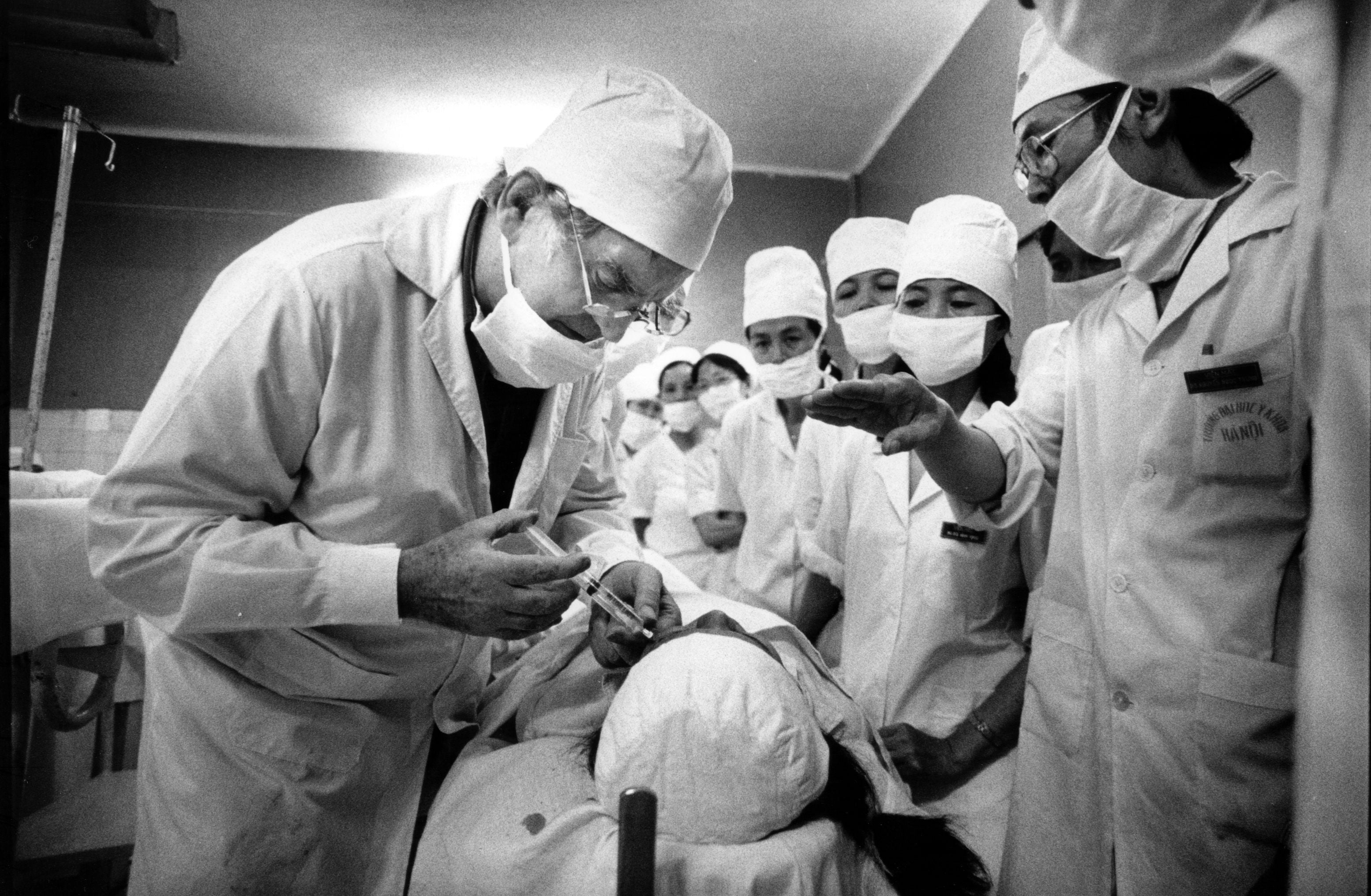 Professor Fred Hollows prepares a patient for cataract surgery in Hanoi, Vietnam, in 1992. Through training local surgeons and introducing modern cataract surgery techniques, Fred helped lay the foundations for a stronger eye health system.
Photo credit: Michael Amendolia
Although he was performing many surgeries at community outreach events in central Vietnam, Dr Binh was trained in the intracapsular cataract extraction (ICCE) technique that replaced damaged cataracts with thick glasses, worn by patients after the surgery.
Being exposed to modern surgical techniques (extracapsular cataract extraction with intraocular lens) seemed like a miracle to Dr Binh who was used to operating in extremely difficult conditions.
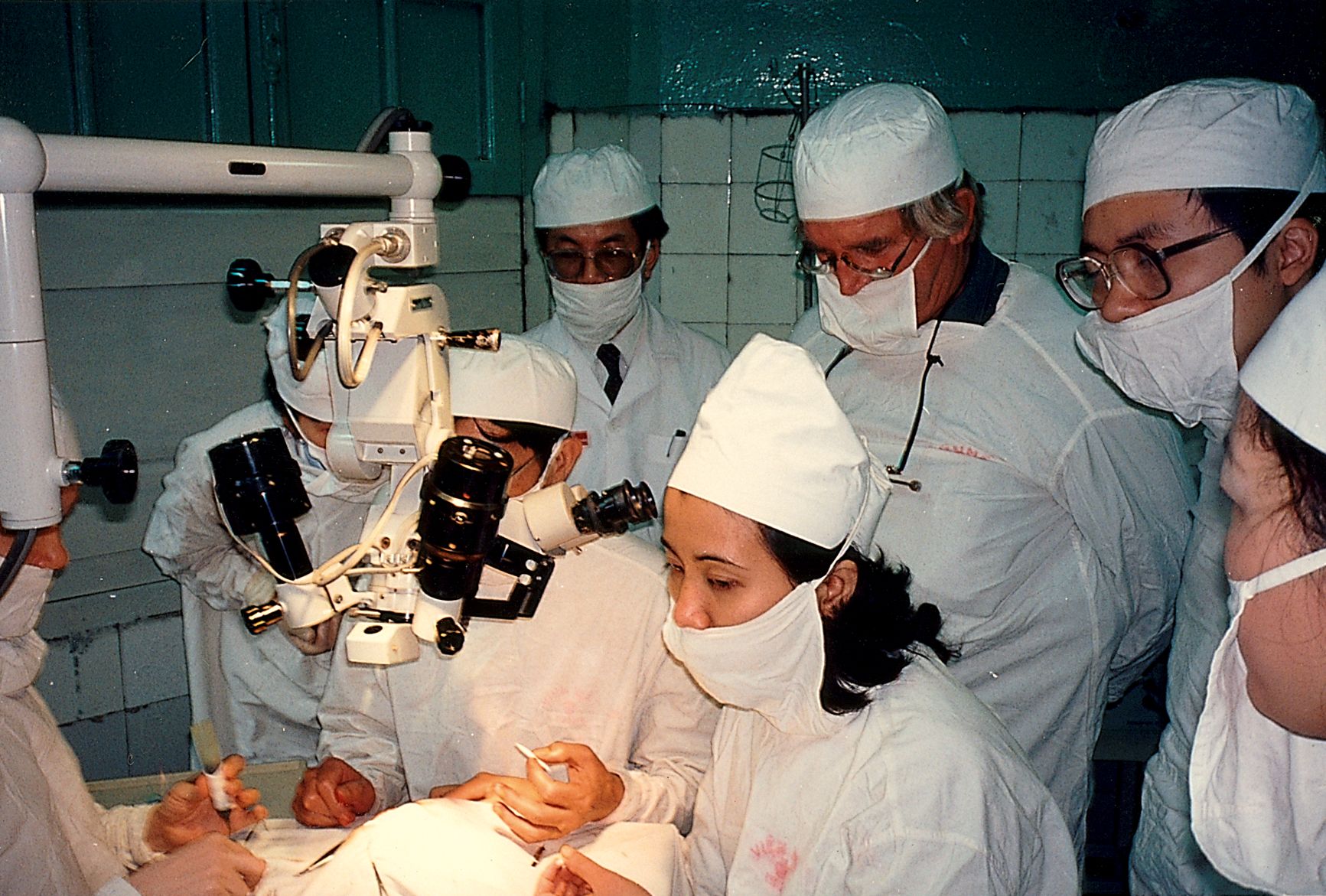 Photo credit: The Fred Hollows Foundation
Dr Binh relied on battery-run lamps provided by World Vision which dangled from the ceiling, while scalpels were manufactured from leftover metal and bamboo.
“We used rat-tail sutures instead of surgical ones. And even the thread that we bought from the local market – it was sterilized by steaming.
“The sterilization was not effective. There were lots of flies. We had to operate inside a mosquito net.
“And the flies would be all around. When night fell, then came the moths so the nets kept them away as well.
“We even had to arrange beds in the front yards of the Eye Stations for patients,” he said.
One year after meeting Fred, Dr Binh was one of 12 doctors selected for the second round of training in 1993 and was soon training the next batch of ophthalmologists.
Professor Hugh Taylor, who worked closely with Fred for two decades, selected Dr Binh for further training with Dr Sanduk Ruit in Nepal.
“Then Professor Hugh Taylor happily told me: ‘This is good now, Binh. You guys can teach your own people and you no longer need any foreigner to do your work’.”
Over the next few years, more than 300 Vietnamese eye doctors were trained with Dr Binh training more than 100 surgeons.
Today, about 250,000 cataract surgeries are performed by more than 1,000 surgeons.
Dr Binh said Fred Hollows and The Foundation had a clear vision for eye health in Vietnam. But they didn’t know about Fred’s declining health.
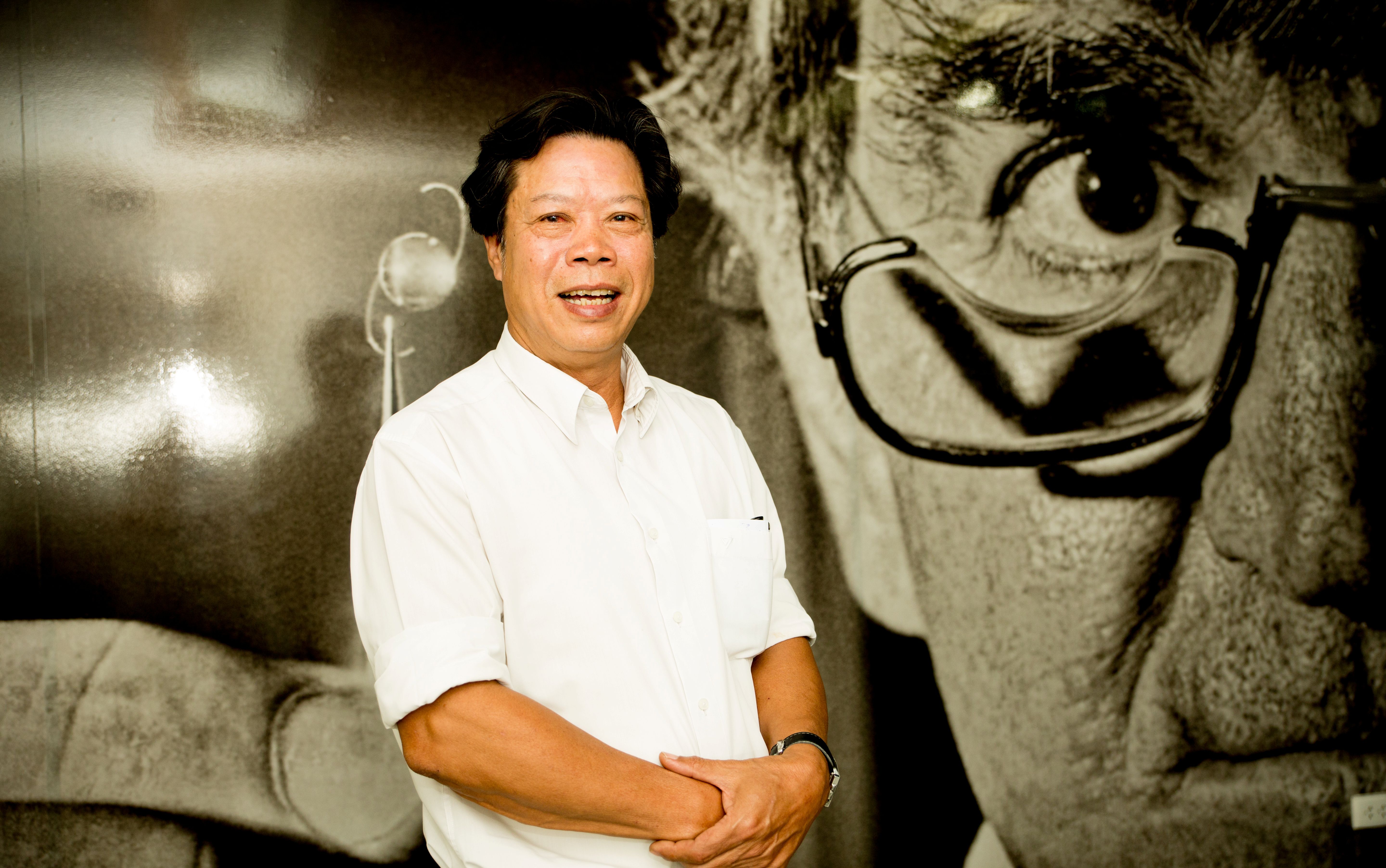 Dr Binh in 2016.
Photo credit: The Fred Hollows Foundation
“It was because of that reason that he tried his best during the little time he had left to leave something – a legacy to Vietnam. That’s why he would not stop.
Dr Binh said Vietnam did not have a strong eye health workforce by then and the situation was more serious in the central region.
If people needed treatment they needed to travel almost 1000km to the north or south.
“That’s why Professor Hollows cared about the central area – because he cared about poor people.
“Firstly, he wanted to change people’s awareness and also the awareness of the government and the whole eye care sector.
“Secondly, he was passionate about improving disadvantaged people’s lives. He was determined to ensure that even poor people can benefit from advanced techniques, just like those from developed countries.
“That did not mean absolute equity but at least a chance for everyone – even the poor.
“He said that even after his death, Vietnam can still stand on its own feet. And now we are getting there – his goals have been achieved.
“I always keep a picture of Professor Hollows on my desk. It used to be at the office when I was Director of Danang Eye Hospital. Now that I’m retired, it’s on my desk at home.
“Professor Hollows and The Fred Hollows Foundation is always in my heart and in the hearts of countless Vietnamese people.
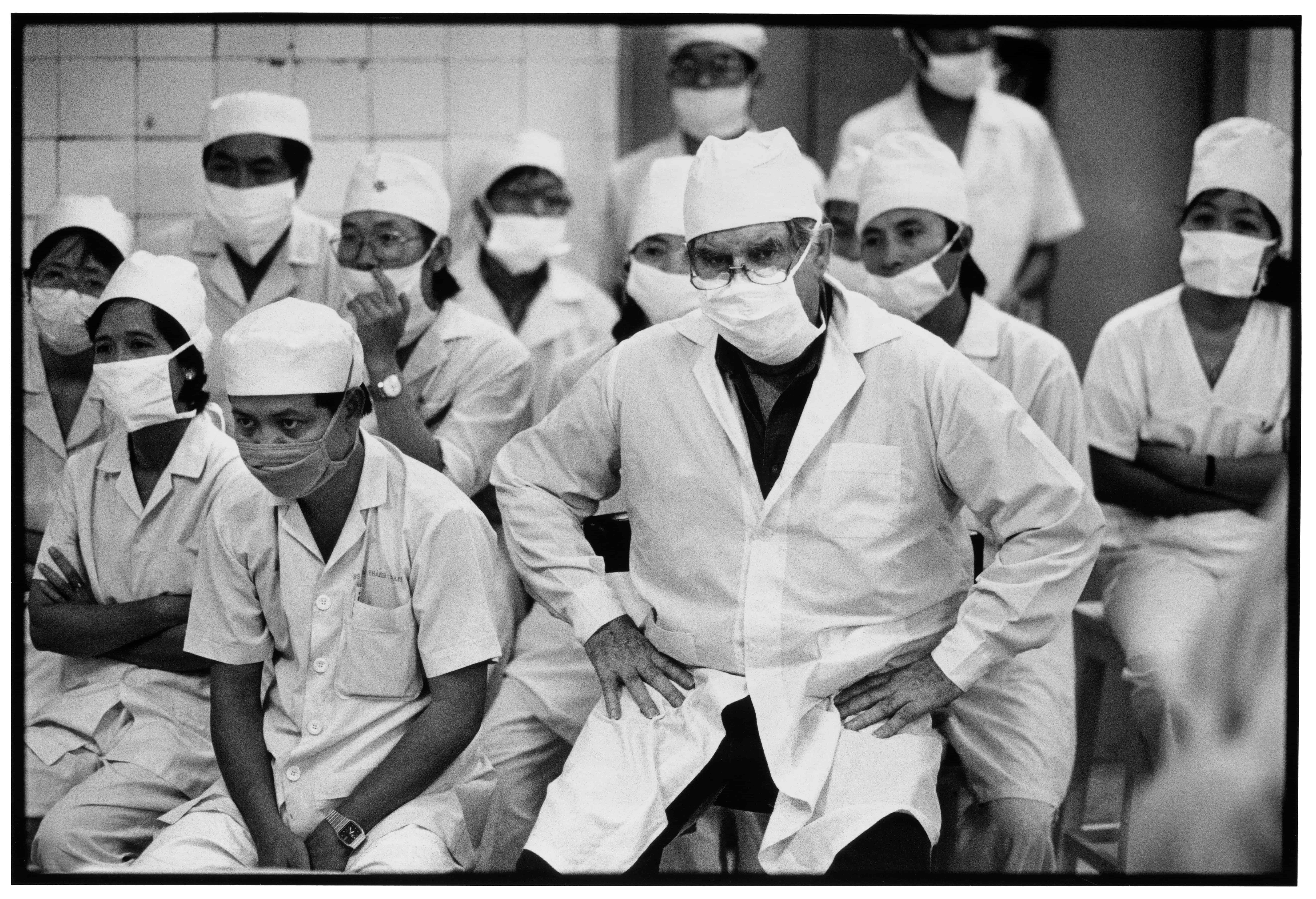 Photo credit: Michael Amendolia
“The young generation, including young doctors, might not know about Professor Hollows, but our generation and the generation next to us will never forget Professor Hollows, The Fred Hollows Foundation and the Australian people.”
Read more about our work

What does one year of impact really look like?

Africa Microsurgical Training Program leaves lasting legacy

How Fred Hollows made cataract surgery affordable for millions