
Uncle Ross's Story

For seven years, Uncle Ross put off the cataract surgery he knew he needed. Not because he didn't want it, but because getting there wasn't easy.
As I'm Going Back Home by the Pigram Brothers plays softly through the operating theatre at Alice Springs Hospital Eye Clinic, Uncle Ross lies calmly waiting for his cataract surgery to begin.
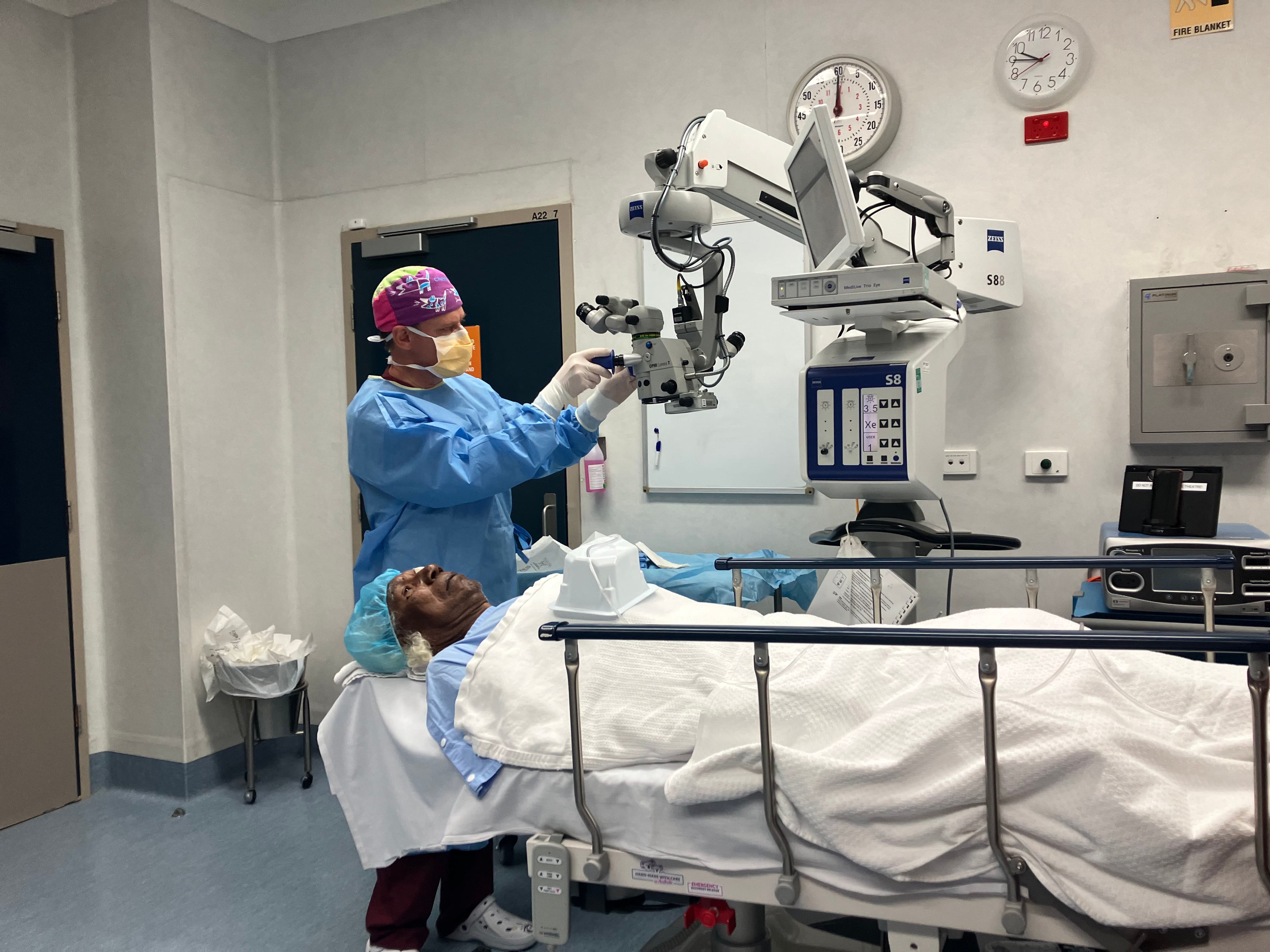 Photo credit: Danny Teece
It's a small but thoughtful gesture by ophthalmologist Dr Tim Henderson, who plays music to help patients relax.
For Uncle Ross, a Warumungu man from Tennant Creek, hearing a song about home feels especially fitting.
Because getting to surgery meant leaving it behind.
A leader putting everyone else first
Uncle Ross has spent much of his life advocating for the health and wellbeing of his community.
As Chairperson and co-founder of Anyinginyi Health Aboriginal Corporation, he has long been a strong voice for Aboriginal health in the Barkly region.
But while helping others, his own eye health slipped down the priority list.
For seven years, his cataracts gradually made everyday life more difficult.
"Seven years I put it off for, and it's had a real impact from basic things like reading, to going hunting and playing sport," Uncle Ross says.
"I could have got it done ages ago, but I was silly. I should have just got it done before COVID hit."
Then COVID-19 arrived, and the opportunity disappeared.
When Tennant Creek Hospital's operating theatre closed in 2021 due to a combination of the pandemic, workforce shortages and ongoing funding challenges, local cataract surgery stopped altogether.
For many people across the Barkly region, accessing surgery suddenly meant travelling hundreds of kilometres to Alice Springs.
The journey is more than just distance
For many Australians, cataract surgery is a relatively straightforward procedure.
For people living in remote Aboriginal communities, it can mean days away from home, family and Country.
The journey from Tennant Creek to Alice Springs takes around seven hours by road. For people living in more remote communities, it can involve an additional day's travel over unsealed roads before the journey even begins.
During the hottest months of the year, those trips are made in temperatures exceeding 40 degrees.
Leaving Country also comes with emotional and cultural challenges.
"We are Elders, not youngsters anymore mate," Uncle Ross says.
"There are a lot of ongoing medical issues, disabilities and it's a seven-hour bus ride to Alice Springs.
"It's 42 degrees today and then some of the mob have to come in from remote communities, which is another day's travel on dirt roads.
"Alice Springs is a long way from home and can be a difficult place to stay for us off Country. Our preference is to stay home, and the doctors come to us."
These barriers are one reason Aboriginal and Torres Strait Islander people continue to experience significantly poorer eye health outcomes than other Australians, despite most vision loss being preventable or treatable with timely care.
Bringing people closer to sight-saving care
The Fred Hollows Foundation is working alongside Aboriginal Community Controlled Health Organisations, hospitals and health partners to improve access to culturally appropriate eye care across Australia.
As part of a week-long eye surgery intensive in Alice Springs, The Foundation supports patients travelling from Tennant Creek by helping provide transport, accommodation and a scrub nurse, making it easier for more people to receive the surgery they have often waited years for.
The goal is simple: remove barriers so people can access the care they need, when they need it.
Because no one should have to live with avoidable vision loss simply because specialist care is too far away.
Looking ahead
For Uncle Ross, finally having cataract surgery means more than seeing clearly again.
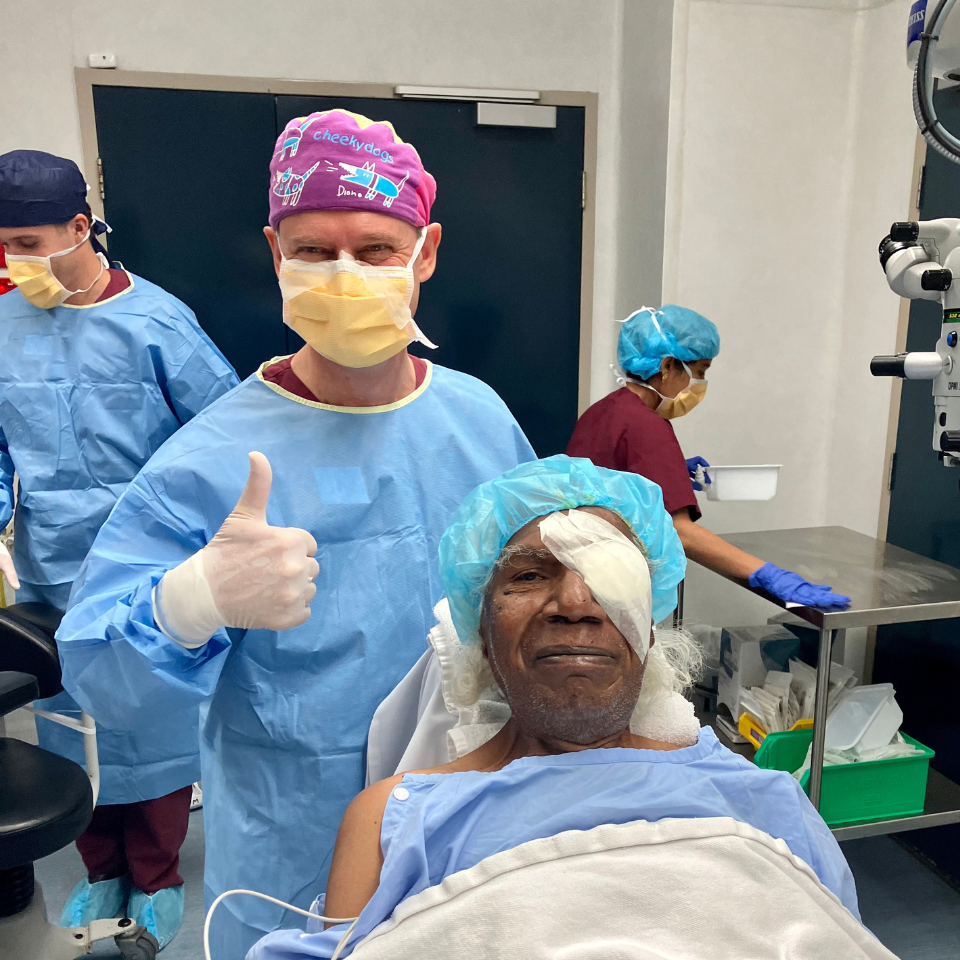
Photo credit: Danny Teece
It means returning home able to read more easily, spend time on Country, go hunting and continue supporting his community.
His story is also a reminder that restoring sight is about more than a single operation.
It's about ensuring Aboriginal and Torres Strait Islander peoples can access timely, culturally safe eye care close to home, so more people can continue living, working and caring for their communities with healthy vision.
The Foundation's work in Australia
The Fred Hollows Foundation continues Fred Hollows' legacy by working alongside Aboriginal and Torres Strait Islander communities, Aboriginal Community Controlled Health Organisations, governments and health partners to strengthen eye health systems across Australia.
In 2025, together with our Indigenous Australia Program partners, we achieved:
- 21,827 people screened
- 3,885 eye operations and treatments, including:
- 246 cataract operations
- 3,476 diabetic retinopathy treatments
- 4,537 pairs of glasses distributed
- 1,270 school children and community members educated in eye health and sanitation
- 32 community health workers trained
Read more stories from Indigenous Australia

Jeffrey's Story

Yanjami's Story

Aunty B's Story