
What happens during cataract surgery?

Cataract surgery is one of the most common and effective medical procedures in the world.
It is used to treat cataract, a condition where the lens of the eye becomes cloudy, causing blurred or reduced vision. Left untreated, cataract can lead to blindness.
The surgery itself is straightforward. In most cases, it takes less than 30 minutes and can restore sight quickly
Step 1: Preparing for surgery
Before the procedure, the eye is carefully examined to confirm the diagnosis and plan treatment.
On the day of surgery, patients are awake but given anaesthetic eye drops or a small injection to numb the eye. This means the procedure is painless, although patients may still be aware of light and movement.
The eye is cleaned and kept open using a small instrument to prevent blinking.
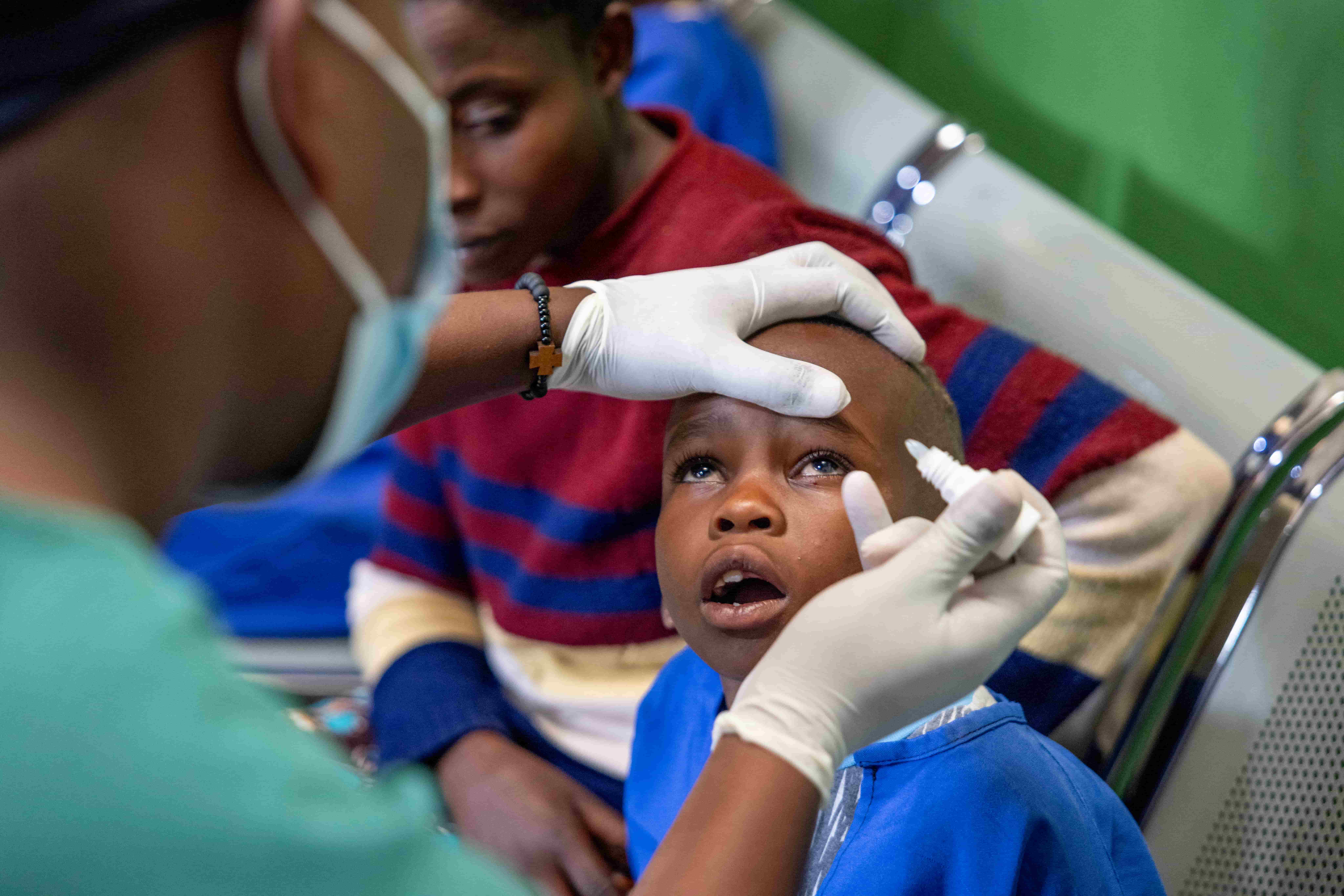 Blaise receives anaesthetic eye drops before cataract surgery at Kabgayi Eye Unit in Rwanda. The drops help numb the eye so the procedure is painless.
Photo credit: Michael Amendolia
Step 2: Removing the cloudy lens
The surgeon makes a very small incision in the eye.
Using specialised instruments, the cloudy lens affected by cataract is gently broken up and removed. This is often done using ultrasound technology, a technique known as phacoemulsification.
The goal is to clear the obstruction that is preventing light from reaching the back of the eye.
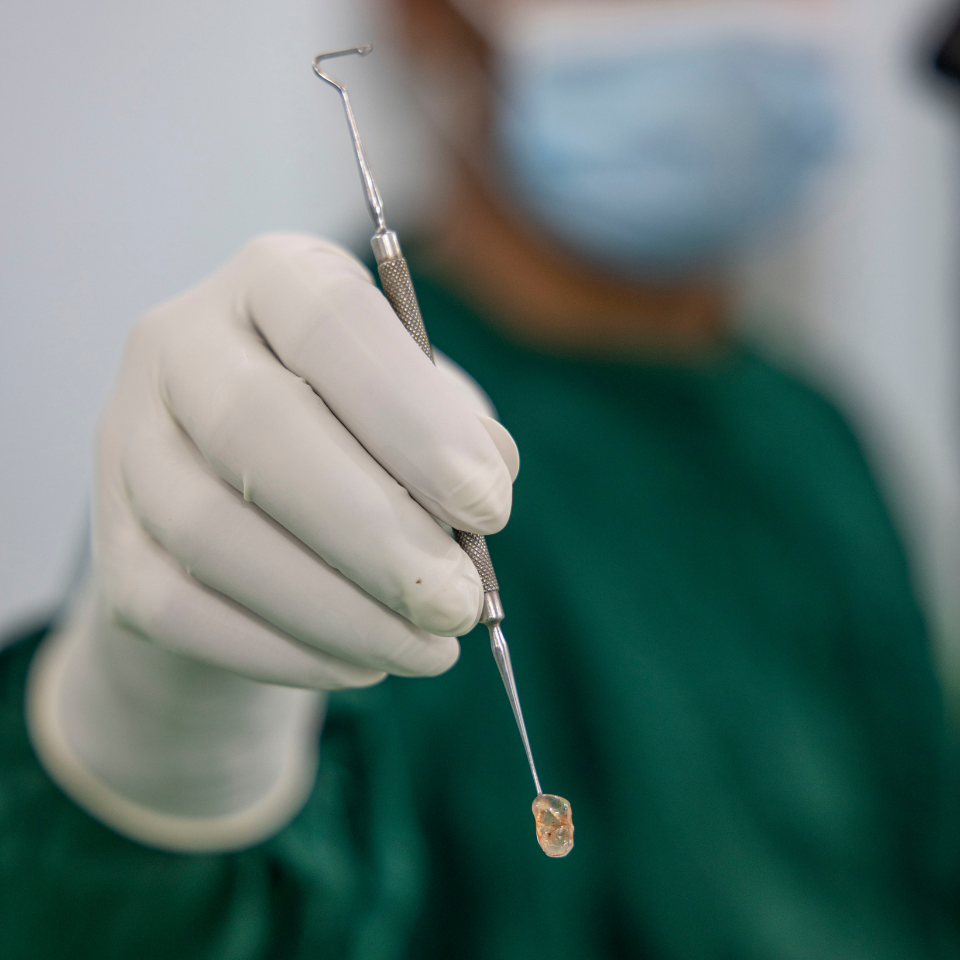 A cataract-affected lens removed during surgery in Bangladesh. Once the cloudy lens is taken out, light can reach the back of the eye properly again, helping restore sight.
Photo credit: Michael Amendolia
Step 3: Replacing the lens
Once the cloudy lens is removed, it is replaced with a clear artificial lens, known as an intraocular lens.
This lens restores the eye’s ability to focus light properly.
In many cases, the incision is so small that it does not require stitches and the eye can heal naturally.
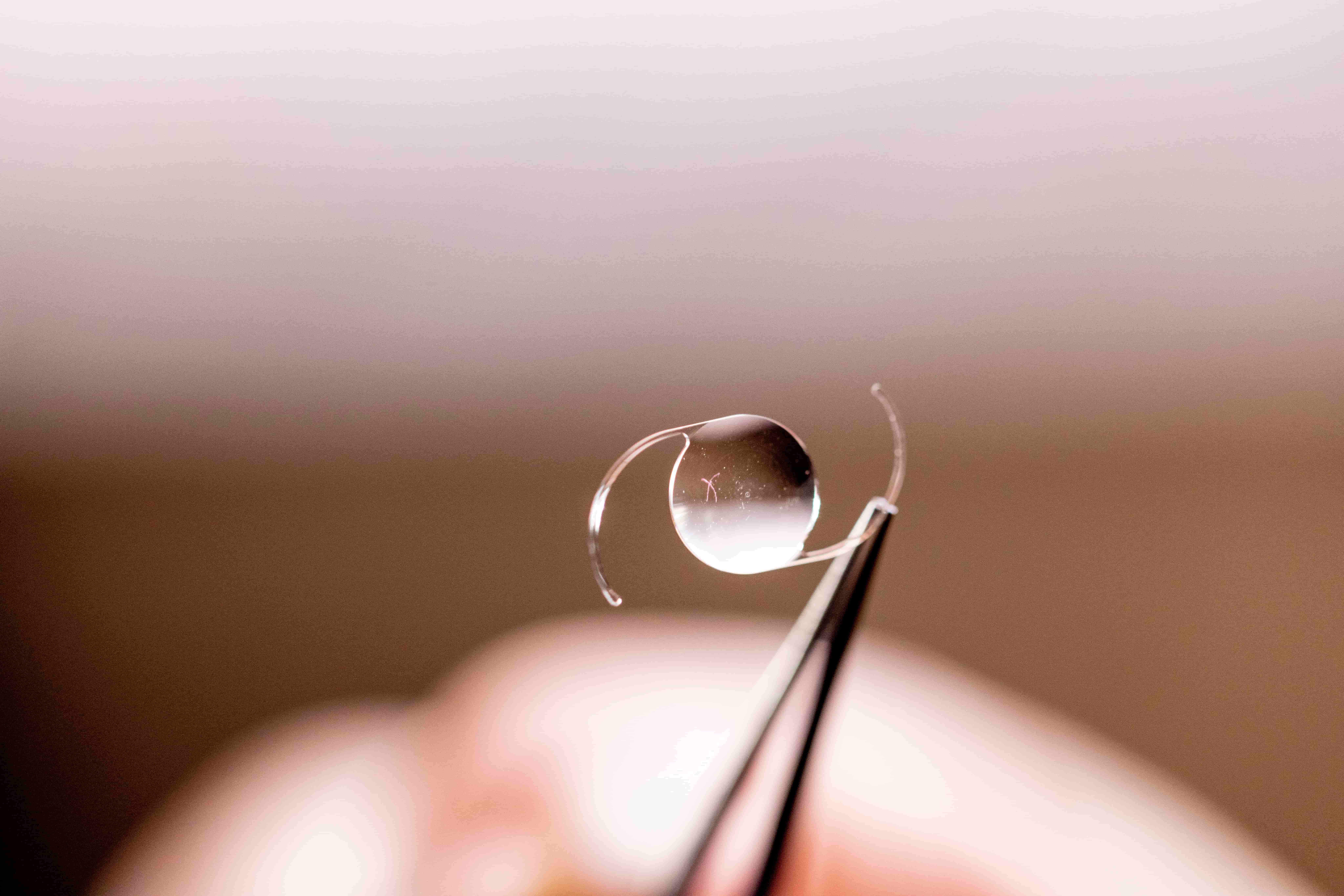 Photo credit: Michael Amendolia
What does the patient experience?
Cataract surgery is not painful.
Patients may see bright lights or movement during the procedure, but discomfort is minimal. The surgery is usually performed as a day procedure, meaning patients can return home the same day.
For many, the most noticeable change happens the following day, when vision begins to improve.
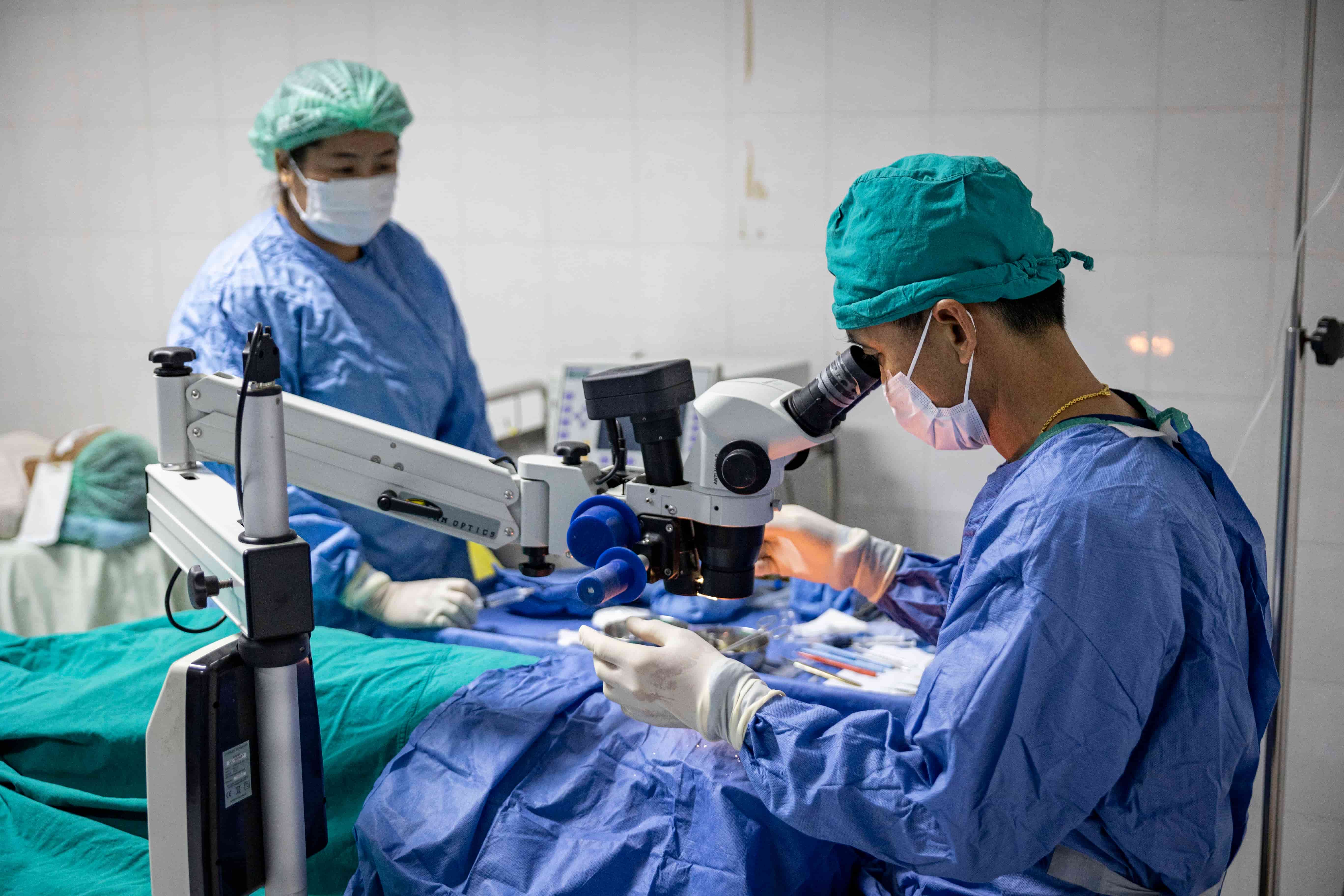 Dr Senglar Laorsen and Dr Phetsamone Indara complete cataract surgery at Oudomxay Provincial Eye Hospital in Lao PDR, where The Fred Hollows Foundation is helping expand access to affordable eye care for people at risk of avoidable blindness.
Photo credit: Michael Amendolia
Recovery and results
Vision often improves within a few days, although full recovery can take several weeks.
Patients are usually prescribed eye drops to prevent infection and support healing. Follow-up appointments help ensure the eye is recovering well. At the final follow up visit, glasses will be prescribed as needed.
Cataract surgery has a very high success rate. It is widely regarded as one of the most cost-effective health interventions available.
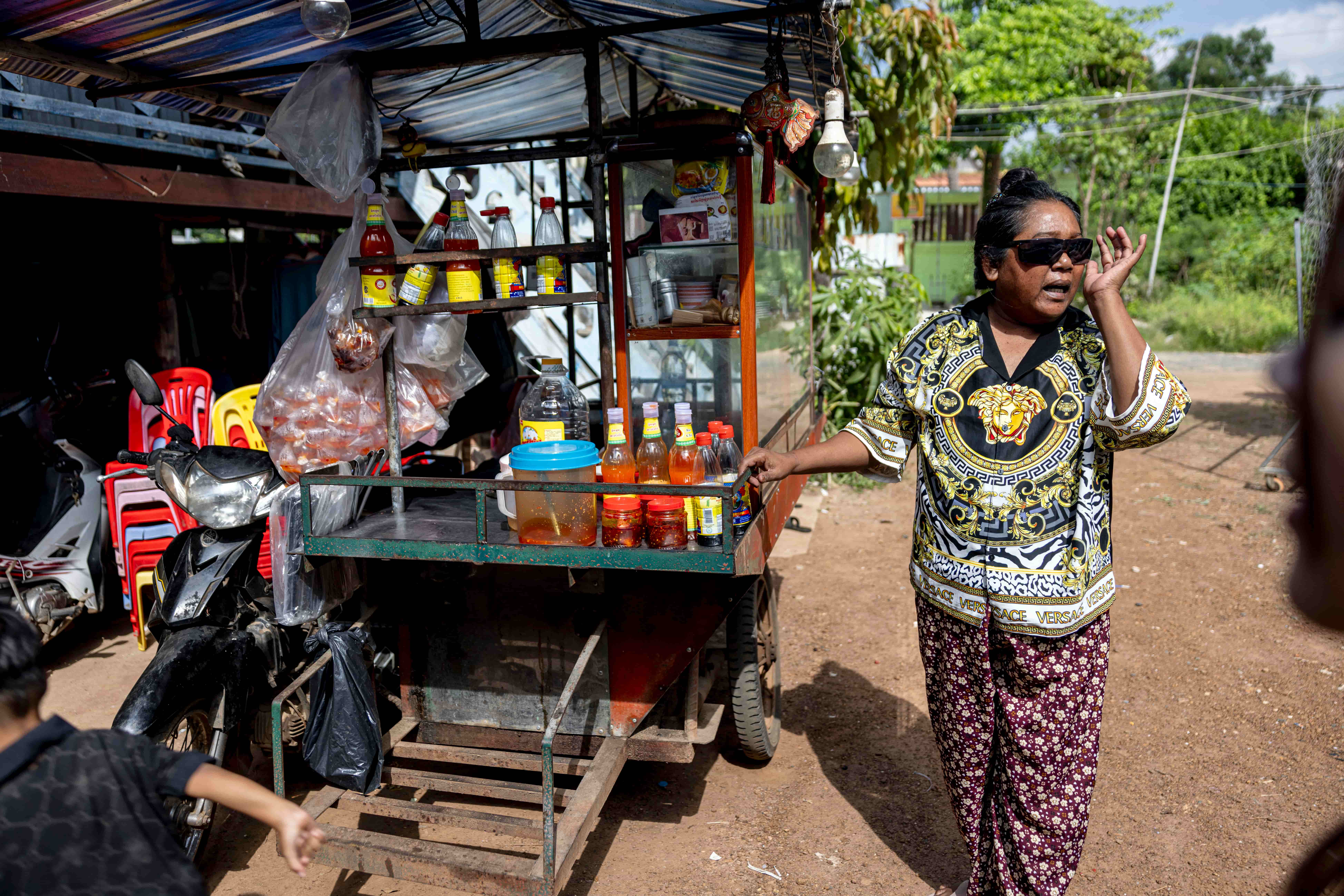 After cataract surgery in Cambodia, Sok returned to her meatball and papaya salad stand with restored vision. Follow-up care and glasses help support recovery and long-term eye health.
Photo credit: Michael Amendolia
Why access to surgery matters
Despite its simplicity, cataract surgery is not accessible to everyone.
Globally, cataract remains the leading cause of blindness. Yet 9 out of 10 people who are blind do not need to be, as their condition is preventable or treatable.
In countries like Rwanda, barriers such as distance, cost, and limited specialist services can delay or prevent treatment.
As a result, people continue to lose their sight from a condition that can be treated in under 30 minutes.
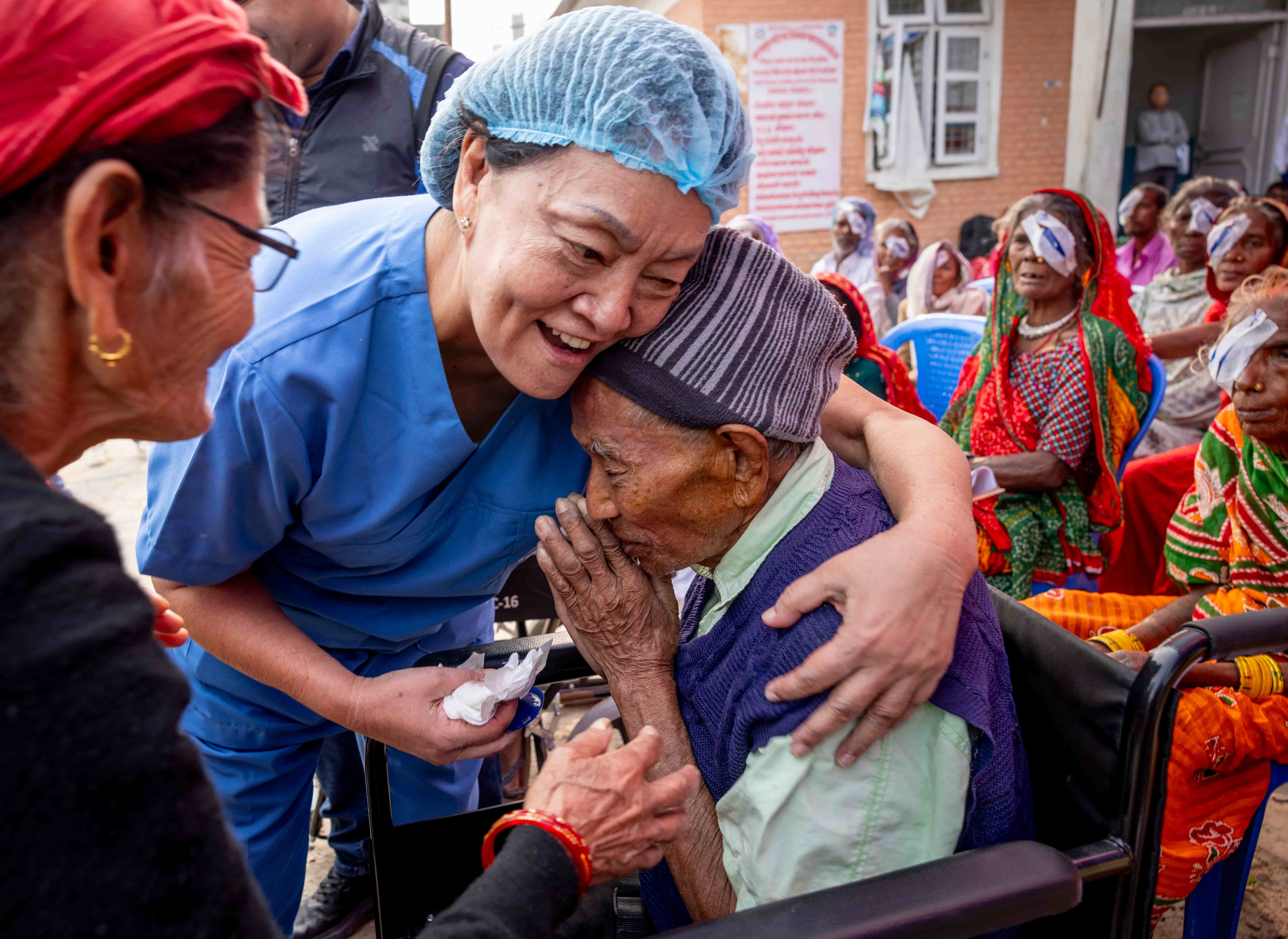 Before a community eye hospital opened near their home in Nepal, Mitthu, 75, and her husband Krishna, 82, had to travel hours and pay extra costs to access cataract treatment. Access to local eye care can mean the difference between blindness and restored sight.
Photo credit: Michael Amendolia
A life-changing procedure
For patients, the impact of cataract surgery is immediate.
Restoring sight allows people to return to work, continue their education, and regain independence. It improves quality of life not only for individuals, but also for their families and communities.
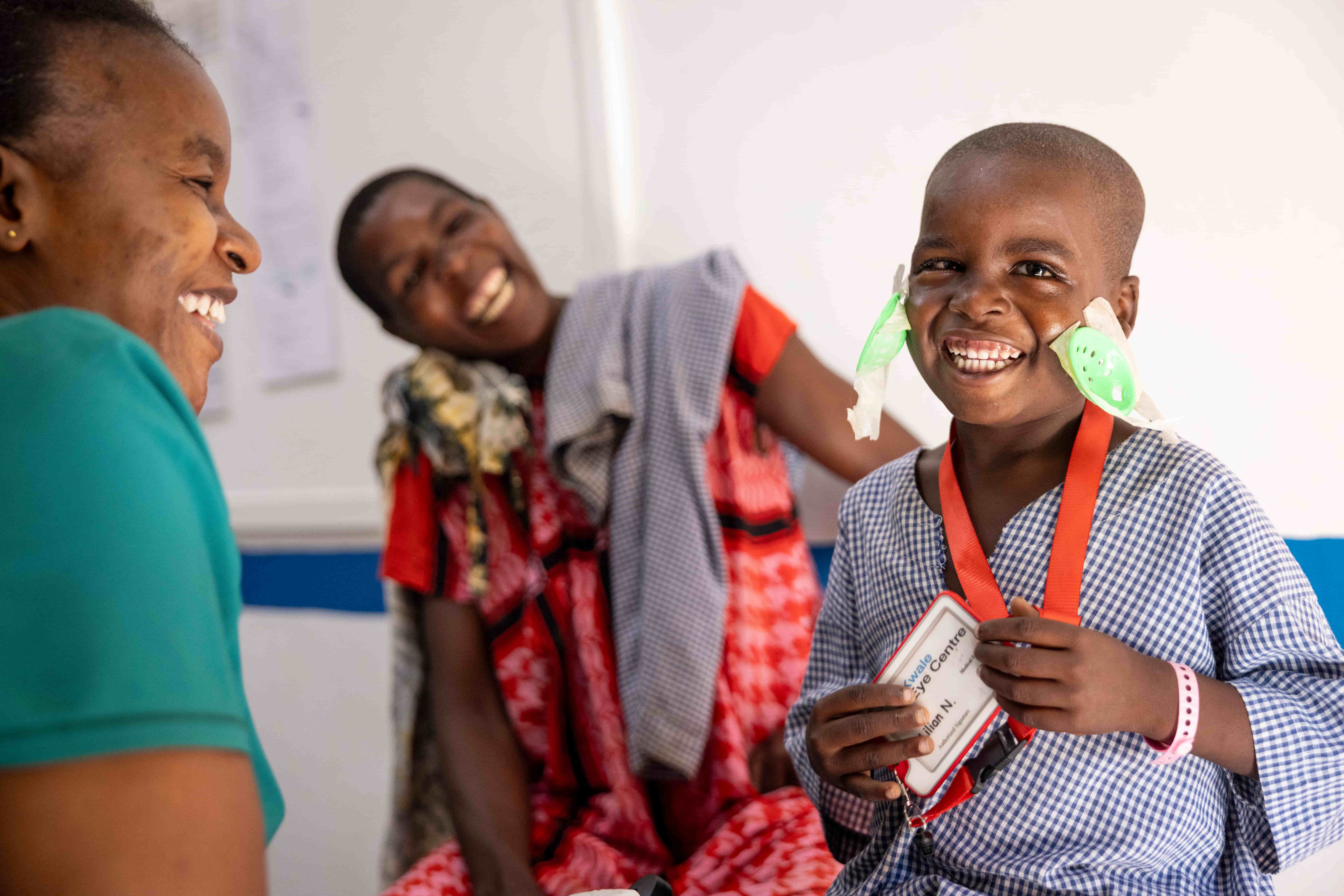 After cataract surgery, Jira’s eye patch is removed in Kenya’s Kwale County. Restoring sight means children like Jira can return to school, regain independence, and reconnect with the world around them.
Photo credit: Michael Amendolia
Support access to cataract surgery
Donate today or become a Visionary to help fund cataract surgery in more than 25 countires, and restore sight for people who would otherwise go blind.
Meet the author

Dr May Ho
Dr May Ho is the Optometry and Primary Care Adviser at The Fred Hollows Foundation. She is an Australian registered optometrist with over 30 years of public health and international eye health experience. She has worked extensively in the development and implementation of sustainable eye care and education programs in various countries in the Asia Pacific and Africa regions as well as in Haiti and Moldova. She was involved in the development and delivery of refraction, low vision, primary eye care and training of trainers’ courses for various cadres of health workers including mid-level ophthalmic personnel, optometrists, and ophthalmologists. Her biggest achievement is the introduction of the profession of optometry into Vietnam.
Explore more eye health articles

Diabetic retinopathy: what it is, why it matters, and how to protect your sight

Ending cataract blindness in Rwanda: Building a national eye health system by 2040


How to look after your eyes after cataract surgey