
The history of trachoma in Australia and how it was eliminated

In April 2026, Australia reached a public health milestone more than 50 years in the making.
The World Health Organization confirmed that Australia had eliminated trachoma as a public health problem — an achievement made possible through decades of Aboriginal and Torres Strait Islander leadership, community-led action and partnership.
For many Australians, the announcement came as a surprise. Few people realise that trachoma existed in Australia at all. Fewer still know that until recently, Australia was the only high-income country where the disease remained a public health problem.
The story of trachoma in Australia is not simply a story about eye health. It is a story about inequality, community leadership, persistence and the power of working together. It is also a story closely connected to Professor Fred Hollows and the Aboriginal and Torres Strait Islander leaders, health workers and communities who helped drive change.
What is trachoma?
Trachoma is a painful bacterial eye infection and the world’s leading infectious cause of blindness.
It spreads through contact with infected eye and nose secretions, as well as flies that have been exposed to the bacteria.
Repeated infections can cause scarring inside the eyelid. Over time, the eyelid can turn inward, causing the eyelashes to rub against the surface of the eye. This condition, known as trichiasis, causes intense pain and can eventually lead to irreversible blindness.
Trachoma thrives where people face barriers to accessing clean water, sanitation, adequate housing and healthcare. For this reason, it is often described as a disease of poverty.
The tragedy is that trachoma is entirely preventable.
How trachoma became a problem in Australia
While trachoma disappeared from most developed countries during the twentieth century, it continued to affect some remote Aboriginal and Torres Strait Islander communities where people faced significant barriers to accessing safe housing, sanitation, clean water and healthcare.
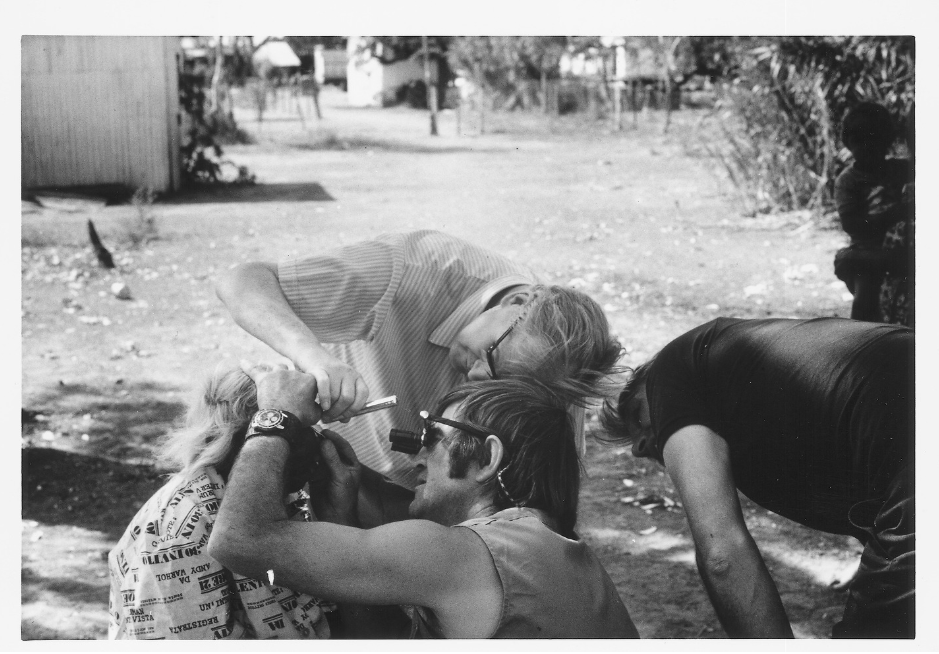 Fred Hollows with a patient during the National Trachoma and Eye Health Program.
Photo credit: The Fred Hollows Foundation
The disease was never simply an eye health issue. Its persistence reflected broader inequities that affected many aspects of health and wellbeing.
Children were particularly vulnerable to infection, while repeated exposure placed many adults, especially women, at risk of permanent vision loss.
By the 1970s, trachoma was still causing unnecessary suffering and blindness in communities across remote Australia.
For Fred Hollows, this was unacceptable.
Fred Hollows and the National Trachoma and Eye Health Program
In 1975, Professor Fred Hollows, Gabi Hollows and a small team of health professionals secured funding from the Australian Government to launch the National Trachoma and Eye Health Program.
The goal was ambitious: understand the scale of trachoma across Australia and deliver urgently needed eye care to Aboriginal and Torres Strait Islander communities.
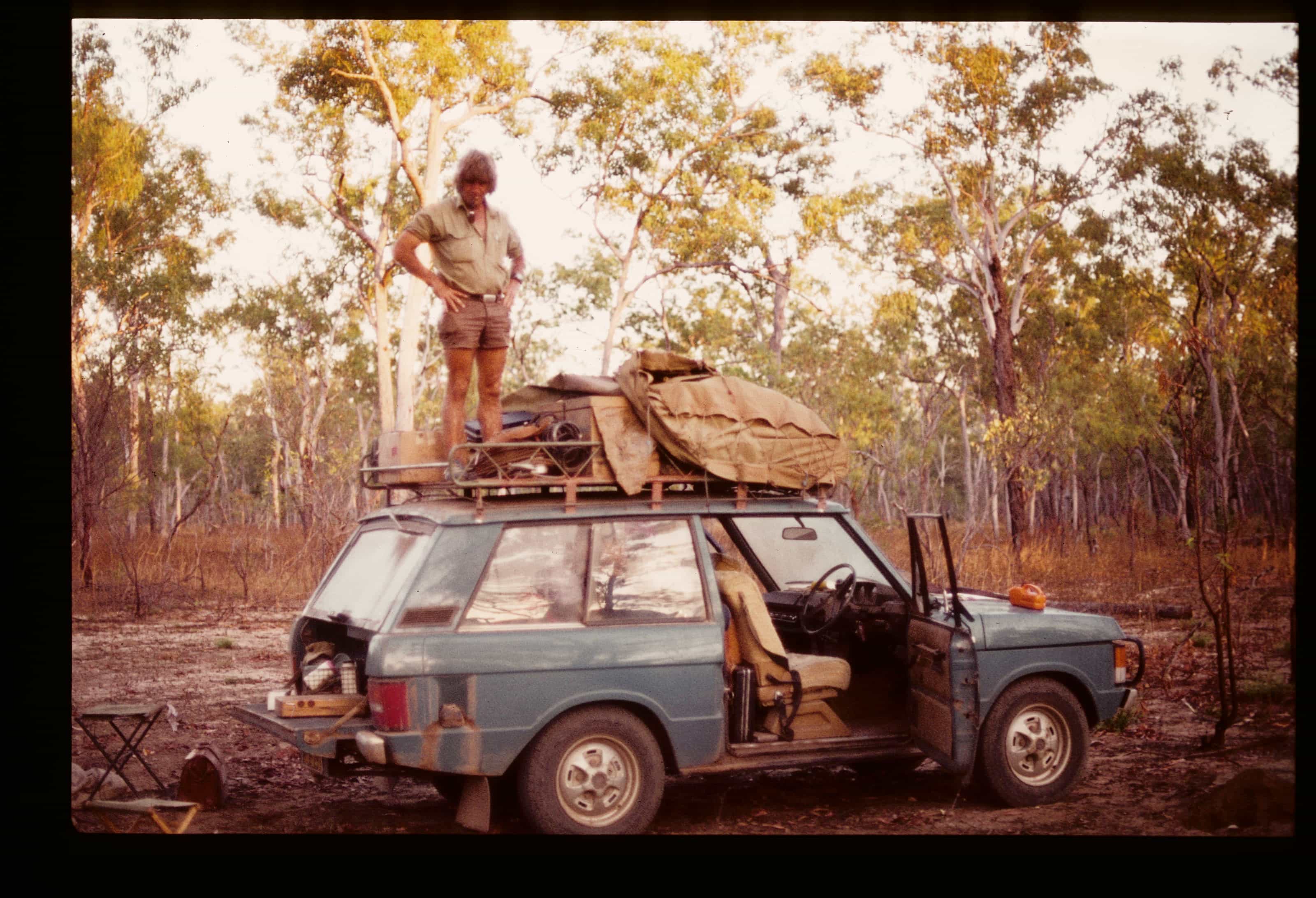 Photo credit: Leon Cebon
Travelling in four-wheel drives across some of the most remote parts of the country, teams of doctors, nurses and Aboriginal health workers visited hundreds of communities, including communities in the Torres Strait Islands.
But the program’s success was not driven by visiting specialists alone.
Aboriginal leaders including Trevor Buzzacott, Jilpia Jones, Rose Murray, Gordon Briscoe and Reg Murray played a critical role in building trust, guiding engagement and ensuring the work reflected community priorities.
Fred understood that meaningful change could only happen alongside communities.
As he said:
“There must be active community involvement, using the community’s own structures, in every aspect of disease control programs.”
Over two years, the program:
- Visited 465 communities
- Screened more than 100,000 people
- Treated more than 27,000 people for trachoma
- Performed more than 1,000 eye operations
- Distributed more than 10,000 pairs of glasses
The program revealed the scale of avoidable vision loss in Australia and laid the foundation for future efforts to improve Aboriginal and Torres Strait Islander eye health.
Why eliminating trachoma took decades
The National Trachoma and Eye Health Program achieved remarkable progress, but eliminating trachoma required much more than medical treatment.
Trachoma is closely linked to living conditions. Without reliable access to clean water, functioning sanitation and adequate housing, the disease can continue to spread.
Over the following decades, Aboriginal Community Controlled Health Organisations, governments, health services, community leaders and partner organisations continued working together to address the factors that allowed trachoma to persist.
The challenge was not simply eliminating an infection. It was creating the conditions that would prevent it from returning.
The SAFE strategy
A major breakthrough came through the adoption of the World Health Organization’s SAFE strategy.
SAFE stands for:
Surgery – correcting inward-turning eyelashes caused by advanced trachoma.
Antibiotics – treating active infection and reducing community transmission.
Face washing – promoting healthy hygiene practices to reduce the spread of infection.
Environmental improvements – improving access to clean water, sanitation and healthy living conditions.
The strategy recognised that medical treatment alone was not enough. Lasting success required addressing the environmental and social factors that allow trachoma to spread.
Community-led education became a vital part of this work.
Aboriginal community-based workers played a crucial role in supporting screening, treatment and prevention activities. As trusted members of their communities, they helped ensure information about trachoma was shared in ways that were culturally relevant and meaningful.
One example was Anngang Anitjakarta (Trachoma Sore Eyes Story), written and illustrated by Aboriginal author Hazel Presley from Ti Tree, Northern Territory.
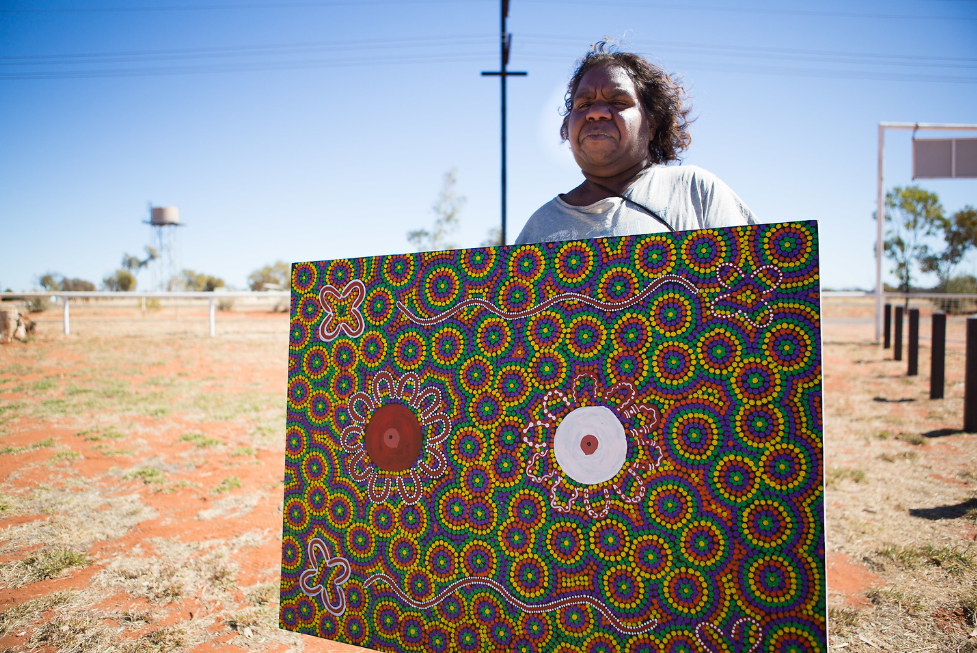 Photo credit: The Fred Hollows Foundation
Written in her local Anmatyerr language, the story helped children and families understand what causes trachoma and how it can be prevented. With support from The Fred Hollows Foundation, 900 copies were distributed to help communities learn about trachoma prevention through a resource that reflected local language, knowledge and culture.
This approach reflects a key lesson from decades of trachoma work in Australia: sustainable health improvements happen when communities are supported to lead solutions that respond to their own priorities.
The role of Aboriginal and Torres Strait Islander leadership
The elimination of trachoma did not happen because of a single organisation, government or program.
It was made possible through decades of leadership from Aboriginal and Torres Strait Islander communities, health workers and organisations.
Community-led approaches ensured screening, treatment and education programs reflected local priorities and cultural contexts.
This leadership was present from the earliest days of the National Trachoma and Eye Health Program and remains central to improving eye health today.
As Indigenous Australia Program Director Tanya Morris said following the WHO announcement:
“The Foundation has worked collaboratively to support education and hygiene promotion initiatives that have been community-led. This long-term, community-owned approach has made trachoma elimination possible.”
Australia eliminates trachoma as a public health problem
In April 2026, the World Health Organization confirmed that Australia had eliminated trachoma as a public health problem.
The announcement marked the culmination of decades of work by Aboriginal and Torres Strait Islander communities, Aboriginal Community Controlled Health Organisations, governments, health workers and partner organisations.
It was a landmark achievement not only for eye health, but for public health more broadly.
The milestone demonstrated what can be achieved when communities are supported to lead solutions that address local priorities.
Protecting this achievement
Elimination does not mean trachoma has disappeared forever.
Ongoing monitoring, prevention and community-led programs remain essential to ensure the disease does not return.
Protecting this achievement will require continued investment in housing, sanitation, healthcare access and health promotion across remote communities.
The work to improve Aboriginal and Torres Strait Islander eye health continues.
But for the first time in Australia’s history, trachoma is no longer considered a public health problem.
This achievement reflects the determination, leadership and partnership of everyone who helped make it possible — from the Aboriginal and Torres Strait Islander leaders who guided the earliest programs, to the communities and health workers who continue to lead change today.
Related articles

34 years of changing lives: Our story in 34 photographs

Aboriginal and Torres Strait Islander eye health: the facts and statistics

Why Indigenous eye health mattered so much to Fred Hollows