
Patrick's Story

A struggle hidden in plain sight
Patrick's parents thought their nine-year-old son was doing well at school.
Living in Rwanda's Gisagara district, Patrick rarely complained, and his family had no reason to believe anything was wrong. But his teachers noticed he was struggling and encouraged his parents to seek help.
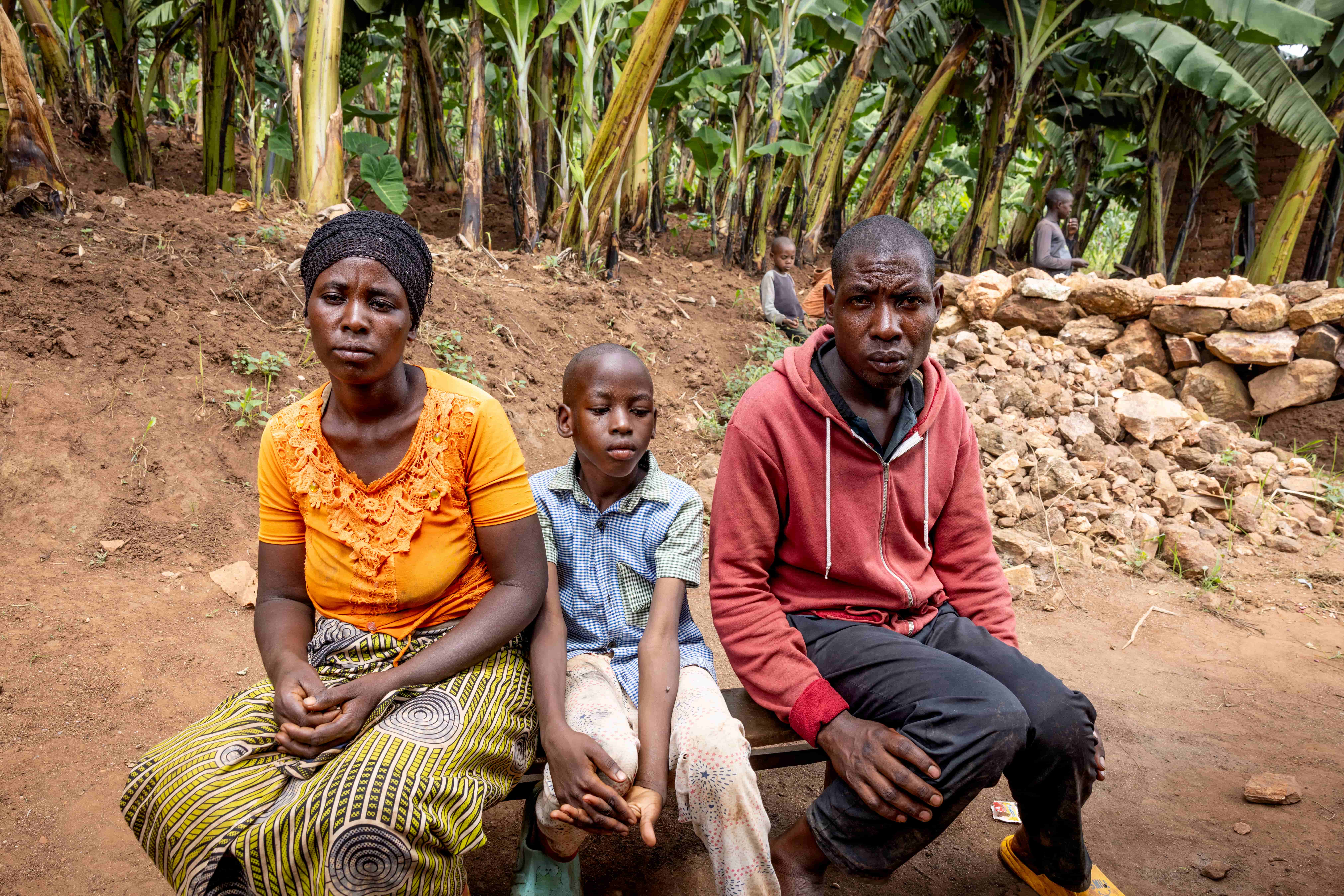 Photo credit: Michael Amendolia
It was only then that Patrick's father, Jean Bosco, began to understand the challenges his son was facing every day.
Patrick was living with cataracts in both eyes.
Unable to see clearly, he often lost his school supplies. Other children would take his books and pens, knowing he could not easily find them again.
"We would buy him books and pens, but he would lose them every day because the other kids would grab them from him," Jean Bosco recalled.
To stop Patrick from losing his pen, Jean Bosco poked a hole in the collar of his shirt so he could keep it attached to his uniform.
But the bullying continued.
"I only wish I was normal like them and they wouldn't call me names and stop bullying me," Patrick said.
The impact beyond the classroom
Patrick's vision loss affected much more than his education.
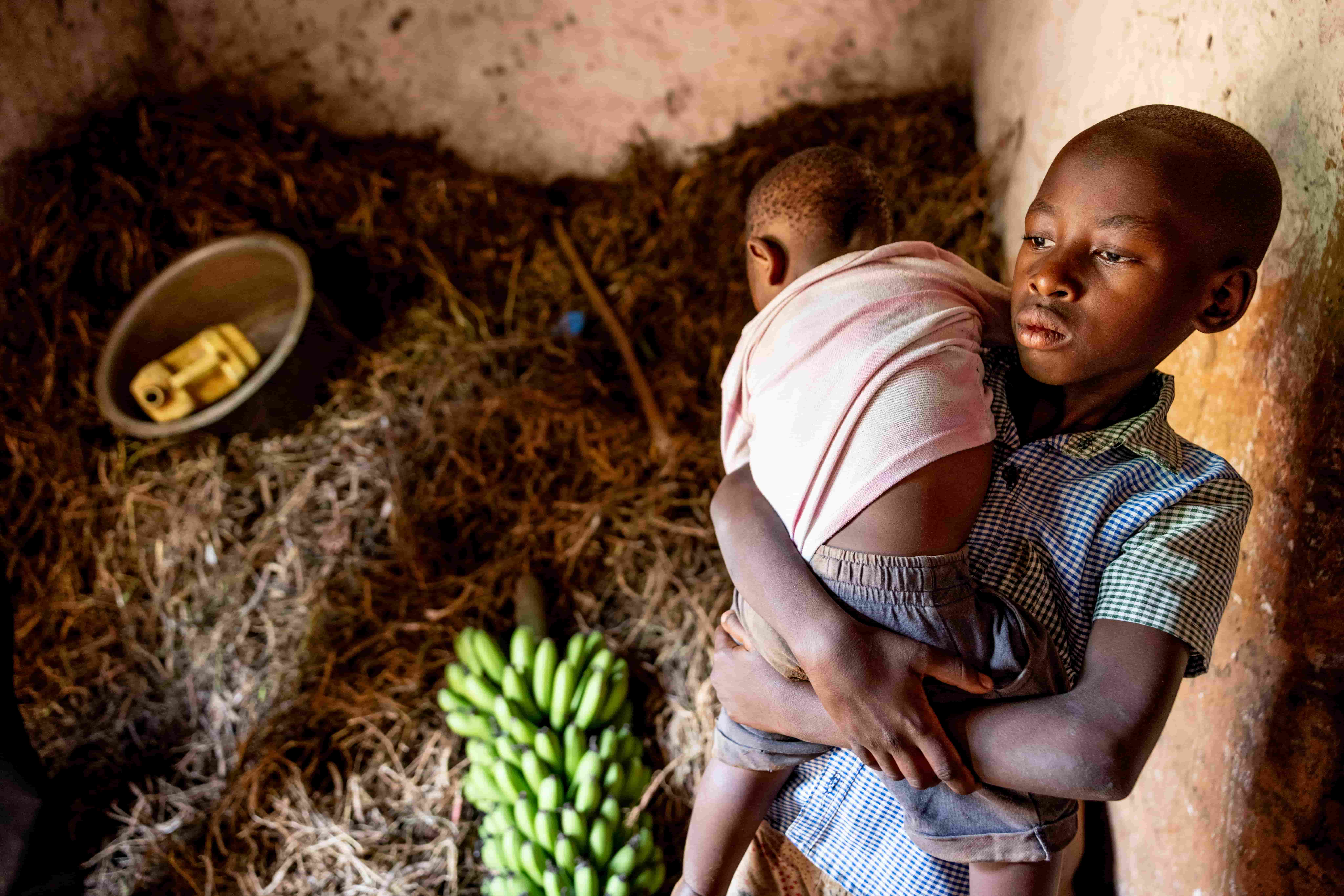 Photo credit: Michael Amendolia
At home, he struggled to help with daily chores and often felt left behind. Fetching water was difficult because he could not safely navigate the steep, uneven terrain around his village. While others carried large containers, Patrick used a smaller jerrycan because he sometimes tripped and fell.
"It makes me feel useless at home because I can't do anything," he said.
His parents wanted to find help, but they believed treatment would be beyond their reach. Neighbours told them eye surgery would be too expensive, leaving the family uncertain about what to do next.
A life-changing operation
Everything changed when Jean Bosco heard a radio announcement about eye health workers visiting the area through a program supported by The Fred Hollows Foundation.
Patrick attended an eye screening and was diagnosed with cataracts in both eyes.
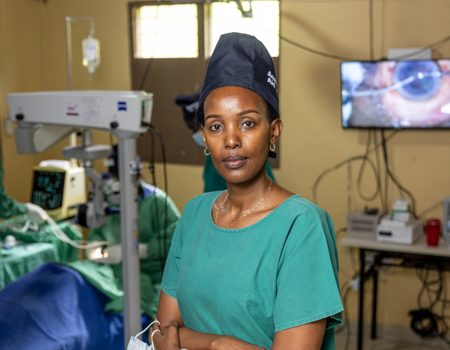
Soon afterwards, he travelled to Kabgayi Eye Unit, where ophthalmologist Dr Theophile Tuyisabe performed cataract surgery and implanted artificial lenses to restore his sight.
For Patrick and his family, it was a moment filled with hope.
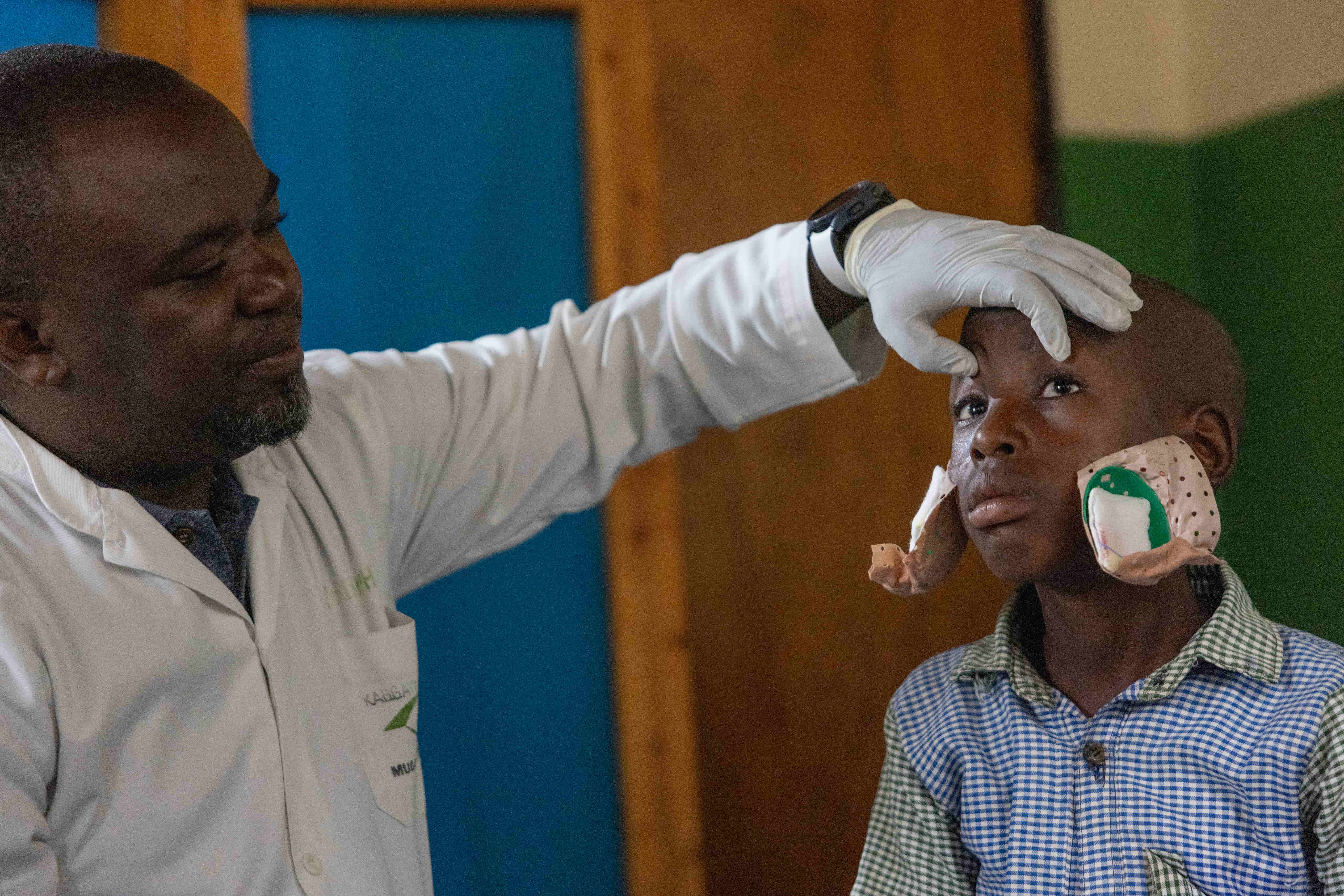 Photo credit: Michael Amendolia
A new view of the world
The day after surgery, Patrick could hardly contain his excitement.
Eager to know whether the operation had worked, he repeatedly asked if his eye patches could be removed.
As Dr Theophile carefully lifted the patches away, Patrick immediately turned towards the window.
Within moments, he began describing everything he could see.
"It's going to rain," he said, looking towards the sky before pointing out a water tank in the distance.
For the first time in years, Patrick could clearly see the world around him.
His surgery not only restored his sight, but also opened the door to a future where he can learn with confidence, participate fully at school and enjoy childhood without the barriers caused by avoidable blindness.
Building a stronger eye health system in Rwanda
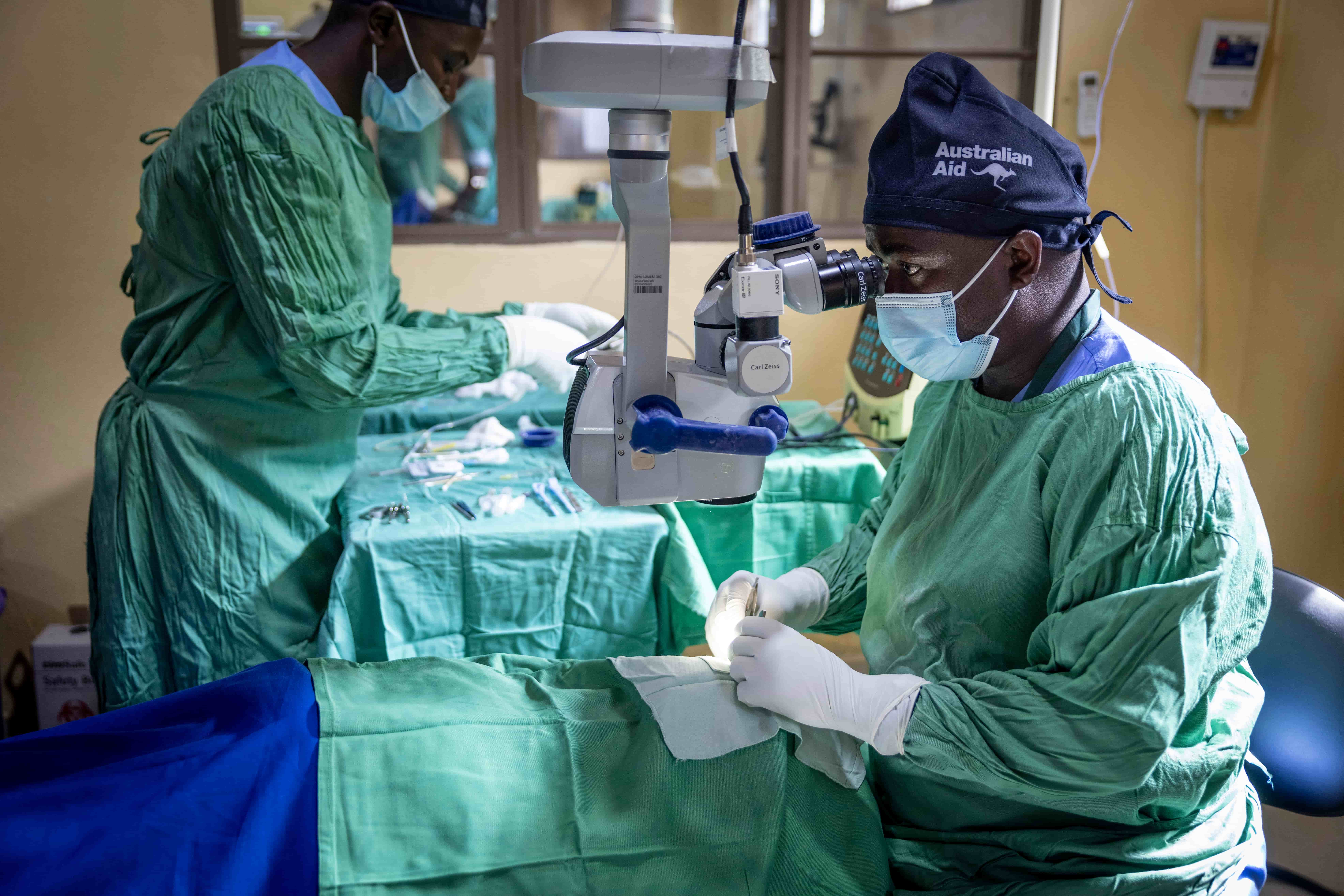 Photo credit: Michael Amendolia
Patrick's story is one example of how access to timely eye care can change a child's life.
Since 2006, The Fred Hollows Foundation has worked alongside Rwanda's Ministry of Health to strengthen eye health services and ensure more people can access the care they need, no matter where they live.
While Rwanda has made significant progress in healthcare, many people in rural communities still struggle to access specialist eye care. Cataract remains the leading cause of blindness, and too many children and adults risk permanent vision loss simply because treatment is unavailable or delayed.
Together with our partners, we are training eye health workers, strengthening hospitals and expanding services beyond the capital, Kigali. Since 2006, supporters have helped screen more than 2.6 million people for eye conditions, perform more than 57,000 cataract surgeries and expand access to eye care from just eight hospitals to 22 facilities across the country.
Patrick's restored sight is part of that bigger story.
By strengthening Rwanda's eye health system and investing in local expertise, we are helping ensure more children can learn, play and build their futures free from avoidable blindness.
Related articles

Valentine's Story

How many eye doctors are there in Rwanda and why it matters

Blaise's Story